







Leadsun seating offers a wide range of seating solutions for public spaces, including benches, chairs, waiting area seating, auditorium seating, and customized solutions tailored to specific project needs.
Lifecycle costing: airport chairs ROI for institutions
This article explains how institutions can apply lifecycle costing to airport chairs to improve ROI, reduce total cost of ownership, and optimize passenger experience. It covers cost categories, calculation methods, durability standards, comparative scenarios, and procurement strategies, and highlights Leadsun's seating solutions and capabilities for airports and public spaces.
- Understanding Total Cost of Ownership in Public Seating
- Why lifecycle costing matters for airport chairs
- Key cost categories for airport chairs
- Calculating lifecycle costs for airport chairs
- Sample lifecycle costing model for airport chairs
- Airport chairs: durability, standards, and verifiable performance
- Metrics procurement teams should demand
- Operational impacts of airport chairs on ROI
- Quantifying indirect benefits
- Procurement strategies to improve ROI for airport chairs
- Contract clauses that protect TCO
- Comparing options: how to present lifecycle analysis to stakeholders
- Example sensitivity table
- Leadsun: High Quality Seating Solutions and lifecycle value for airport chairs
- Why choose Leadsun airport chairs for better ROI
- Leadsun product categories relevant to lifecycle costing
- Practical steps for institutions to implement lifecycle costing for airport chairs
- Checklist for procurement teams
- FAQ
- 1. What is the typical service life for airport chairs?
- 2. How do I compare warranties when assessing airport chairs?
- 3. Can lifecycle costing capture intangible benefits like passenger satisfaction?
- 4. Are modular designs better for TCO?
- 5. How often should seating be inspected and maintained?
- 6. How can small airports stretch budgets while keeping lifecycle costs low?
- Contact and next steps
- References
- Call to Action
Understanding Total Cost of Ownership in Public Seating
Why lifecycle costing matters for airport chairs
Institutions that purchase seating for airports, transit hubs, and other public spaces often focus on upfront price. However, airport chairs incur costs throughout their lifetime: maintenance, repairs, downtime, replacement cycles, cleaning, and indirect passenger experience impacts. Lifecycle costing (LCC) shifts the procurement lens from lowest initial price to lowest total cost of ownership (TCO) over a defined analysis period. For high-traffic environments such as airports, the difference between cheap and durable seating can be substantial — affecting operating budgets, passenger satisfaction, and brand perception.
Key cost categories for airport chairs
When evaluating airport chairs using lifecycle costing, include these categories:
- Acquisition cost: purchase price, delivery, installation.
- Operating & maintenance: cleaning, routine repairs, replacement parts, labour for upkeep.
- Availability cost: lost seating capacity due to downtime, rework time, passenger inconvenience.
- End-of-life costs: disposal, recycling, trade-in value or salvage.
- Intangible costs and benefits: passenger satisfaction, brand image, ergonomic benefits, compliance with accessibility standards.
Calculating lifecycle costs for airport chairs
To produce an actionable ROI analysis, follow a structured method: define the analysis period (commonly 10–20 years for commercial seating), estimate annual maintenance and operating costs, forecast replacement cycles, and discount future costs to net present value (NPV). Use established standards and guidance such as ISO 15686 (service life planning) to determine expected service lives and failure rates. Wherever possible, base assumptions on measured field data or supplier test reports (BIFMA durability tests, salt-spray tests for corrosion resistance, fire-retardancy certificates).
Sample lifecycle costing model for airport chairs
Below is a simplified example comparing two seating options for a mid-sized terminal concourse (200 seats). Use this model as a template; adjust figures to local labour rates, cleaning protocols, and material lifespans.
| Item | Option A: Low-cost chairs | Option B: High Quality durable airport chairs |
|---|---|---|
| Initial unit price | $80 | $250 |
| Seats (200) | $16,000 | $50,000 |
| Estimated useful life | 5 years | 15 years |
| Annual maintenance & repairs per seat | $12 | $6 |
| Average downtime cost (reduction in seating availability, annual) | $2,500 | $800 |
| End-of-life disposal net cost (per seat) | $5 | $12 |
| Total 15-year cost (nominal) | $58,000 | $44,800 |
Interpretation: Even though Option A has a much lower upfront cost, over a 15-year horizon the High Quality airport chairs deliver lower total cost and better availability. The model assumes reinvestment in cheap chairs every 5 years; real-world results depend on local conditions and vendor quality.
Airport chairs: durability, standards, and verifiable performance
Performance claims should be validated against standards. Relevant benchmarks include BIFMA durability testing protocols, ISO service-life frameworks (ISO 15686), and specific fire and safety regulations that apply in many jurisdictions. Look for suppliers that provide test reports (e.g., cyclic load testing, upholstery abrasion ratings, corrosion resistance) and documented field references from other airports. These verification artifacts reduce technical risk and improve lifecycle forecasting accuracy.
Metrics procurement teams should demand
- Expected service life (years) with conditions of use described.
- Results from cyclic loading and fatigue tests (number of cycles supported).
- Warranty scope and service-level commitments for spare parts and repairs.
- Replacement-part lead times and logistics for rapid on-site remediation.
- Material specifications for corrosion resistance, UV resistance, and flame retardancy.
Operational impacts of airport chairs on ROI
Beyond measurable maintenance costs, seating quality affects passenger flow, dwell comfort, retail dwell time, and accessibility compliance. High-quality seating with ergonomic support reduces strain on passengers carrying luggage and supports seniors and persons with reduced mobility, which improves compliance statistics and reduces complaints. For commercial airports, better passenger experience can indirectly support retail revenue — passengers who sit comfortably are more likely to shop and spend.
Quantifying indirect benefits
Quantifying these indirect impacts requires local data: average dwell times, retail conversion rates, and passenger throughput. A conservative approach is to model a modest increase in retail spend or conversion when seating availability and comfort improve, and attribute a fraction of that incremental revenue to seating investments for ROI calculations.
Procurement strategies to improve ROI for airport chairs
Procurement practices can materially influence lifecycle outcomes. Consider the following strategies:
- Specify functional requirements, not just price — service life, repairability, modularity for replacement of parts.
- Use performance-based procurement with milestones and acceptance testing.
- Negotiate long-term spare-parts packages and repair SLAs as part of the initial contract.
- Evaluate total cost through NPV of cash flows rather than simple payback.
- Consider bulk purchasing / OEM customization to standardize parts across terminals and reduce inventory complexity.
Contract clauses that protect TCO
Include guarantees for finish lifetimes, corrosion warranties, and defined response times for repairs in the contract. Clauses for training in-house maintenance crews and providing spare parts kits can lead to faster repairs and lower downtime costs.
Comparing options: how to present lifecycle analysis to stakeholders
Decision-makers need concise, defensible comparisons. Use a one-page TCO chart and an executive summary showing NPV for each option, payback period, and key sensitivity scenarios (e.g., +/-20% maintenance cost). Provide a risk assessment highlighting assumptions with the largest impact: e.g., service-life uncertainty, labour rate changes, and expected passenger throughput growth.
Example sensitivity table
| Variable | Impact on 15-year NPV | Why it matters |
|---|---|---|
| Service life shorter by 20% | Increases NPV for low-cost chairs by 25% | Drives earlier replacement cycles |
| Maintenance costs +20% | Raises NPV for cheap chairs more than High Quality chairs | High-maintenance items magnify TCO differences |
| Repair response time slower (days) | Increases indirect downtime costs | Reduces seating availability; impacts passenger flow |
Leadsun: High Quality Seating Solutions and lifecycle value for airport chairs
Leadsun: High Quality Seating Solutions for Global Public Spaces Since 1998. As a leading China-based manufacturer with over 25 years of experience, Leadsun focuses on engineering comfort, durability, and functionality into seating for demanding commercial environments. For institutions evaluating lifecycle costs, Leadsun provides the documentation and product quality that support reliable LCC analysis.
Why choose Leadsun airport chairs for better ROI
- Durability & Value: High Quality materials and rigorous standards reduce maintenance frequency and extend useful life, lowering long-term cost.
- Ergonomic Comfort: Designed for extended use to improve passenger experience and compliance with accessibility guidelines.
- Global OEM/ODM Partner: Capacity for bulk orders, customization, and coordinated export logistics reduces procurement complexity.
- Tailored Solutions: Proven track record in airports, lecture halls, and public waiting areas helps institutions choose fittings that match operational conditions.
Leadsun product categories relevant to lifecycle costing
Leadsun supplies a broad portfolio that aligns with lifecycle procurement goals: airport seating, beam seating, tandem seating, fixed desks and chairs, lecture hall seating, waiting chairs, ergonomic chairs, desk chairs, and activity desks and chairs. Standardization across these product groups can reduce spare part inventories and streamline maintenance protocols.
Practical steps for institutions to implement lifecycle costing for airport chairs
Institutional teams can start with a pragmatic roadmap:
- Define the analysis period and discount rate consistent with institutional finance policies.
- Collect field data: current maintenance logs, failure rates, spare parts consumption, and customer complaint records.
- Request verifiable product data from suppliers: test reports, field references, warranty terms.
- Build a TCO model with base, optimistic, and pessimistic scenarios and present results to stakeholders with a recommended procurement strategy.
- Include clauses for pilot installations or phased roll-outs to validate assumptions before large-scale procurement.
Checklist for procurement teams
- Do you have documented maintenance and failure history for existing seating?
- Are supplier durability test reports and warranty terms available?
- Have indirect benefits (retail revenue, passenger satisfaction) been estimated?
- Is there a spare-parts and repair SLA included in the tender?
- Can the supplier support customization or standardization across terminals?
FAQ
1. What is the typical service life for airport chairs?
Service life varies by product quality and use intensity. Commercial-grade, heavy-duty airport chairs often have expected lifespans of 10–20 years under normal use. Lower-cost options may wear out in 3–7 years. Verify with supplier test data and warranties.
2. How do I compare warranties when assessing airport chairs?
Look beyond length: examine the scope (structural frame vs upholstery vs finish), exclusions (vandalism, improper use), response times for repairs, and whether spare parts are guaranteed for the warranty period. A shorter warranty with fast, inexpensive repairs can outperform a longer warranty with poor service.
3. Can lifecycle costing capture intangible benefits like passenger satisfaction?
Yes. Although harder to quantify, you can model conservative estimates of indirect revenue impacts (e.g., increased retail spend) or reduced complaint handling costs and include them in sensitivity analyses. Document assumptions and be transparent about uncertainty.
4. Are modular designs better for TCO?
Modularity improves maintainability: individual seats, armrests, or upholstery panels can be replaced without replacing entire beams, reducing parts and labour costs and minimizing downtime.
5. How often should seating be inspected and maintained?
Inspection frequency depends on traffic but a common approach is monthly visual inspections and quarterly preventive maintenance for high-traffic gates, with immediate repairs for safety-related defects.
6. How can small airports stretch budgets while keeping lifecycle costs low?
Prioritize durable materials in the highest-use zones (boarding gates, baggage claim) and consider phased upgrades. Standardize parts across areas and negotiate spare-parts kits to reduce emergency procurement High Quality costs.
Contact and next steps
If you want a custom lifecycle costing analysis for your terminal seating program or to review product options, contact Leadsun to arrange a case-specific TCO model, product test reports, and pilot installations. Explore product lines, request reference installations, or ask for a tailored quotation to support procurement decision-making.
References
- ISO 15686 Service-life planning. International Organization for Standardization. https://www.iso.org/standard/38498. (accessed 2025-11-01)
- BIFMA Standards and Testing for Commercial Furniture. BIFMA. https://www.bifma.org/page/standards (accessed 2025-11-01)
- Airport Council International (ACI): World airport traffic reports and airport operations guidance. https://aci.aero/ (accessed 2025-11-01)
- General Services Administration (GSA) Federal Acquisition and furniture procurement guidance. https://www.gsa.gov/ (accessed 2025-11-01)
- Leadsun corporate information and product categories (company history and capabilities). https://www.leadsun.com/ (accessed 2025-11-01)
Call to Action
Ready to reduce total cost of ownership for airport chairs and improve passenger experience? Contact Leadsun to request a lifecycle costing proposal, view technical test reports, or schedule a pilot installation. Secure durable, ergonomic seating with proven long-term value for your terminals.
Tags
Airport lounge seating
Airport lounge seating
beam seating systems
beam seating systems
office training tables
office training tables
lecture hall seats manufacturer
lecture hall seats manufacturer
auditorium chairs
auditorium chairs
beam seats
beam seats
Recommended for you
Best professional lecture hall seating high back manufacturers and supplier brands
Best beam mounted seating manufacturers and supplier brands
Leadsun Best professional china infusion public chair factories manufacturers and supplier brands
Top china infusion public chair Manufacturers and Suppliers in us
Prdoucts Categories
Question you may concern
One Stop Airport Terminal Seating
Are there any successful cases we can refer to?
We’ve provided services to numerous international and major domestic airports. We can offer detailed case materials, on-site photos, and client testimonials, so you can get a clear understanding of the solution’s effectiveness.
How do you ensure seat installation doesn't disrupt airport operations?
We’ll develop a detailed installation plan, giving priority to non-peak hours for construction. We also use a modular installation approach to minimize any impact on airport operations.
FAQs
What types of public seating solutions does Leadsun seating provide?
Are your seating solutions suitable for outdoor use?
Yes, many of our seating solutions are designed to withstand outdoor conditions. We use weather-resistant materials and coatings to ensure durability and performance in public outdoor environments.
What is the lead time for custom seating orders?
The lead time for custom seating orders varies depending on the complexity of the design and the order size. Typically, it takes 4-6 weeks for production, with shipping times depending on your location.
You may also like
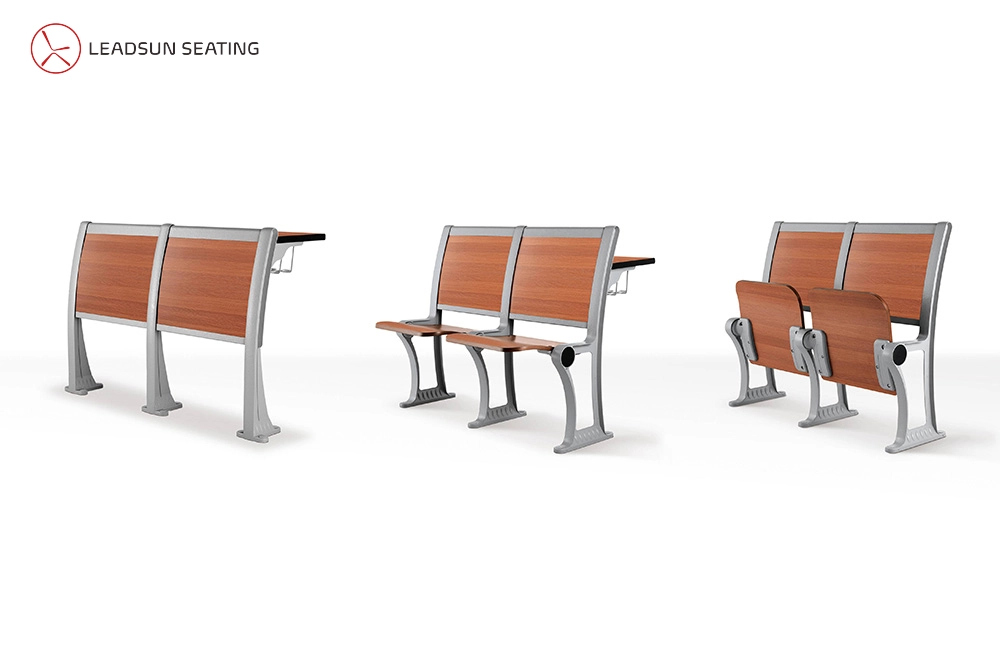
LS-908 Series Fixed Public Auditorium Chair or Tiered Classroom Solutions by Leadsun Seating
Introducing the LS-908 Series by Leadsun, your ideal solution for tiered classroom seating and fixed public auditorium chairs. Designed for comfort and durability, this series enhances audience engagement in educational and corporate settings. Discover the perfect blend of functionality and style with Leadsun Seating.
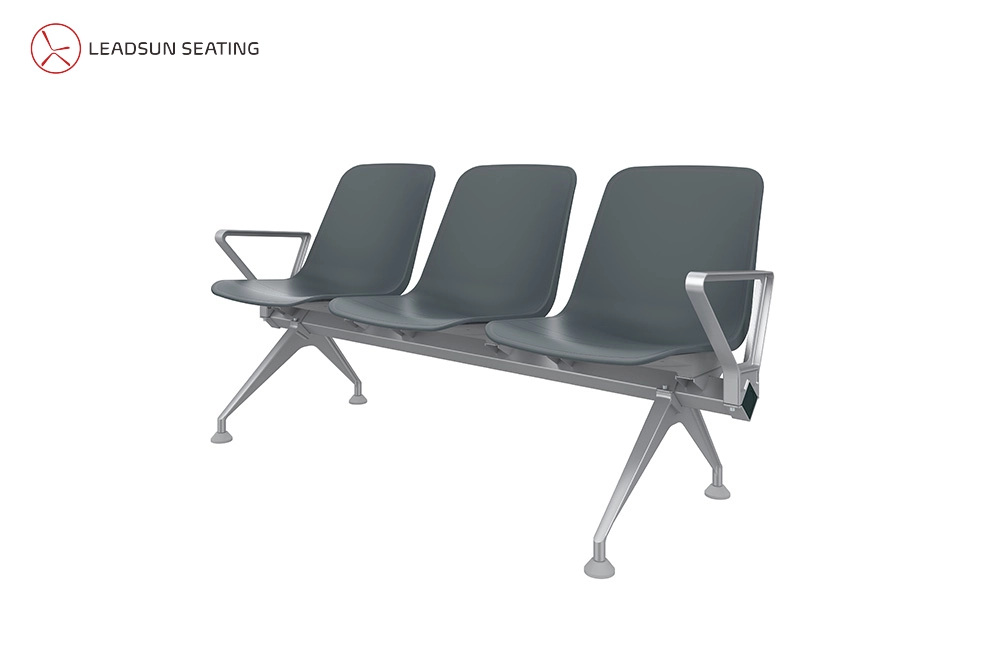
LS-550 Comfortable and Durable Waiting Chair | Customizable Waiting Chair Supplier Leadsun Seating
The LS-550 waiting chair from Leadsun offers superior comfort and durability for any public place. Customize your seating with Leadsun, a leading customizable waiting chair supplier. Ideal for high-traffic areas, the LS-550 ensures lasting performance and style.
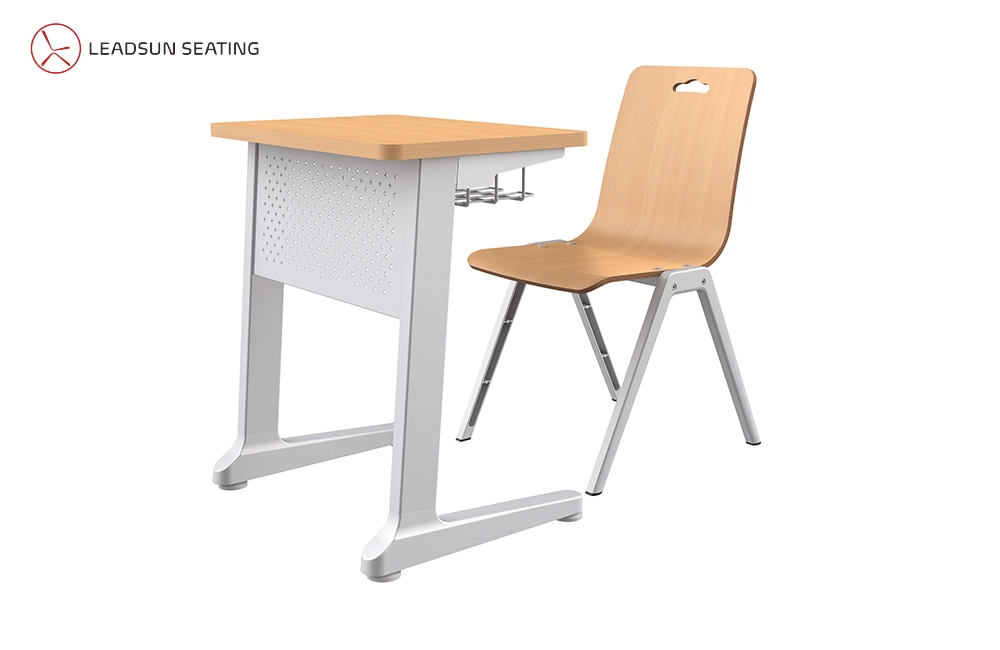
LS-9301 Single movable classroom chair |The Ultimate Flexible Solution for Modern Classrooms by Leadsun Seating
Leadsun's LS-9301 single movable classroom chair offers ultimate flexibility for modern learning environments. This activity desk and chair solution ensures comfortable and adaptable seating for students. Ideal for dynamic classrooms.
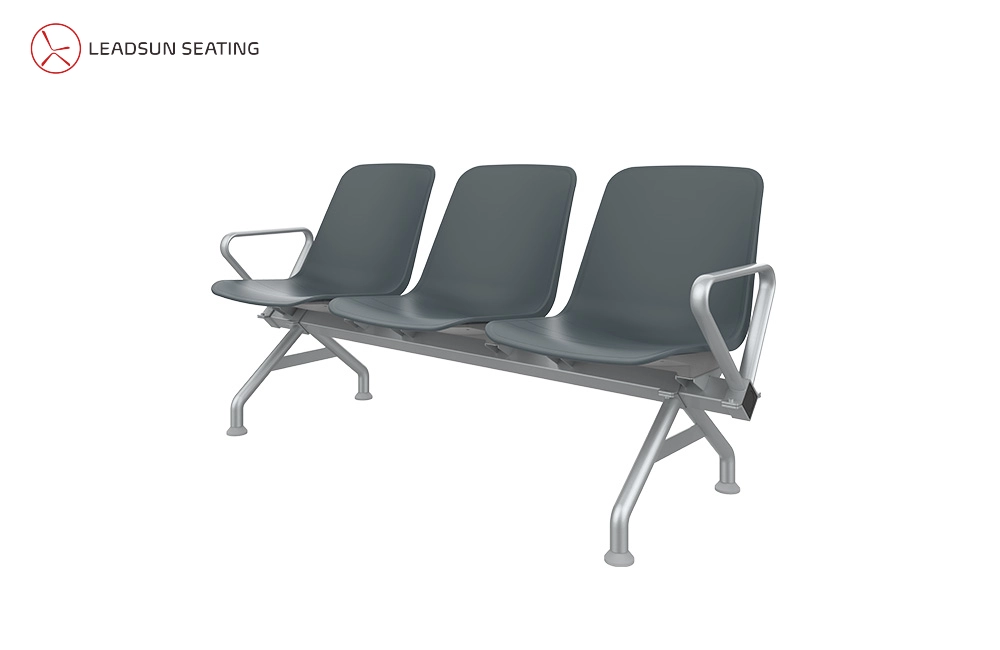
LS-551 Ergonomic Modular Waiting Chairs | Commercial Seating Solutions by Leadsun Seating
Leadsun's LS-551 Ergonomic Modular Waiting Chairs offer superior comfort for any commercial space. Ideal for hospitals, airports, and more, these modular chairs provide flexible configurations and ergonomic support. Experience unmatched comfort and style with Leadsun Seating.
Get in touch with us
If you have any comments or good suggestions, please leave us a message, later our professional staff will contact you as soon as possible.

Leadsun Seating is also engaged in the design, development, production, and marketing of lightweight public seats in public places, with an annual output of desks and chairs.
 Scan QR Code