







Cappuccino Beam Seating vs Traditional Fixed Seating
- Designing Efficient Learning Spaces: Seating Choices that Matter
- Why the seating decision matters for lecture halls and public spaces
- What is cappuccino beam seating? An overview
- What we mean by traditional fixed seating
- Side-by-side comparison: cappuccino beam seating vs traditional fixed seating
- Performance factors you should evaluate (not just price)
- 1. Usable capacity and sightlines
- 2. Acoustic and comfort considerations
- 3. Accessibility and code compliance
- Cost and lifecycle analysis: practical ranges and approach
- Ergonomics and user comfort: what research and standards say
- Maintenance, cleaning and infection control
- When to choose cappuccino beam seating — practical decision rules
- When traditional fixed seating is preferable
- Specifying for procurement: checklist for bids
- Leadsun: High Quality Seating Solutions for Global Public Spaces Since 1998
- Core expertise & products
- Why choose Leadsun?
- Decision framework — checklist for final selection
- Frequently Asked Questions (FAQ)
- 1. What is the main difference between cappuccino beam seating and traditional fixed seating?
- 2. Is beam seating less durable than fixed pedestals?
- 3. Which option is cheaper overall?
- 4. Can cappuccino beam seating accommodate accessible/wheelchair spaces?
- 5. Are beam-mounted seats harder to clean?
- 6. How do I evaluate comfort for long lectures?
- Contact / Product inquiry
- References
Designing Efficient Learning Spaces: Seating Choices that Matter
Why the seating decision matters for lecture halls and public spaces
Choosing the right seating system affects capacity, sightlines, accessibility, maintenance budgets, and the learner/user experience. In higher education, corporate training rooms, and other high-traffic public venues, specifiers often weigh modern modular systems such as cappuccino beam seating against time-tested traditional fixed seating. This article gives facility managers, architects, and procurement teams a practical, evidence-based comparison so you can select the right solution for performance, cost, and longevity.
What is cappuccino beam seating? An overview
Cappuccino beam seating refers to a style of tandem seating mounted on continuous steel beams (often painted in neutral or dark tones such as cappuccino). Each row is a linear assembly of seats attached to one or more longitudinal beams anchored to the floor, rather than fully independent fixed-chair pedestals at each seat. Key attributes include space efficiency, modularity, and simplified cleaning and maintenance. The name may be used generically by manufacturers to describe a family of beam-mounted seating products tailored for lecture halls, waiting areas, and transit spaces.
What we mean by traditional fixed seating
Traditional fixed seating generally refers to individually mounted seats—each with its own pedestal or fixed floor mount—installed in rigid rows. In lecture halls, these are often upholstered or hard-shell seats bolted to the floor, with fixed spacing and limited reconfiguration options. This approach has long been a standard due to its perceived robustness and straightforward installation.
Side-by-side comparison: cappuccino beam seating vs traditional fixed seating
Below is a direct comparison to help you evaluate trade-offs across common procurement criteria. Data ranges and qualitative assessments are drawn from industry standards, market reports, and manufacturer product literature.
| Feature | Cappuccino Beam Seating | Traditional Fixed Seating |
|---|---|---|
| Space efficiency (seat layout) | High — shared beam reduces pedestal footprint; typical seat pitch in lecture applications: 450–550 mm depending on local code and comfort requirements (industry manufacturer ranges). | Moderate — individual pedestals create more fixed floor interference; pitch similar but aisle/maintenance clearances can reduce usable capacity. |
| Flexibility / Reconfiguration | Moderate — rows can be added/removed as modular assemblies, but full reconfiguration requires beam relocation. | Low to Moderate — individual seats can be unbolted and replaced, but whole-row adjustments are labor-intensive. |
| Installation complexity | Lower per-seat labor when installing long beam sections; alignment critical but fewer anchors. | Higher per-seat labor; more anchors and precise pedestal placement required. |
| Cleaning and maintenance | Easier — open under-seat area and continuous beam allow faster cleaning; replacement of individual seats straightforward. | Harder — pedestals leave more obstacles; replacement of individual seats also possible but floor anchors complicate access. |
| Durability & lifespan | High — well-engineered beams distribute loads; expected service life 15–25+ years when maintained (manufacturer warranties vary). | High — rugged pedestals and bolted connections; similar lifespan if quality components used. |
| Initial cost (indicative) | Typically competitive — cost efficiencies on installation and materials for long rows; actual prices vary by spec, upholstery, and features. | Often higher per seat installed due to more anchors and installation time; depends on specification. |
| Accessibility (ADA / local codes) | Good — can be designed with removable sections and integrated wheelchair spaces. | Good — individual seat layout can be adjusted but may require more planning. |
| Aesthetic options | Wide — modular panels, different shells, tablet arms, and finishes; beam color options add uniformity. | Wide — broad range of shell styles, upholstery, and arm types. |
Sources: manufacturer product specifications and industry reports (see References).
Performance factors you should evaluate (not just price)
1. Usable capacity and sightlines
Beam systems can often increase usable capacity per square meter because there are fewer obstructions on the floor plane and seating can be aligned more closely while retaining consistent sightlines. For lecture halls where maximum seating density matters, cappuccino beam seating often offers an advantage.
2. Acoustic and comfort considerations
Seat shell materials, upholstery foam density, and seat contouring determine acoustic absorption and comfort more than mounting method. Specify foam and fabric to meet expected duty cycles—higher foam density and abrasion-resistant textiles for heavy use environments.
3. Accessibility and code compliance
Both systems can meet accessibility standards. For beam seating, plan removable modules or dedicated wheelchair spaces. Verify local building codes for aisle width, handrail placement, and egress routes before finalizing layout.
Cost and lifecycle analysis: practical ranges and approach
Life-cycle cost, not just initial purchase price, determines long-term value. Consider installation labor, expected maintenance intervals, replacement component availability, and cleaning regimes.
| Item | Cappuccino Beam Seating (typical) | Traditional Fixed Seating (typical) |
|---|---|---|
| Initial procurement cost (per seat, estimated) | USD 150–450 depending on shell, upholstery, tablet arm, and beam length | USD 180–520 depending on pedestal type, upholstery, and integrated features |
| Annual maintenance (per seat, estimated) | USD 5–20 (cleaning, minor repairs, replacement parts) | USD 7–25 (cleaning, tightening, pedestal repair) |
| Expected service life | 15–25+ years with planned maintenance | 15–25+ years with planned maintenance |
Notes: these ranges are indicative and depend on specification, geography, and labor rates. For procurement budgeting, request total installed quotes (including freight and installation) and a spare-parts kit to support long-term maintenance.
References for market pricing and lifecycle approach: industry market analysis and BIFMA guidance (see References).
Ergonomics and user comfort: what research and standards say
Good seating design reduces fatigue and supports attention. Workplace and institutional ergonomics guidance (OSHA and other authorities) emphasize lumbar support, appropriate seat width, and adequate legroom for extended seating. Whether beam-mounted or individually pedestaled, seats should meet ergonomic benchmarks for the intended dwell time (e.g., short-term waiting vs. multi-hour lectures).
Design tip: choose seats with easily replaceable upholstery panels and modular components so damaged or dirty parts can be swapped without replacing the whole seat.
Maintenance, cleaning and infection control
Beam seating generally simplifies routine cleaning because the under-seat area is more open and continuous beams allow faster sweeping and vacuuming. Select upholstery finishes with antimicrobial or stain-resistant treatments where hygiene is a priority. Verify fabric performance ratings (Martindale / Wyzenbeek) for abrasion resistance in high-use environments.
When to choose cappuccino beam seating — practical decision rules
- If you need to maximize capacity per square meter and reduce installation time for long, continuous rows.
- If you value streamlined cleaning and modular replacement of seating modules.
- If your project budget favors lower installed labor costs without sacrificing durability.
When traditional fixed seating is preferable
- When highly customized, sculpted pedestals or ornate single-seat installations are required for aesthetics or unique architectural features.
- If you need full flexibility to move or re-purpose single seats frequently (though this is rare in fixed lecture halls).
- Where very heavy-duty, individual pedestals are specified for extreme abuse environments.
Specifying for procurement: checklist for bids
Include the following items in RFPs to get comparable bids:
- Seat shell type, foam density, and fabric performance (abrasion rating, fire rating).
- Beam material, finish, and anchoring details; required floor types and tolerances.
- Warranty terms for structure, upholstery, and moving parts.
- Installation scope (site prep, anchoring, leveling) and time estimates.
- Availability of spare parts and lead times.
- Testing standards compliance (BIFMA or equivalent).
Leadsun: High Quality Seating Solutions for Global Public Spaces Since 1998
Leadsun is a leading China-based manufacturer of high-quality, durable seating solutions for demanding commercial environments. With over 25 years of expertise, Leadsun engineers comfort, durability, and functionality into every product for global clients.
Core expertise & products
- Airport Seating Manufacturer: Robust, easy-maintain airport waiting area seating for high traffic, security, and comfort.
- Ergonomic Chair Specialist: Ergonomic office chairs and desk chairs designed for well-being and productivity.
- Lecture Hall Seating Supplier: Space-efficient, durable lecture hall seating and tiered solutions, including beam-mounted systems like cappuccino beam seating.
- Public Waiting Area Seating: Commercial-grade waiting area chairs built for longevity in high-volume spaces.
Why choose Leadsun?
Durability & Value: High Quality materials and rigorous standards ensure durability and low lifetime cost. Ergonomic Comfort: Designs prioritize user well-being for extended use. Global OEM/ODM Partner: Reliable bulk order manufacturing, customization (ODM/OEM), and export logistics for B2B. Tailored Solutions: Deep experience in public spaces, airports, education, and offices.
Leadsun product lines include Lecture hall seating, Waiting Chair, Fixed desks and chair, Activity desks and chairs, beam seating, Tandem seating, Airport Seating, Ergonomic Chair, Desk Chairs. The company emphasizes competitive pricing, rigorous quality control, and decades of manufacturing expertise—making it a strong partner for large-scale installations that require proven durability, modularity, and after-sales support.
Decision framework — checklist for final selection
1) Confirm target capacity and floor constraints. 2) Prioritize whether upfront cost or lifecycle cost drives procurement. 3) Verify maintenance staff skills and spare-parts logistics. 4) Check code and accessibility requirements. 5) Request physical mock-ups where possible and a small pilot if project scale allows.
Frequently Asked Questions (FAQ)
1. What is the main difference between cappuccino beam seating and traditional fixed seating?
The principal difference is the mounting method: cappuccino beam seating uses continuous beams that carry multiple seats, reducing floor anchors and improving space efficiency; traditional fixed seating uses individual pedestals bolted to the floor for each seat.
2. Is beam seating less durable than fixed pedestals?
No — when engineered correctly, beam seating is equally durable because the beam distributes load across multiple supports. Durability depends on materials, finish, and maintenance rather than mounting type alone. Look for manufacturer warranties and BIFMA testing where applicable.
3. Which option is cheaper overall?
Initial installed cost for beam seating is often competitive due to faster installation for long rows; lifecycle costs depend on maintenance, warranty, and replacement parts. Obtain total installed quotes and consider 10–20 year lifecycle costs rather than unit price alone.
4. Can cappuccino beam seating accommodate accessible/wheelchair spaces?
Yes — modular beam rows can be designed with removable sections or planned gaps to create wheelchair-accessible spaces complying with local accessibility codes.
5. Are beam-mounted seats harder to clean?
Actually, beam seating typically simplifies cleaning because the under-seat area is more continuous and less cluttered with pedestals. This is an advantage in high-traffic public spaces and educational institutions.
6. How do I evaluate comfort for long lectures?
Check seat dimensions (width, depth, lumbar contour), foam density, and upholstery breathability. Request sample seats and, if possible, a small trial with representative users. Ergonomics guidance from industry leaders helps set minimum comfort specifications.
Contact / Product inquiry
If you’re specifying seating for a lecture hall or public space and want tailored advice or quotations, contact Leadsun for product brochures, technical drawings, and sample units. For large projects, request an on-site survey and a detailed proposal including lifecycle cost analysis, warranty, and lead times.
References
- BIFMA — Business and Institutional Furniture Manufacturers Association: Standards and testing guidance for commercial furniture. Accessed: 2024-06-01. https://www.bifma.org/
- Grand View Research — Public Seating Market Analysis: market drivers and product trends. Accessed: 2024-05-10. https://www.grandviewresearch.com/industry-analysis/public-seating-market
- Steelcase Research — Learning Spaces and ergonomics insights for educational environments. Accessed: 2024-05-10. https://www.steelcase.com/research/articles/topics/learning-spaces/
- OSHA — Ergonomics: general guidance on ergonomic principles applicable to seating design and user well-being. Accessed: 2024-05-10. https://www.osha.gov/ergonomics
- Leadsun official site — product lines and corporate overview. Accessed: 2025-11-30. https://www.leadsun.com/
Wholesale chair airport manufacturer and supplier
ADA-Compliant Waiting Room Chairs: Accessibility Requirements
ADA Compliance for Cappuccino Beam Seating Layouts
Wholesale computer training room tables manufacturer and supplier
FAQs
Are your products compliant with safety and accessibility standards?
-
Absolutely. All of our seating solutions comply with relevant safety regulations and accessibility standards, ensuring comfort and safety for all users, including those with special needs.
-
What materials are used in the production of your public seating?
We use a variety of durable materials such as stainless steel, aluminum, wood, high-quality upholstery, and advanced polymers to ensure that our seating solutions are both functional and long-lasting.
What is the lead time for custom seating orders?
The lead time for custom seating orders varies depending on the complexity of the design and the order size. Typically, it takes 4-6 weeks for production, with shipping times depending on your location.
One Stop Airport Terminal Seating
What does the after-sales service include?
Our after-sales service covers daily maintenance guidance, regular inspections, fault repairs, and component replacements. Our professional after-sales team is available 24/7 to ensure the long-term stable operation of the seats.
What is the one-stop airport terminal lounge seating solution?
This solution covers the entire process, from initial needs assessment, personalized design, and professional manufacturing, to installation, delivery, and after-sales maintenance. It offers an integrated seating configuration service for airports, eliminating the need for coordinating with multiple parties.
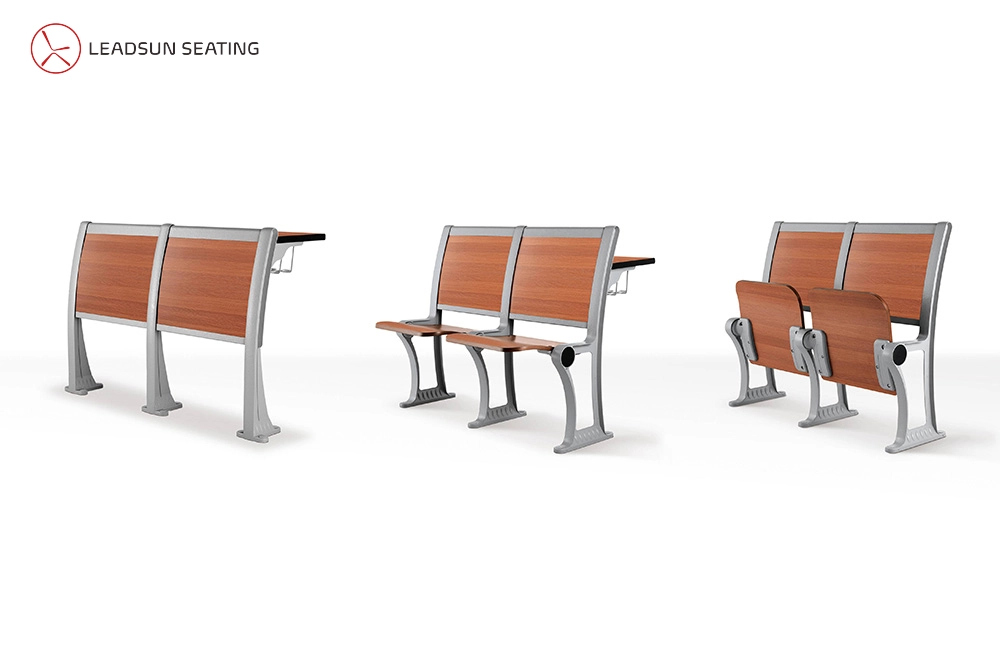
LS-908 Series Fixed Public Auditorium Chair or Tiered Classroom Solutions by Leadsun Seating
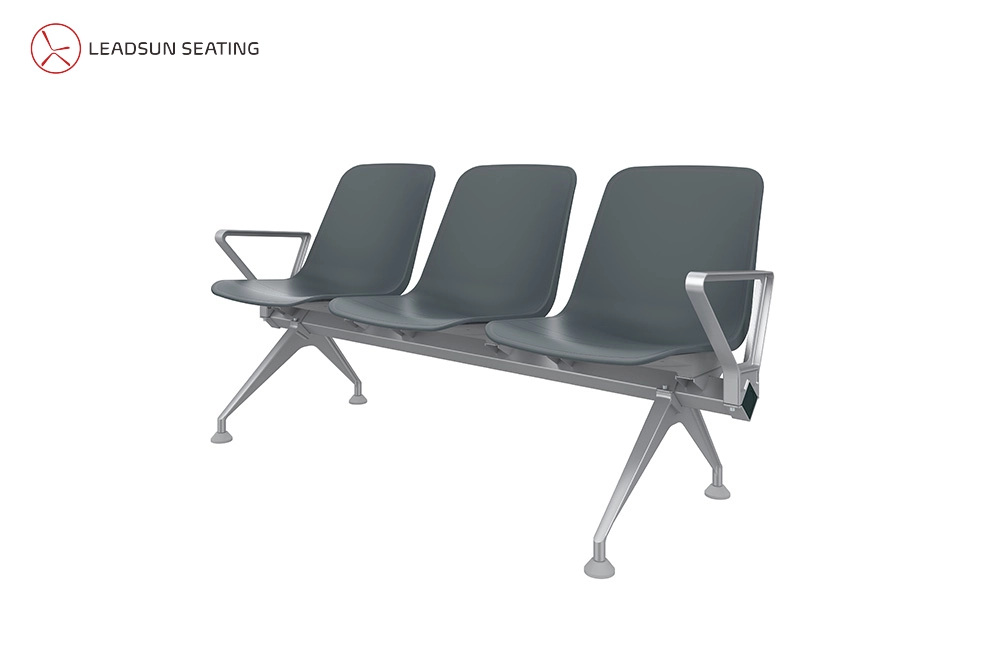
LS-550 Comfortable and Durable Waiting Chair | Customizable Waiting Chair Supplier Leadsun Seating
The LS-550 waiting chair from Leadsun offers superior comfort and durability for any public place. Customize your seating with Leadsun, a leading customizable waiting chair supplier. Ideal for high-traffic areas, the LS-550 ensures lasting performance and style.
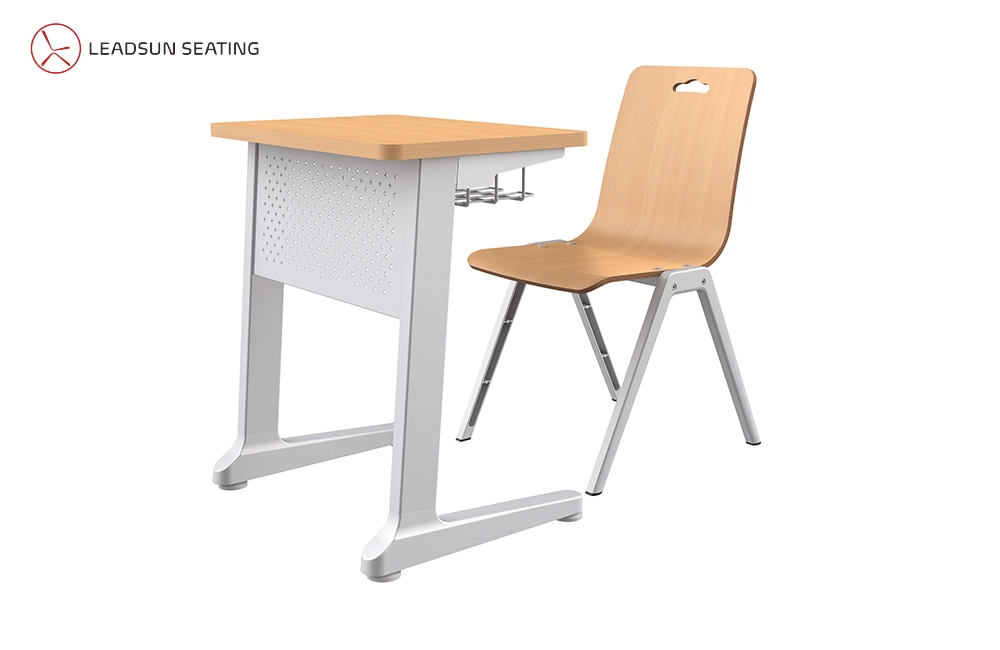
LS-9301 Single movable classroom chair |The Ultimate Flexible Solution for Modern Classrooms by Leadsun Seating
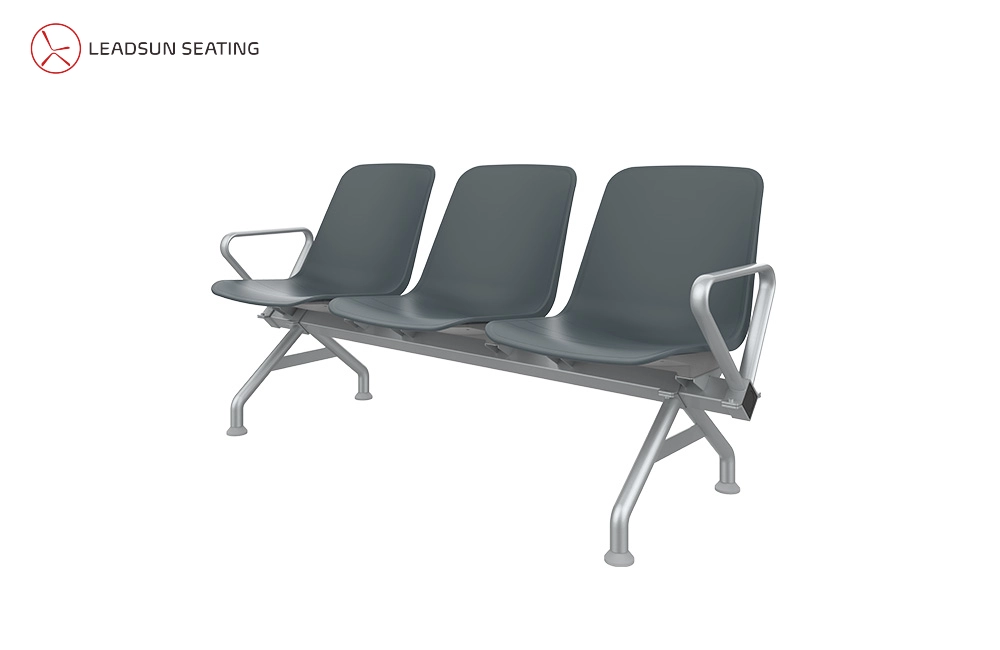
LS-551 Ergonomic Modular Waiting Chairs | Commercial Seating Solutions by Leadsun Seating

Leadsun Seating is also engaged in the design, development, production, and marketing of lightweight public seats in public places, with an annual output of desks and chairs.
 Scan QR Code