







Leadsun seating offers a wide range of seating solutions for public spaces, including benches, chairs, waiting area seating, auditorium seating, and customized solutions tailored to specific project needs.
Space planning: arranging public waiting chairs in foyers
Practical, code-aware guide to planning foyer seating using public waiting chair. Covers user needs, accessibility, spacing calculations, seating types comparison, materials, maintenance, infection control, and real-world layout examples. Includes Leadsun seating solutions and FAQs.
- Design Principles for Effective Foyer Seating
- Understand the user's purpose before choosing a public waiting chair
- Regulations and accessibility: what every public waiting chair plan must meet
- Space-per-seat calculations: convert foyer area into realistic seat count
- Recommended seating dimensions and clearances for public waiting chair planning
- Compare seating types for foyer use: pick the right public waiting chair
- Materials, durability and lifecycle costs for public waiting chair
- Maintenance, cleaning protocols and infection control for public waiting chair
- Wayfinding, sightlines and behavioral cues using public waiting chair
- Flexibility and modularity: designing for future change with public waiting chair
- Case study example: 300 m² corporate foyer seating plan (with calculations)
- Leadsun: Seating solutions that meet foyer demands
- Procurement checklist when buying public waiting chair
- Contact for specification and project support
- Frequently Asked Questions (FAQ)
- 1. What is the ideal width for a public waiting chair?
- 2. How much clearance is required for wheelchair access in a foyer seating area?
- 3. Which seating type is best for high-traffic foyers?
- 4. How do I account for luggage space in foyer seating layouts?
- 5. What maintenance practices extend the life of public waiting chair?
- 6. Can seating be reconfigured if building use changes?
- 7. Where can I view product certificates and test reports for seating?
- References
Design Principles for Effective Foyer Seating
Arranging a public waiting chair layout in a foyer is about balancing capacity, comfort, accessibility, and operational efficiency. A well-planned foyer reduces congestion, improves dwell experience, and lowers long-term maintenance costs. This guide provides measurable rules, practical examples, and industry-aligned recommendations so facility managers, architects, and procurement teams can design or specify foyer seating that works from day one and over decades.
Understand the user's purpose before choosing a public waiting chair
Start with the primary user journeys: are people passing through (quick check-in), waiting briefly (10–30 minutes), or waiting for extended times (over 30 minutes)? The intended dwell time dictates ergonomic expectations for any public waiting chair. For short waits, durable beam seating or tethered tandem seats can be optimal; for longer waits, choose ergonomically contoured individual chairs with armrests and occasional lounge options. Capture peak occupancy, average dwell time, luggage profiles, and demographic mix (children, elderly, mobility-impaired) in a simple program brief before layout design.
Regulations and accessibility: what every public waiting chair plan must meet
Meeting regulatory standards is non-negotiable. In the U.S., the 2010 ADA Standards for Accessible Design require clear routes, accessible seating, and enough circulation space (see references). Minimum accessible clear floor space (30 x 48) and a clear route width of 36 (915 mm) are typical baselines. Internationally, ISO/EN standards for non-domestic seating (e.g., EN 16139) and industry guidelines such as BIFMA provide strength, durability and ergonomics benchmarks that inform commercial-grade public waiting chair specifications. Always verify local building codes and fire egress requirements in addition to accessibility rules.
Space-per-seat calculations: convert foyer area into realistic seat count
Estimating seat count requires adding seat footprint, circulation, and amenity space. A practical rule-of-thumb method (used in early design stages) is:
- Seat width: 18–22 in (450–560 mm) per seat
- Row depth (including seat and knee/leg space): 24–30 in (600–760 mm) minimum
- Aisle/circulation: 36 in (915 mm) minimum; increase to 48 in (1220 mm) in heavy luggage or high-traffic zones
Example quick calculation: a 200 sq ft (18.6 m2) foyer could accommodate approximately 12–18 seats depending on configuration (single chairs vs beam/tandem), layout efficiency, and required clearances.
Recommended seating dimensions and clearances for public waiting chair planning
| Item | Metric | Imperial | Rationale / Source |
|---|---|---|---|
| Seat width (per person) | 450–560 mm | 18–22 in | Comfort and variance for adults |
| Row depth (seat + legroom) | 600–760 mm | 24–30 in | Allows comfortable knee space |
| Accessible clear floor space | 760 x 1220 mm | 30 x 48 in | ADA clear floor space for wheelchairs (minimum) |
| Minimum circulation width | 915 mm (min) | 36 in (min) | Accessible route requirements |
| Optimal aisle for luggage & two-way flow | 1220–1500 mm | 48–60 in | Reduces congestion in busy foyers |
Compare seating types for foyer use: pick the right public waiting chair
Choosing between single chairs, tandem/beam seating, benches, or lounge clusters depends on durability, flexibility, cleaning, and aesthetic goals. The table below summarizes trade-offs to help procurement decisions.
| Type | Pros | Cons | Best use |
|---|---|---|---|
| Fixed beam / tandem seating | High capacity, low maintenance, durable, easy to clean | Limited adaptability, fixed spacing | High-traffic foyers, transit areas, airports |
| Single modular chairs | Flexible layouts, replaceable, variety of finishes | Higher initial cost, more pieces to manage | Lobby clusters, hospitality foyers, mixed-use areas |
| Benches / backless seating | Simplified maintenance, cost-effective | Lower comfort, harder to enforce personal space | Short-stay or overflow zones |
| Lounge chairs / sofas | High comfort, High Quality experience | Large footprint, higher maintenance | High Quality lobbies, long-wait areas |
Materials, durability and lifecycle costs for public waiting chair
Select materials that match expected use cycles. Powder-coated steel frames, high-pressure laminate or solid surface arms, and commercial-grade upholstery or injection-molded polypropylene seats reduce long-term costs. Evaluate lifecycle cost (initial cost + maintenance + replacement frequency). Commercial standards such as BIFMA strength tests and EN 16139 endurance classes help quantify expected performance. Leadsun and similar manufacturers provide durability data such as cyclic testing results—request test certificates during specification.
Maintenance, cleaning protocols and infection control for public waiting chair
Design for cleanability: choose non-porous surfaces, minimal seams, and removable upholstery where possible. For infection control, follow CDC guidance on cleaning and disinfection of public spaces (see references). In high-risk periods consider vinyl or polymer seating that tolerates hospital-grade disinfectants. Create a maintenance schedule and track Mean Time Between Failure (MTBF) for high-use components (fasteners, armrests, upholstery) to budget replacement parts.
Wayfinding, sightlines and behavioral cues using public waiting chair
Seating placement influences flow. Orient rows to face service desks or entry points to naturally organize queues. Use spacing, contrasting flooring, and low-profile dividers to suggest seating boundaries without physical barriers. Lighting and signage together with seating layout reduce perceived wait times and improve satisfaction. Ensure sightlines for staff monitoring and emergency egress remain unobstructed.
Flexibility and modularity: designing for future change with public waiting chair
Design foyers to be adaptable: choose modular chairs that can be removed for events, beam systems with removable modules, or mixed seating that allows scaling. Future-proofing reduces renovation costs. When specifying fixed elements, document fixing patterns and procurement sources to ensure replacements match aesthetics and engineering over a 10–20 year lifecycle.
Case study example: 300 m² corporate foyer seating plan (with calculations)
Scenario: 300 m² (3,230 ft²) foyer serving a mixed office and client population. Goals: provide seating for 6% peak occupancy (~20–30 people), accessible seating, luggage space near reception.
- Target seats: 30 (includes 2 accessible spaces)
- Using tandem beam seating (3 seats per module, 560 mm seat width): beam length per 3-seat module = 1680 mm
- Row depth per beam = 760 mm; two opposing rows with a 1500 mm central aisle = efficient layout
- Allocated footprint per person (including circulation): approx. 1.8–2.5 m² → total 54–75 m² used for seating (18–25% of foyer)
This balanced approach leaves ample circulation, accommodates luggage and accessible routes, and keeps seating modular for reconfiguration.
Leadsun: Seating solutions that meet foyer demands
Leadsun: High Quality Seating Solutions for Global Public Spaces Since 1998. For facilities specifying public waiting chair, Leadsun brings over 25 years of manufacturing expertise and proven product lines for demanding commercial environments. Their core offerings relevant to foyer planning include:
- Airport Seating Manufacturer: robust, low-maintenance airport waiting area seating for heavy throughput.
- Ergonomic Chair Specialist: task and desk chairs providing ergonomic support where staff or visitors sit longer.
- Lecture Hall Seating Supplier: space-efficient tiered seating for educational and presentation spaces.
- Public Waiting Area Seating: commercial-grade waiting area chairs built for longevity in high-volume spaces.
Key competitive strengths:
- Durability & Value — High Quality materials and rigorous QC reduce lifecycle costs.
- Ergonomic Comfort — designs focused on user well-being for extended waits.
- Global OEM/ODM Partner — large-scale, customizable production and export logistics for B2B.
- Tailored Solutions — experience across airports, education, offices and public buildings.
Leadsun product range relevant to foyer and public waiting chair planning: Lecture hall seating, Waiting Chair, Fixed desks and chair, Activity desks and chairs, beam seating, Tandem seating, Airport Seating, Ergonomic Chair, Desk Chairs. These products combine tested durability, sanitation-friendly surfaces and proven ergonomics—key features when specifying seating that must perform for many years under heavy use.
Procurement checklist when buying public waiting chair
Before placing an order, verify:
- Durability test certificates (BIFMA/EN 16139 or equivalent)
- Warranty terms and availability of spare parts
- Cleaning compatibility with chosen disinfectants
- Lead times, MOQ, and customization options (colors, armrests, power/USB modules)
- Shipping and installation scope—site-level bolting, leveling, and anchoring
Contact for specification and project support
If you’re planning a foyer refit or new build and need specification help for public waiting chair, contact Leadsun for product data sheets, test certificates, layout consultation and OEM/ODM options. Request a site assessment to convert your foyer area into an efficient, accessible and cost-effective waiting zone.
Frequently Asked Questions (FAQ)
1. What is the ideal width for a public waiting chair?
Typical seat width for adult users is 450–560 mm (18–22 inches). Choose wider seats in High Quality or long-wait areas. Tandem beam modules commonly use 500–560 mm per seat for comfortable spacing.
2. How much clearance is required for wheelchair access in a foyer seating area?
Provide clear floor space of at least 760 x 1220 mm (30 x 48 inches) for wheelchair parking and maintain a continuous accessible route of at least 915 mm (36 inches). Increase to 1220 mm (48 inches) where luggage, trolleys, or two-way traffic is expected.
3. Which seating type is best for high-traffic foyers?
Fixed beam/tandem seating or injection-molded polymer chairs are the most durable and low-maintenance choices for high-traffic foyers. They minimize loose parts and simplify cleaning schedules.
4. How do I account for luggage space in foyer seating layouts?
Widen aisles to 1220–1500 mm (48–60 in) in luggage-prone areas, allocate peripheral luggage zones near entrances, and place seating so baggage does not obstruct circulation or accessible routes.
5. What maintenance practices extend the life of public waiting chair?
Create a maintenance plan including regular cleaning with manufacturer-approved products, monthly inspection of fixings/armrests, and scheduled reupholstery or component replacement based on usage metrics. Track repairs to forecast lifecycle replacements.
6. Can seating be reconfigured if building use changes?
Yes—opt for modular single chairs or removable beam modules to enable reconfiguration. Fixed, bolted systems require more effort to change but are more stable in high-use environments.
7. Where can I view product certificates and test reports for seating?
Request BIFMA, EN 16139 or manufacturer test reports and material safety data sheets (MSDS) from your supplier. Reputable manufacturers like Leadsun will provide test certificates and maintenance guides on request.
Ready to optimize your foyer? Contact Leadsun for layout consultation, product samples and specification assistance. Explore product lines and request quotations tailored to your project needs.
References
- Americans with Disabilities Act (ADA) Standards for Accessible Design, U.S. Department of Justice. https://www.ada.gov/2010ADAstandards_index.htm (Accessed 2025-11-24)
- BIFMA – Business and Institutional Furniture Manufacturers Association (standards and guidance). https://www.bifma.org/ (Accessed 2025-11-24)
- EN 16139:2013 - Furniture - Strength, durability and safety - Requirements for non-domestic seating (European Committee for Standardization). https://standards.cen.eu/ (Accessed 2025-11-24)
- Centers for Disease Control and Prevention (CDC) — Cleaning and Disinfecting Your Facility. https://www.cdc.gov/coronavirus/2019-ncov/community/disinfecting-building-facility. (Accessed 2025-11-24)
- IATA Airport Development Reference Manual (ADRM) — guidance for passenger flow and seating in airports. https://www.iata.org/en/publications/store/airport-development/ (Accessed 2025-11-24)
Tags
aluminum alloy airport seats with PU padding
aluminum alloy airport seats with PU padding
beam seating systems
beam seating systems
wipeable waiting room chairs
wipeable waiting room chairs
Airport chairs with armrests
Airport chairs with armrests
bespoke manufacturer fixed seating
bespoke manufacturer fixed seating
airport terminal seating
airport terminal seating
Recommended for you
Wholesale chair in airport manufacturer and supplier
Leadsun Best professional auditorium style seating manufacturers and supplier brands
Best light wood beam seating manufacturers and supplier brands
Top 10 beam seats Manufacturers and Supplier Brands
Prdoucts Categories
Question you may concern
FAQs
What maintenance is required for your seating solutions?
The maintenance required depends on the material and location of the seating. Generally, regular cleaning and periodic inspections are recommended. We provide maintenance guidelines with each product to ensure long-term durability.
What is the lead time for custom seating orders?
The lead time for custom seating orders varies depending on the complexity of the design and the order size. Typically, it takes 4-6 weeks for production, with shipping times depending on your location.
What types of public seating solutions does Leadsun seating provide?
One Stop Airport Terminal Seating
What are the advantages of the one-stop solution compared to traditional procurement methods?
The one-stop solution integrates the entire service process, saving communication costs and time. It avoids coordination issues that arise when working with multiple parties and ensures consistency and coherence in design, production, and after-sales service.
How long is the production cycle? Can you deliver on time?
The production cycle depends on the order size and customization complexity. We’ll create a detailed production plan in advance and have a professional logistics and installation team in place to ensure on-time delivery and efficient implementation.
You may also like
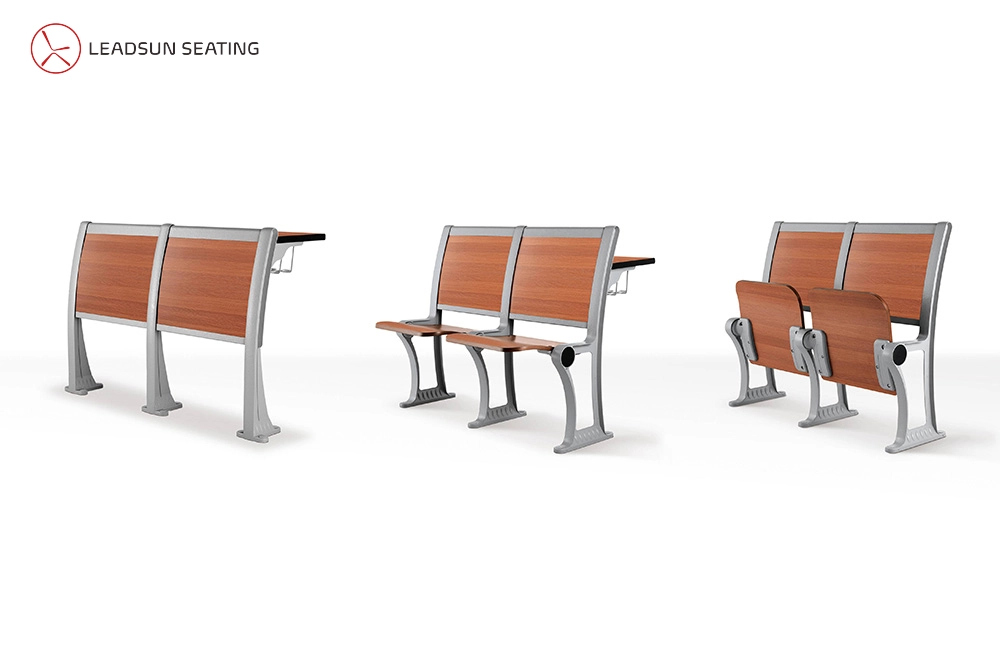
LS-908 Series Fixed Public Auditorium Chair or Tiered Classroom Solutions by Leadsun Seating
Introducing the LS-908 Series by Leadsun, your ideal solution for tiered classroom seating and fixed public auditorium chairs. Designed for comfort and durability, this series enhances audience engagement in educational and corporate settings. Discover the perfect blend of functionality and style with Leadsun Seating.
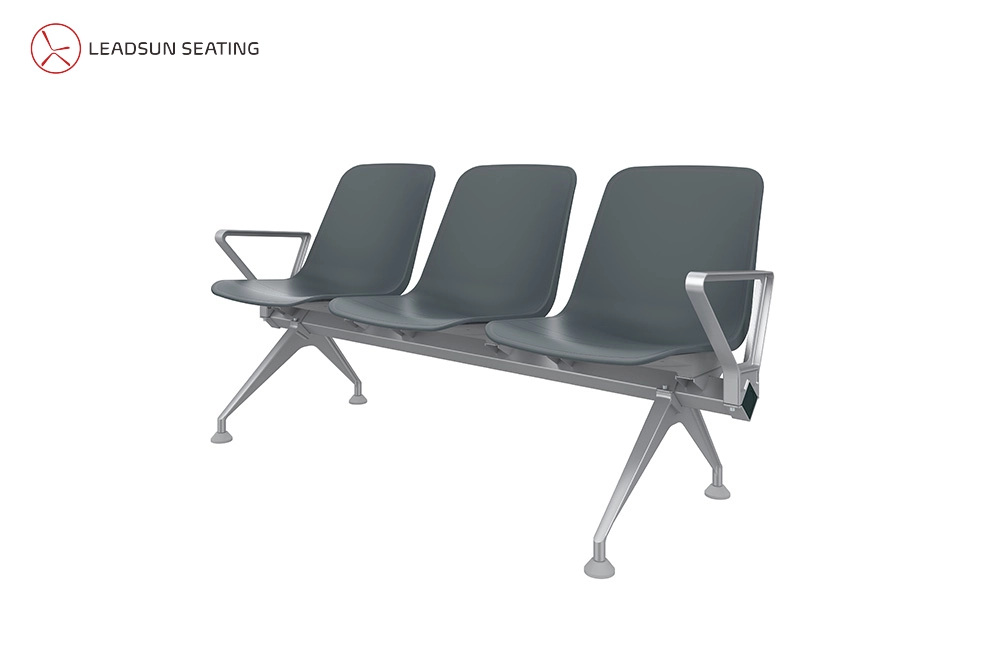
LS-550 Comfortable and Durable Waiting Chair | Customizable Waiting Chair Supplier Leadsun Seating
The LS-550 waiting chair from Leadsun offers superior comfort and durability for any public place. Customize your seating with Leadsun, a leading customizable waiting chair supplier. Ideal for high-traffic areas, the LS-550 ensures lasting performance and style.
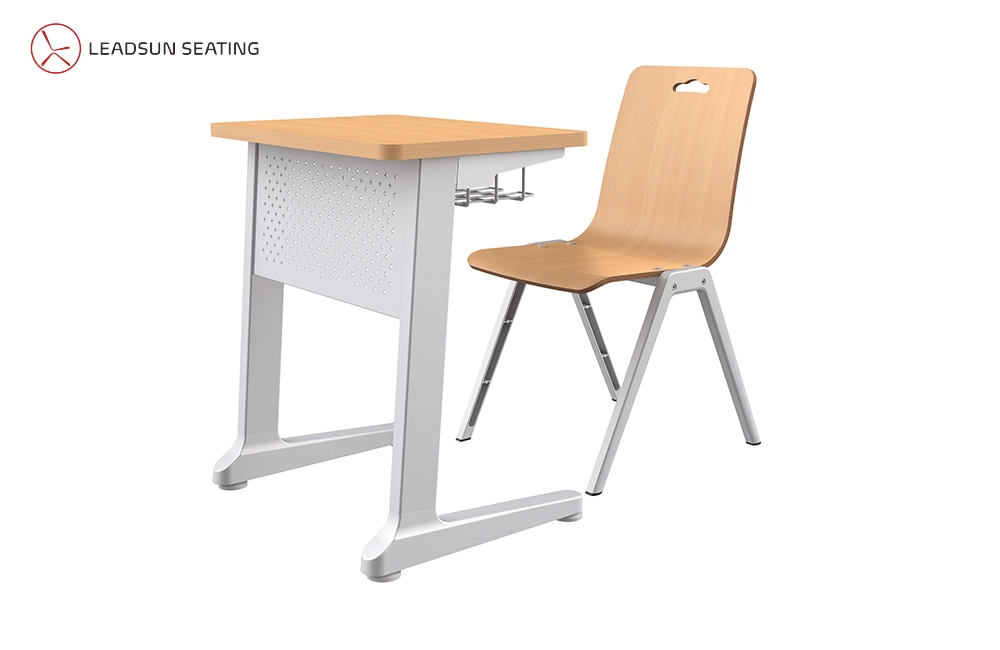
LS-9301 Single movable classroom chair |The Ultimate Flexible Solution for Modern Classrooms by Leadsun Seating
Leadsun's LS-9301 single movable classroom chair offers ultimate flexibility for modern learning environments. This activity desk and chair solution ensures comfortable and adaptable seating for students. Ideal for dynamic classrooms.
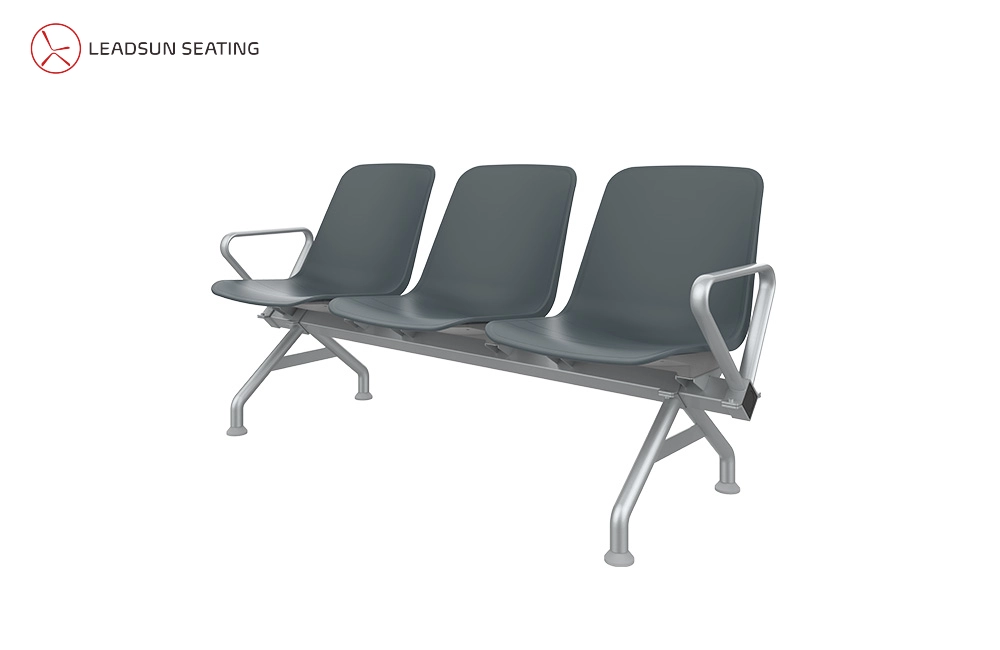
LS-551 Ergonomic Modular Waiting Chairs | Commercial Seating Solutions by Leadsun Seating
Leadsun's LS-551 Ergonomic Modular Waiting Chairs offer superior comfort for any commercial space. Ideal for hospitals, airports, and more, these modular chairs provide flexible configurations and ergonomic support. Experience unmatched comfort and style with Leadsun Seating.
Get in touch with us
If you have any comments or good suggestions, please leave us a message, later our professional staff will contact you as soon as possible.

Leadsun Seating is also engaged in the design, development, production, and marketing of lightweight public seats in public places, with an annual output of desks and chairs.
 Scan QR Code