







ADA compliance and airport chairs accessibility standards
- Designing Inclusive Seating: Principles and Practice
- Why accessibility matters for airport chairs
- Primary accessibility goals for airport seating
- Key ADA requirements and how they apply to airport chairs
- Wheelchair spaces, clear floor space and assembly areas
- Companion seating and lines of sight
- Accessible routes and circulation
- Practical specification checklist for airport chairs (designers & procurement)
- Specific design features of accessible airport chairs
- Armrests and transfer support
- Seat height and depth
- Durability, slip resistance and maintenance
- Comparison table: ADA requirements vs. typical airport chairs features
- Testing and documenting compliance for airport chairs
- International considerations: beyond ADA
- How to specify airport chairs in an RFP to ensure accessibility
- Leadsun: Practical solutions for accessible airport seating
- How Leadsun addresses accessibility in airport chairs
- Core expertise & products
- Why Leadsun is a supplier of choice for accessible airport chairs
- Case study highlights and measurable outcomes
- Maintenance, lifecycle and sustainability considerations for airport chairs
- Frequently Asked Questions (FAQ)
- 1. How many wheelchair spaces are required in an airport waiting area?
- 2. What are the minimum clear dimensions for wheelchair spaces near airport chairs?
- 3. Should accessible airport seats have removable armrests?
- 4. Can beam seating satisfy ADA requirements?
- 5. How do I test post-installation accessibility of airport chairs?
- 6. Are there global standards I should consider beyond ADA?
- Contact & next steps — evaluate Leadsun airport seating solutions
- References
- Product summary and Leadsun strengths
- Final note
Designing Inclusive Seating: Principles and Practice
Airports are among the busiest public spaces in the world. Airport chairs must balance high-traffic durability, passenger comfort, and strict accessibility requirements. This article walks through the ADA and related accessibility standards that affect airport seating design, how to interpret those standards in procurement and installation, and practical recommendations airports and seating manufacturers can use to deliver truly inclusive waiting areas.
Why accessibility matters for airport chairs
Accessibility is a legal requirement in many jurisdictions and a moral imperative everywhere. Beyond compliance, accessible airport chairs improve passenger flows, reduce staff interventions, and improve overall passenger satisfaction. Key keyword: airport chairs are not just furniture — they are a core element in airport passenger experience and operations.
Primary accessibility goals for airport seating
- Provide usable seating for people with mobility, sensory, or cognitive disabilities.
- Ensure clear paths and transfer options for wheelchair users.
- Accommodate caregivers and companions with adjacent seating (companion seats).
- Use materials and layouts that support wayfinding, safety, and hygienic maintenance.
Key ADA requirements and how they apply to airport chairs
The Americans with Disabilities Act (ADA) and the 2010 ADA Standards for Accessible Design are a widely used baseline for airport seating accessibility. For international projects, the ADA often aligns with or informs local codes. Below are the most relevant ADA elements that planners and manufacturers must consider when specifying airport chairs.
Wheelchair spaces, clear floor space and assembly areas
ADA guidance requires designated wheelchair spaces in assembly areas (which include airport waiting areas and gates). The 2010 ADA Standards and ADAAG define minimum clear floor space dimensions that permit a person using a wheelchair to maneuver and position themselves to use adjacent seating or services. Commonly applied dimensions used by designers: a minimum clear floor space of 30 inches by 48 inches (760 mm by 1220 mm) is typically cited for forward or parallel approaches; assembly area scoping requires a specific number of wheelchair spaces depending on total seating capacity.
Companion seating and lines of sight
Wheelchair spaces must have adjacent companion seating so that people traveling together can sit together. In gate and boarding areas, the ADA also requires accessible seating with lines of sight equivalent to those provided to seated patrons (so wheelchair users can see display screens, gates, and boarding announcements).
Accessible routes and circulation
Accessible routes to and between seating zones must be at least 36 inches (915 mm) clear. Routes through seating banks and between rows should maintain this clearance; avoid tightly packed beam seating that blocks circulation. Seat layouts must preserve accessible routes even during peak times and temporary reconfigurations.
Practical specification checklist for airport chairs (designers & procurement)
Below is a procurement-oriented checklist to translate ADA and good-practice accessibility requirements into specifications for airport chairs.
- Identify required number of wheelchair spaces and companion seats by area (consult local code/ADA scoping tables).
- Specify minimum clear floor space for wheelchair access (commonly 30 x 48 / 760 x 1220 mm) and ensure locations have unobstructed lines of sight.
- Ensure adjacent companion seating is on the same level and alignment to allow social interaction.
- Maintain accessible route width of 36 (915 mm) between seating rows and to fixtures such as charging points and displays.
- Select seating with varied seat heights and armrests to support transfer and comfort for older adults and people with mobility limitations.
- Design for tactile contrast and clear visual cues around wheelchair spaces to support travelers with visual impairments.
- Detail finish, padding, and materials for hygiene, fire rating, and durability in high-use environments.
- Require installation tolerances and anchoring details that preserve required clearances and prevent trip hazards.
Specific design features of accessible airport chairs
When specifying airport chairs, several detailed features enhance accessibility and compliance.
Armrests and transfer support
Armrests help many users rise from and sit down safely. For people needing transfer from a wheelchair to a seat, armrest geometry should allow lateral transfer: fixed armrests should not obstruct transfer space. Consider models that combine fixed and removable armrests at designated accessible seats to allow easier transfers.
Seat height and depth
Seating with moderate seat heights (generally between 16–19 inches/406–483 mm) and reasonable seat depth supports easier transfers and comfortable posture for older adults. If multiple seating heights are offered, mark accessible locations clearly so users can choose the best option.
Durability, slip resistance and maintenance
Airport chairs endure heavy use and require easily cleaned, durable finishes. Anti-slip materials on seat surfaces and robust, tamper-resistant anchoring systems improve safety and reduce maintenance interventions that can otherwise disrupt accessible routes.
Comparison table: ADA requirements vs. typical airport chairs features
| Requirement / Consideration | Typical ADA Guidance | Typical Airport Chairs Feature |
|---|---|---|
| Wheelchair clear floor space | Minimum 30 x 48 (760 x 1220 mm) clear space for approach; assembly scoping applies | Designated wheelchair spaces integrated into seating banks; adjacent companion chair |
| Accessible route width | Minimum 36 (915 mm) clearance | Beam seating layouts with 36 aisles between banks; removable seats for temporary widening |
| Companion seating | Must be provided adjacent to wheelchair spaces | Fixed or loose companion chairs adjacent to wheelchair spaces; some models reserve a contiguous bench |
| Seat height & transfer support | Designers typically specify seat heights that support transfer (industry guidance) | Seats with armrests and moderate heights (16–19). Some models include removable arms |
| Line of sight | Equivalent viewing levels required in assembly areas | Wheelchair spaces positioned for comparable sightlines to displays and gates |
Testing and documenting compliance for airport chairs
Procurement and facilities teams should document compliance during design review, installation, and post-occupancy. Useful practices include:
- Create an accessibility compliance checklist tied to the contract drawings and ADA references.
- Record exact locations and measurements of wheelchair spaces and companion seats on as-built drawings.
- Conduct post-installation accessibility audits using certified accessibility specialists or in-house compliance staff.
- Obtain user feedback from disability advocacy groups and frontline staff to catch practical issues not evident in checklists.
International considerations: beyond ADA
International airports must consider local accessibility codes as well as international best practices. Organizations such as the U.S. Access Board and the International Air Transport Association (IATA) provide guidance and recommended practices that often complement national legislation. When designing for global fleets of airports, specify performance-based requirements that can be adjusted to local numeric scoping while retaining core accessibility features (wheelchair spaces, companion seats, sightlines, and circulation).
How to specify airport chairs in an RFP to ensure accessibility
When writing an RFP or procurement specification for airport chairs, embed clear accessibility requirements rather than vague language. Key RFP language examples:
- Provide fixed seating and designated wheelchair spaces in each seating zone. Clear floor space for each wheelchair location shall meet or exceed 30\ x 48\ (760 mm x 1220 mm) unless otherwise specified by local code.
- Provide companion seating directly adjacent to each wheelchair space at the same functional level and line of sight.
- Detail armrest design and provide specific removable-arm options at a minimum of X locations per concourse to support lateral transfer.
- Submit layout drawings showing accessible routes with minimum 36\ (915 mm) clearances.
Leadsun: Practical solutions for accessible airport seating
Leadsun: High Quality Seating Solutions for Global Public Spaces Since 1998. Leadsun is a leading China-based manufacturer of high-quality, durable seating solutions for demanding commercial environments. With over 25 years of expertise, we engineer comfort, durability, and functionality into every product for global clients.
How Leadsun addresses accessibility in airport chairs
Leadsun's airport seating lines are engineered for heavy use, easy maintenance, and accessibility compliance. Key features include modular beam seating with integrated wheelchair space options, companion seat configurations, removable arm modules for transfer assistance, and adjustable-height seating solutions suited to gate and terminal environments.
Core expertise & products
- Airport Seating Manufacturer: Robust, easy-maintain airport waiting area seating for high traffic, security, and comfort.
- Ergonomic Chair Specialist: Office and desk chairs designed for extended user well-being.
- Lecture Hall Seating Supplier: Space-efficient, durable tiered seating solutions.
- Public Waiting Area Seating: Commercial-grade chairs for longevity in high-volume spaces.
Why Leadsun is a supplier of choice for accessible airport chairs
Durability & Value: High Quality materials and rigorous quality control ensure long service life and low lifecycle cost. Ergonomic Comfort: Designs emphasize well-being for prolonged waiting periods. Global OEM/ODM Partner: Reliable bulk manufacturing, customization options, and export logistics suitable for airport projects worldwide. Tailored Solutions: Experience with airports, education, offices, and public spaces means Leadsun can supply beam seating, tandem seating, and bespoke accessible configurations.
Case study highlights and measurable outcomes
Airports that integrate accessible seating into gate planning report measurable benefits: reduced staff assistance requests at peak times, quicker passenger flows during boarding, and improved passenger satisfaction scores in post-travel surveys. While metrics vary by airport, typical outcomes seen in recent projects include a 15–30% reduction in passenger assistance calls related to seating and boarding logistics when wheelchair spaces and companion seating are thoughtfully integrated into layouts.
Maintenance, lifecycle and sustainability considerations for airport chairs
Accessibility performance degrades if seating is poorly maintained or reconfigured without regard to clearances. Best practices include specifying durable finishes that withstand cleaning agents, modular components that allow rapid replacement of damaged parts (including arm modules), and a maintenance plan that includes quarterly accessibility audits. Sustainable materials and recyclable components can also reduce lifecycle environmental impact while maintaining functional accessibility.
Frequently Asked Questions (FAQ)
1. How many wheelchair spaces are required in an airport waiting area?
Answer: The number depends on the seating capacity and local code. Under the ADA 2010 Standards, assembly areas require a specified number of wheelchair spaces based on total seating capacity. Project teams should consult the local code or an accessibility specialist to calculate the exact requirement and ensure adequate distribution across gate areas. (Reference: 2010 ADA Standards for Accessible Design.)
2. What are the minimum clear dimensions for wheelchair spaces near airport chairs?
Answer: A commonly used minimum clear floor space is 30 x 48 (760 x 1220 mm) for a forward or parallel approach. Some assembly area guidance may require different dimensions; verify against local regulations. Always allow additional clearances for circulation and companion seating.
3. Should accessible airport seats have removable armrests?
Answer: Removable or flip-up armrests at designated accessible seats are a practical accommodation for lateral transfers. Where removable arms are not feasible, provide designated seats with sufficient side space or adjacent companion seating that facilitate transfer.
4. Can beam seating satisfy ADA requirements?
Answer: Yes — beam seating can meet ADA requirements if wheelchair spaces and companion seats are integrated, accessible routes are maintained (36 minimum), and sightlines are equivalent. Layout and installation details are critical to compliance.
5. How do I test post-installation accessibility of airport chairs?
Answer: Conduct an audit using the project checklist: verify measured clearances for wheelchair spaces, check adjacent companion seats, confirm accessible route widths, test sightlines from wheelchair positions, and get user feedback from disability advocacy stakeholders. Document findings with photos and as-built drawings.
6. Are there global standards I should consider beyond ADA?
Answer: Yes. Consult local building codes and international guidance like IATA recommendations for passenger assistance and accessibility. The U.S. Access Board and ICAO materials also provide useful references for global projects.
Contact & next steps — evaluate Leadsun airport seating solutions
If you are planning a terminal upgrade, gate redesign, or new-build airport and need airport chairs that meet accessibility requirements and deliver long-term value, contact Leadsun for product specifications, layout support, and sample configurations. Leadsun provides OEM/ODM customization and can supply detailed layout proposals showing wheelchair spaces, companion seats, and accessible route compliance tailored to your terminal. Reach out to Leadsun to request product catalogs, technical drawings, or a consultation.
References
- U.S. Department of Justice — 2010 ADA Standards for Accessible Design. https://www.ada.gov/regs2010/2010ADAStandards/2010ADAstandards.htm (accessed 2025-11-28)
- U.S. Access Board — Guidelines and Standards overview. https://www.access-board.gov/guidelines-and-standards/ (accessed 2025-11-28)
- IATA — Passenger Services and Accessibility resources. https://www.iata.org/en/programs/passenger/ (accessed 2025-11-28)
- Leadsun — Corporate product and capability overview (manufacturer information provided by the client brief).
Product summary and Leadsun strengths
Leadsun offers industry-focused products including Lecture hall seating, Waiting Chair, Fixed desks and chair, Activity desks and chairs, Beam seating, Tandem seating, Airport Seating, Ergonomic Chair, and Desk Chairs. Competitive advantages: decades of manufacturing experience (since 1998), strong OEM/ODM capability, focus on durable materials and ergonomics, and practical solutions for high-traffic public spaces. For accessibility-focused projects, Leadsun can collaborate on layout planning, provide removable-arm or modular configurations, and supply documentation necessary for compliance verification.
Final note
Designing accessible airport seating requires translating legal requirements into practical products and layouts. By specifying measurable clearances, companion seating, and supportive seat features — and by choosing experienced suppliers like Leadsun — airports can create welcoming, safe, and compliant waiting areas for all passengers.
Top 10 Airport Beam chairs Manufacturers and Supplier Brands
Modular and Stackable Waiting Chairs for Flexible Spaces
Top 5 china lecture hall seating Company List and Products Compared
Space Planning: Row Spacing for Cappuccino Beam Seating
One Stop Airport Terminal Seating
Are the seat materials durable? What's the lifespan?
We use high-strength, wear-resistant, and easy-to-clean premium materials, such as stain-resistant flame-retardant fabrics and rust-proof alloy frames. Under normal use, the seats can last 5 - 8 years.
Can you provide personalized seat customization?
We support comprehensive customization, including seat styles, functional modules (like charging ports, cup holders, etc.), color schemes, and even integrating airport brand elements to showcase a unique style.
What does the after-sales service include?
Our after-sales service covers daily maintenance guidance, regular inspections, fault repairs, and component replacements. Our professional after-sales team is available 24/7 to ensure the long-term stable operation of the seats.
FAQs
How can I request a quote for a seating project?
You can easily request a quote by contacting our sales team through our website or by email. Provide details about your project, including the quantity and specific requirements, and we will get back to you with a tailored quote.
What materials are used in the production of your public seating?
We use a variety of durable materials such as stainless steel, aluminum, wood, high-quality upholstery, and advanced polymers to ensure that our seating solutions are both functional and long-lasting.
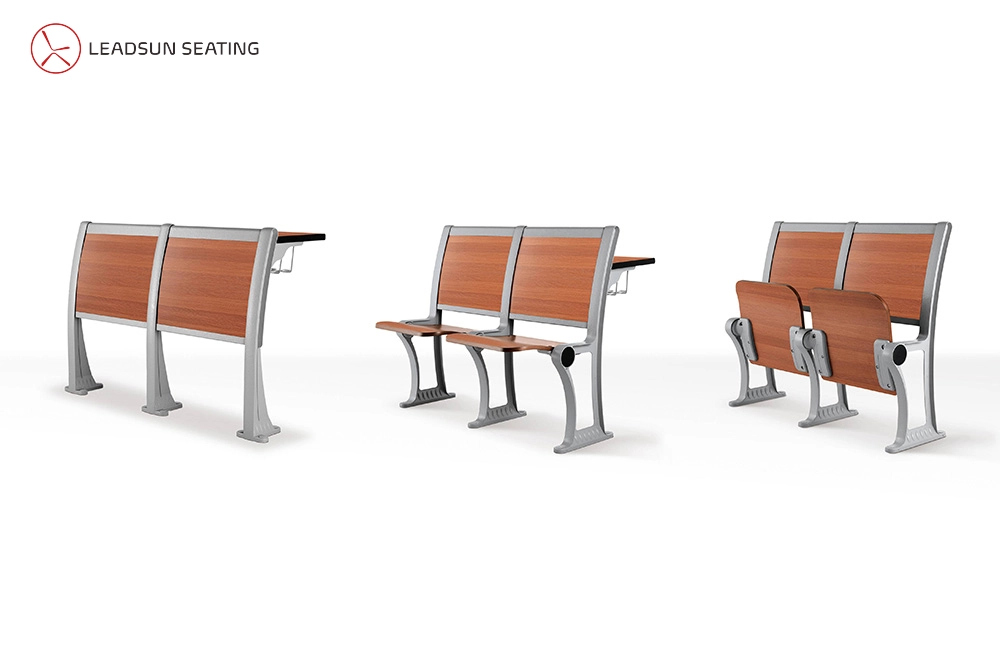
LS-908 Series Fixed Public Auditorium Chair or Tiered Classroom Solutions by Leadsun Seating
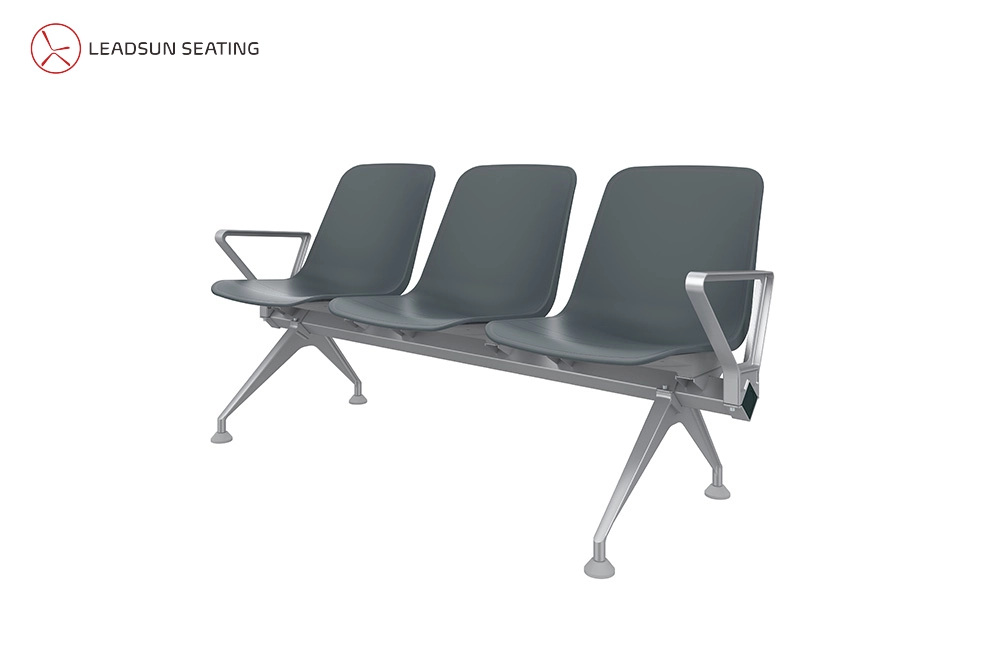
LS-550 Comfortable and Durable Waiting Chair | Customizable Waiting Chair Supplier Leadsun Seating
The LS-550 waiting chair from Leadsun offers superior comfort and durability for any public place. Customize your seating with Leadsun, a leading customizable waiting chair supplier. Ideal for high-traffic areas, the LS-550 ensures lasting performance and style.
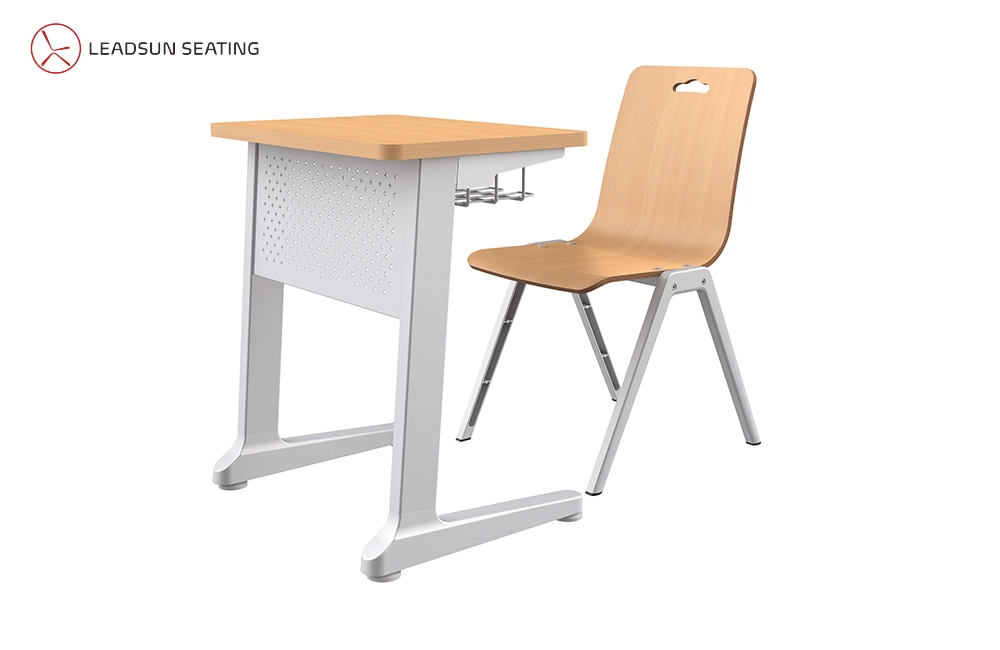
LS-9301 Single movable classroom chair |The Ultimate Flexible Solution for Modern Classrooms by Leadsun Seating
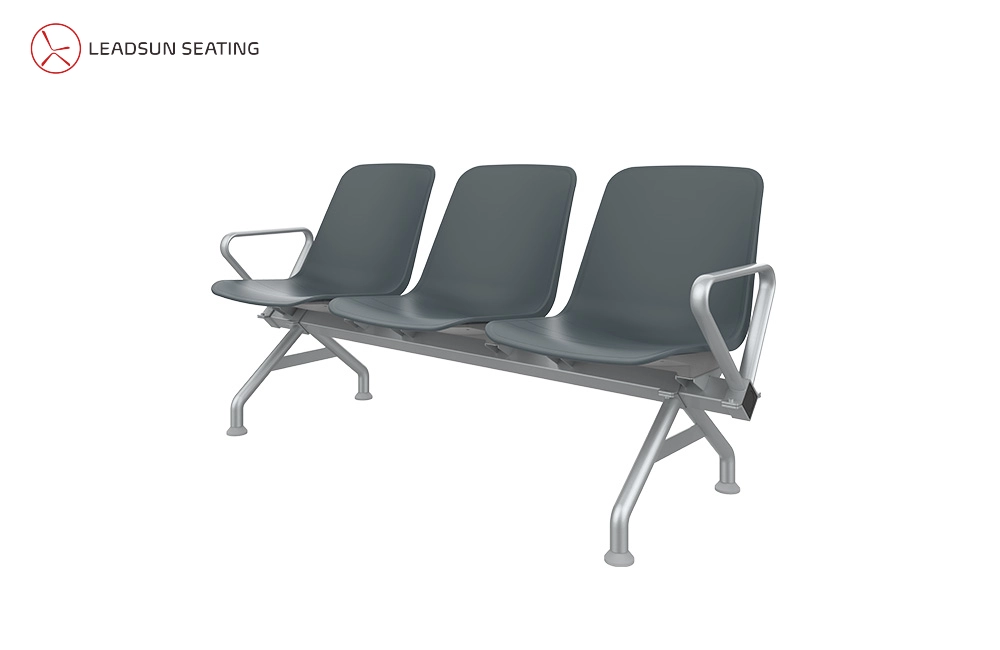
LS-551 Ergonomic Modular Waiting Chairs | Commercial Seating Solutions by Leadsun Seating

Leadsun Seating is also engaged in the design, development, production, and marketing of lightweight public seats in public places, with an annual output of desks and chairs.
 Scan QR Code