







How to evaluate warranty, lead time, and service for waiting room chairs
- Why procurement decisions for public seating matter
- Costs beyond purchase price
- Risk to operations and reputation
- Standards and verifiable claims
- Understanding warranties for waiting room chairs
- What a warranty should cover
- Typical market ranges and what they mean
- How to compare warranties (checklist)
- Lead time and delivery considerations
- Understanding lead time components
- Typical lead-time benchmarks
- Strategies to shorten effective lead time
- Service, maintenance, and spare parts
- Service-level agreements (SLAs) to request
- Maintenance planning and life-extension
- How to validate supplier claims and make a final choice
- Documents and tests to request
- Comparing suppliers: a simple scoring model
- Case note: airport seating vs healthcare waiting rooms
- Leadsun: Practical example of a supply partner
- Why a long-term OEM/ODM partner matters
- Leadsun capabilities and product fit
- Practical checklist before you sign
- Final verification steps
- Negotiation tips that work
- Frequently Asked Questions (FAQ)
- 1. What is a reasonable warranty period for waiting room chairs?
- 2. How long should I expect lead time for a custom waiting room chair order?
- 3. Are spare parts usually available after the warranty ends?
- 4. What standards should I ask manufacturers to meet?
- 5. How do I evaluate a supplier’s service capability in my region?
- 6. Should I order spare chairs as backup for critical spaces?
- Contact and next steps
I design and advise on seating solutions for high-traffic public environments, and I know that choosing waiting room chairs is not just about looks. When procurement teams evaluate options, warranty terms, lead time, and after-sales service are often the decisive factors that determine lifecycle cost, uptime, and user satisfaction. This article gives a practical, evidence-based framework to evaluate those three pillars — warranty, lead time, and service — for waiting room chairs, with checklists, sample comparisons, references to industry standards (like BIFMA and EN 16139), and real-world recommendations.
Why procurement decisions for public seating matter
Costs beyond purchase price
In my experience, the unit price of waiting room chairs can represent only 20–40% of the total cost of ownership over a 10-year window. Remaining costs include maintenance, repairs, replacement parts, and downtime. A stronger warranty and reliable service network reduce these ongoing expenses and protect budgets.
Risk to operations and reputation
Failures in public seating—broken armrests, detached cushions, collapsed frames—create safety risks, downtime, and negative impressions. For critical environments such as airports and hospitals (where seating must withstand high turnover), lead time for replacement parts and repair SLA times are mission-critical.
Standards and verifiable claims
Always verify manufacturer claims against recognized standards. For example, the Business and Institutional Furniture Manufacturers Association (BIFMA) publishes seating performance standards useful for commercial seating verification (see BIFMA standards). The European EN 16139 standard addresses strength and durability requirements for non-domestic seating. Quality-management certification such as ISO 9001 is another signal that processes are in place to support consistent production and after-sales service (ISO 9001).
Understanding warranties for waiting room chairs
What a warranty should cover
Warranties vary widely. I expect at minimum the following elements to be explicitly stated in any commercial seating warranty:
- Coverage period (years)
- Scope: frame, finish, upholstery/foam, mechanical components (e.g., hinges, folding mechanisms)
- Exclusions: misuse, vandalism, normal wear, modifications by third parties
- Remedy: repair, replacement, prorated replacement, or refund
- Transferability (important if assets are sold or leased)
- Procedure: how to claim, required photos/documents, and turnaround expectations
Typical market ranges and what they mean
Based on industry experience and market review, typical warranty ranges are:
- Frames: 5 years to lifetime
- Mechanisms and moving parts: 2–5 years
- Upholstery and foam: 1–5 years (depending on material and traffic)
- Surface finishes and powder-coating: 3–5 years
Longer warranties generally indicate confidence in materials and manufacturing controls, but always read the fine print — lifetime sometimes applies only to the original purchaser or only to the frame under normal use.
How to compare warranties (checklist)
When comparing proposals, I use this checklist:
- Does the warranty explicitly list what is and isn't covered?
- Is shipping for warranty repairs included or charged?
- Is on-site repair available for large installations, or are chairs returned to the factory?
- Are spare parts guaranteed for a number of years and is a parts list provided?
- Is there a documented claims process with SLA commitments?
Lead time and delivery considerations
Understanding lead time components
Lead time for waiting room chairs typically breaks down into: order confirmation, tooling/customization, production, quality inspection, packing, and shipping (including customs clearance for import). For stock models, lead time can be weeks; for custom or OEM orders, it can be several months. I always ask suppliers to provide a lead-time breakdown rather than a single number.
Typical lead-time benchmarks
As a rule of thumb (actual times vary by region, production load, and customization):
| Product Type | Typical Lead Time | Notes |
|---|---|---|
| Standard stock waiting chairs | 2–6 weeks | Fastest option if color/finish available |
| Customized upholstery or colors | 6–12 weeks | May require minimum-order quantities |
| OEM/ODM large batches (bulk) | 12–20 weeks | Includes tooling, approvals, factory scheduling |
Strategies to shorten effective lead time
From procurement projects I've managed, the following measures help reduce effective lead time and supply risk:
- Specify a standard color/finish and upholstery from the supplier’s stock range.
- Order spare modules/parts at the time of the main purchase to avoid separate shipments later.
- Use staggered deliveries or buffer stock for critical public spaces like airports.
- Agree on clear milestones, including key dates for production start, inspection, and shipping.
Service, maintenance, and spare parts
Service-level agreements (SLAs) to request
Good SLAs reduce downtime. I recommend negotiating specific metrics for:
- Response time for service requests (phone/email acknowledgement)
- On-site visit window for repairs (e.g., within 3–7 business days depending on region)
- Parts availability (percentage of parts available from stock, and guaranteed availability years)
- Mean Time to Repair (MTTR) goal for typical failures
Example SLA table:
| Metric | Target | Why it matters |
|---|---|---|
| Initial response | <24 hours | Ensures issues are triaged quickly |
| On-site visit | 3–7 business days | Minimizes downtime for major repairs |
| Spare-parts availability | >90% in-stock for 5 years | Reduces wait for replacements |
| Repair turnaround | <10 business days | Quick restores capacity |
Maintenance planning and life-extension
Preventive maintenance extends life. I recommend a simple maintenance schedule for waiting room chairs in high-traffic areas:
- Monthly: Visual inspection for loose fasteners, tears, or surface damage
- Quarterly: Tighten fasteners, inspect welding or joints, clean upholstery per supplier guidance
- Annually: Full inspection, replacement of worn cushions or components
Manufacturers who supply maintenance instructions, spare-parts kits, and on-site training for in-house staff add measurable value.
How to validate supplier claims and make a final choice
Documents and tests to request
From my consulting work, I always request:
- Certificate of conformity to relevant standards (e.g., BIFMA testing reports, EN 16139 where applicable)
- ISO 9001 quality-management certificate and details of factory inspection regimes (ISO 9001)
- Sample warranty contract and service agreement
- Customer references and case studies for similar environments (e.g., airports, hospitals, lecture halls)
Comparing suppliers: a simple scoring model
I use a weighted scoring model to make objective comparisons. Example weightings (adjust per project):
- Warranty comprehensiveness — 25%
- Lead time and flexibility — 20%
- Service coverage & SLA — 20%
- Standards & test evidence — 15%
- Price and total cost of ownership — 20%
Score suppliers against each criterion and rank by weighted total. This helps avoid decisions based purely on unit price.
Case note: airport seating vs healthcare waiting rooms
Different environments place different priorities. For airports and transit hubs, durability, easy-to-clean finishes, and quick parts replacement are top priorities — I look for suppliers experienced in airport seating and beam seating solutions. For healthcare waiting rooms, infection control (cleanable surfaces), ergonomic comfort, and warranty coverage for upholstery are often more important. Ask suppliers for evidence of installations in similar settings.
Leadsun: Practical example of a supply partner
Why a long-term OEM/ODM partner matters
As a supplier with over 25 years in contract seating, Leadsun combines manufacturing scale with design expertise — which matters when you’re evaluating warranty, lead time, and service simultaneously. An experienced OEM/ODM partner often offers predictable lead times for bulk orders, enforced quality systems for consistent long-term warranties, and established logistics for global deliveries. Learn more at Leadsun.
Leadsun capabilities and product fit
Leadsun: High Quality Seating Solutions for Global Public Spaces Since 1998. Core strengths I verify in partners like Leadsun include:
- Products: Lecture hall seating, waiting chairs, fixed desks and chair combos, activity desks and chairs, beam seating, tandem seating, airport seating, ergonomic chairs, desk chairs.
- Durability & Value: Use of High Quality materials, rigorous factory QC and long warranty options for frames and mechanisms.
- Ergonomic Comfort: Design focus on prolonged user comfort for waiting areas and lecture halls.
- Global OEM/ODM Partner: Experience with bulk manufacturing, customization, and export logistics for B2B.
- Tailored Solutions: Proven installations in airports, education, healthcare, and office environments.
For enquiries, Leadsun’s contact channel is: https://www.leadsunseating.com/ or email [email protected]. I recommend requesting their warranty samples, lead-time breakdown, and a spare-parts availability statement for comparison.
Practical checklist before you sign
Final verification steps
- Obtain and compare explicit warranty documents for frame, upholstery, and mechanisms.
- Request production and shipping milestone dates; verify supplier’s recent delivery performance.
- Secure an SLA addendum covering response times, on-site repair windows, and parts availability.
- Ask for test reports (BIFMA, EN 16139 when relevant) and ISO 9001 certification evidence.
- Order spare parts with the initial shipment or secure a parts holding agreement.
Negotiation tips that work
Negotiate specific remedies for slow lead times (e.g., temporary loaner chairs, partial shipments) and request penalties or credits for unusually late deliveries where projects are schedule-sensitive. Ensure the warranty and SLAs are tied to the purchase order or contract explicitly.
Frequently Asked Questions (FAQ)
1. What is a reasonable warranty period for waiting room chairs?
Reasonable warranty periods vary: 3–5 years is common for commercial seating; frames sometimes carry 5 years to lifetime coverage. Always check what components are covered and any prorated clauses.
2. How long should I expect lead time for a custom waiting room chair order?
Custom orders commonly take 8–20 weeks depending on tooling, upholstery, and order size. Supplier transparency about each lead-time component reduces surprises.
3. Are spare parts usually available after the warranty ends?
Good suppliers commit to spare parts availability for a guaranteed period (often 5–10 years). Ask for a parts list and availability guarantee in writing.
4. What standards should I ask manufacturers to meet?
Request test reports or compliance with relevant standards: BIFMA (seating performance) and EN 16139 for non-domestic seating strength/durability. Also check for ISO 9001 quality-management certification (ISO 9001).
5. How do I evaluate a supplier’s service capability in my region?
Ask for local references, the existence of regional service partners, average on-site response times, and whether the supplier stocks spare parts centrally or regionally. Remote support and clearly documented repair guides are also helpful.
6. Should I order spare chairs as backup for critical spaces?
Yes. For critical high-traffic installations (airports, major hospitals), ordering a small buffer of spare chairs or spare modules at procurement helps avoid service gaps while parts or repairs are arranged.
Contact and next steps
If you’d like help evaluating proposals or want a supplier you can rely on for warranty strength, predictable lead times, and robust service, I recommend requesting full warranty documents, SLA drafts, and testing reports from each vendor you’re considering. For proven manufacturing capability and tailored seating solutions — from airport seating and beam seating to lecture hall seating and ergonomic waiting chairs — consider Leadsun: https://www.leadsunseating.com/. Email direct enquiries to [email protected] and ask for sample warranty contracts, spare-parts lists, and average lead-time data for your required quantities.
With the right warranty terms, transparent lead times, and a clear service agreement, your waiting room chairs will deliver value, safety, and comfort throughout their lifecycle.
Wholesale classroom training tables manufacturer and supplier
Top public health chair Manufacturers and Suppliers in us
The B2B Buyer’s Guide to airport seating alliance | Leadsun Seating Ultimate Insights
Custom public waiting chair Manufacturers and Suppliers in us
One Stop Airport Terminal Seating
What are the advantages of the one-stop solution compared to traditional procurement methods?
The one-stop solution integrates the entire service process, saving communication costs and time. It avoids coordination issues that arise when working with multiple parties and ensures consistency and coherence in design, production, and after-sales service.
Are the seat materials durable? What's the lifespan?
We use high-strength, wear-resistant, and easy-to-clean premium materials, such as stain-resistant flame-retardant fabrics and rust-proof alloy frames. Under normal use, the seats can last 5 - 8 years.
How do you ensure seat installation doesn't disrupt airport operations?
We’ll develop a detailed installation plan, giving priority to non-peak hours for construction. We also use a modular installation approach to minimize any impact on airport operations.
Can you provide personalized seat customization?
We support comprehensive customization, including seat styles, functional modules (like charging ports, cup holders, etc.), color schemes, and even integrating airport brand elements to showcase a unique style.
How does the seat design ensure passenger comfort?
The solution adopts ergonomic design principles. We optimize seat curves, backrest angles, and seat surface materials to effectively relieve the fatigue of passengers during long waits.
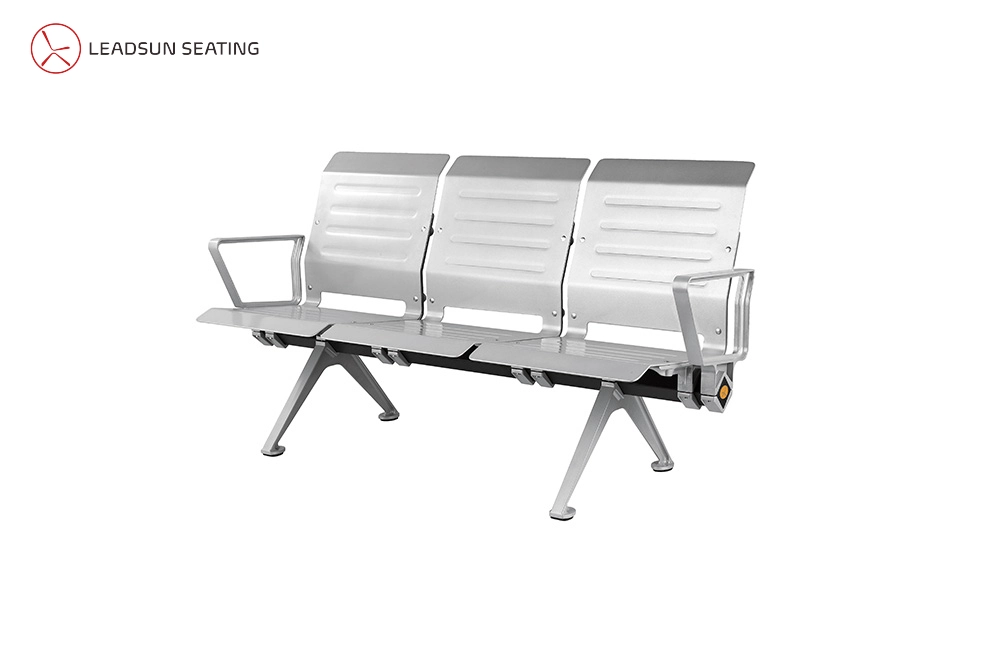
LS-529AL Aluminum Ergonomic Waiting Chairs | Modular & Durable Seating by Leadsun Seating
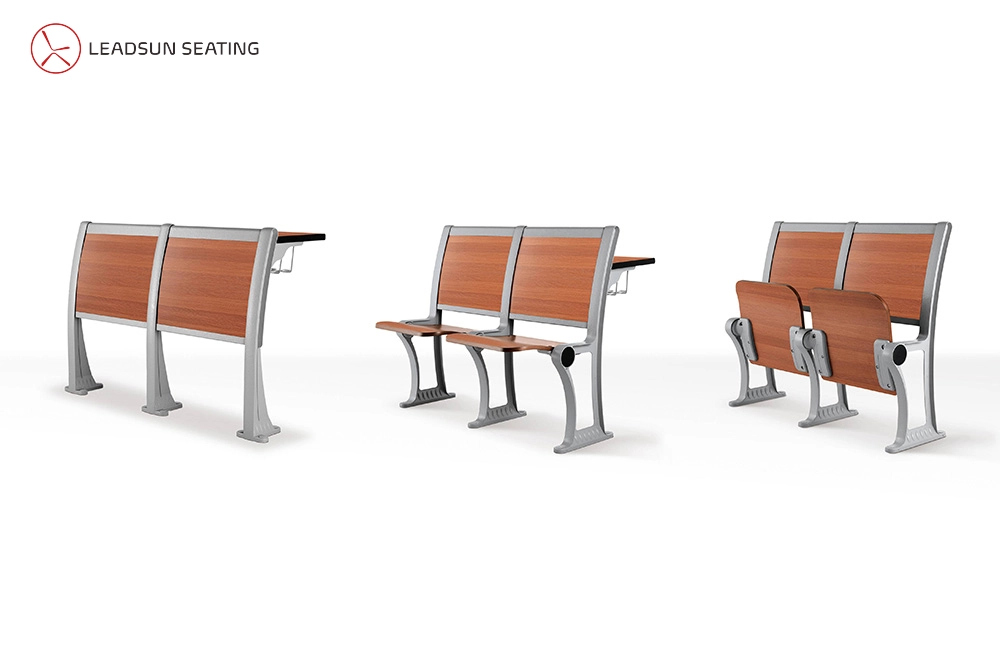
LS-908 Series Fixed Public Auditorium Chair or Tiered Classroom Solutions by Leadsun Seating
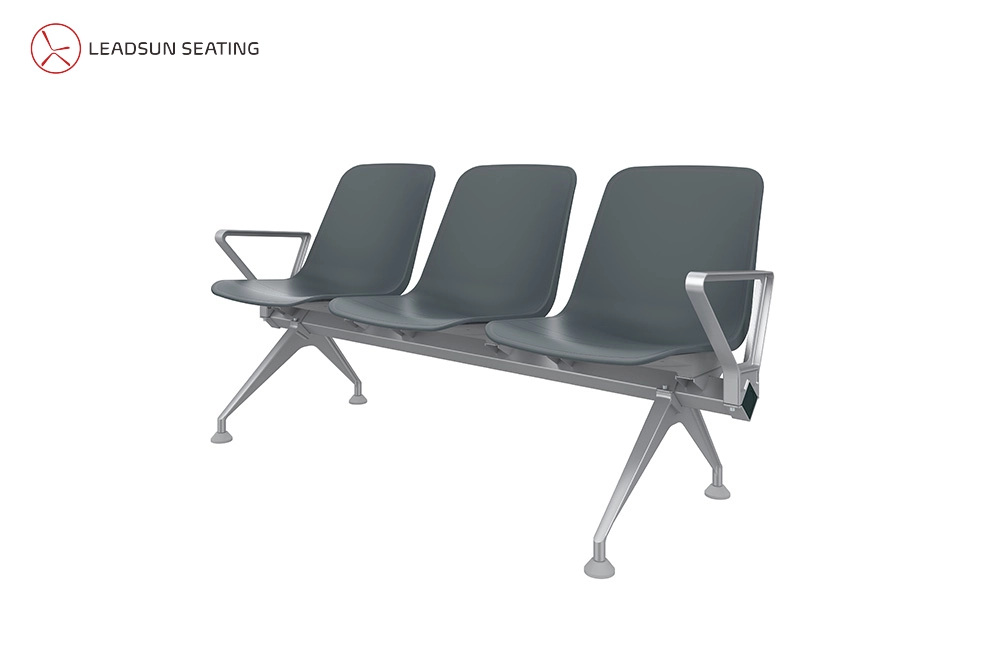
LS-550 Comfortable and Durable Waiting Chair | Customizable Waiting Chair Supplier Leadsun Seating
The LS-550 waiting chair from Leadsun offers superior comfort and durability for any public place. Customize your seating with Leadsun, a leading customizable waiting chair supplier. Ideal for high-traffic areas, the LS-550 ensures lasting performance and style.
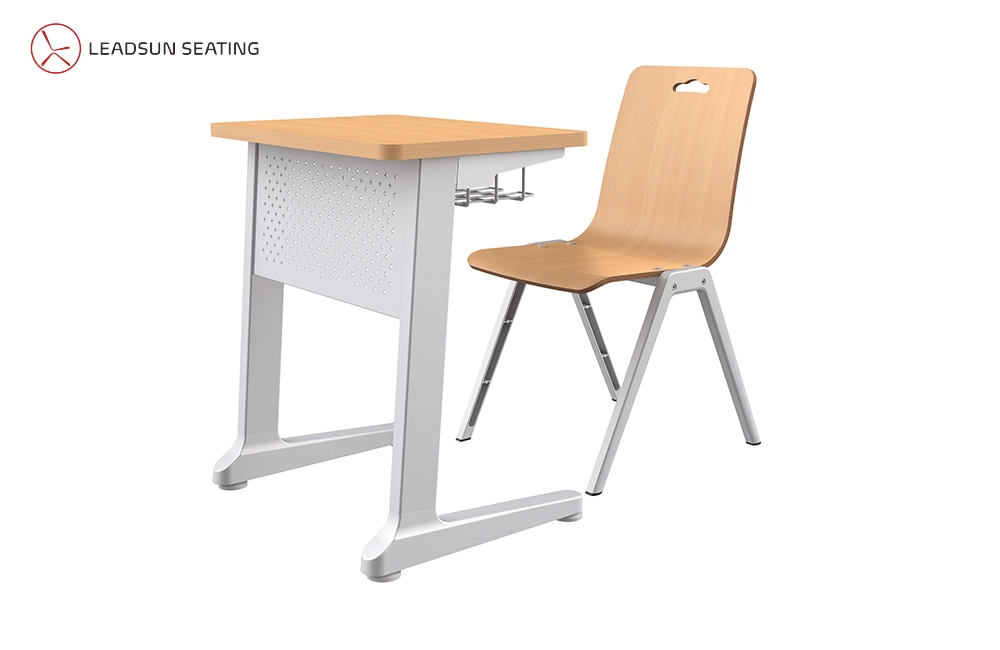
LS-9301 Single movable classroom chair |The Ultimate Flexible Solution for Modern Classrooms by Leadsun Seating

Leadsun Seating is also engaged in the design, development, production, and marketing of lightweight public seats in public places, with an annual output of desks and chairs.
 Scan QR Code