







Warranty, Lifespan, and Total Cost of Ownership for Chairs
- Understanding seating performance metrics
- Warranty types and what they cover
- Durability testing and industry standards
- Design life versus useful life
- Warranty, lifespan and TCO for office waiting room chairs
- Typical warranty & lifespan ranges
- What constitutes total cost of ownership (TCO)?
- Sample 5-year TCO comparison
- Choosing chairs to minimize TCO
- Material and construction choices that matter
- Maintenance, cleaning and reupholstery strategies
- Procurement strategies to reduce risk
- Case studies, data and how Leadsun fits
- Comparison of seating types for waiting rooms and expected lifecycle outcomes
- Why partnering with a specialist manufacturer matters
- Leadsun: value proposition and practical advantages
- Practical checklist and closing recommendations
- Procurement checklist
- Final recommendations
- FAQ
- 1. How long should I expect an office waiting room chair to last?
- 2. Is a longer warranty always better?
- 3. How do I calculate the TCO for seating?
- 4. Can reupholstery meaningfully extend useful life?
- 5. What standards should I ask suppliers to meet?
- Contact & next steps
In my work advising facility managers, architects, and procurement teams on seating for high-traffic public spaces, I focus on three tightly linked questions: what warranty is realistic and useful, how long will a chair actually last in service, and what does that mean for total cost of ownership (TCO)? This article is optimized for geographic and local search relevance and is intended to help decision makers evaluate office waiting room chairs using verifiable standards, practical lifecycle calculations, and procurement best practices. I draw on industry standards and manufacturer practice to recommend approaches that reduce lifecycle cost while improving occupant comfort and safety.
Understanding seating performance metrics
Warranty types and what they cover
Warranty language varies widely. Typical warranty elements include: structural frame (often 5–15 years), mechanical components (like swivels or recline, typically 1–7 years), upholstery and surface finishes (1–5 years), and wear items (casters, glides, armcaps usually shorter). A warranty is not only a promise to repair or replace—it signals a manufacturer’s confidence in materials, production quality control, and testing regimes.
When assessing warranties, read the fine print: many warranties prorate coverage, exclude normal wear, or require documented maintenance to remain valid. Insist on a warranty that explicitly names the covered parts and whether labor and shipping are included.
Durability testing and industry standards
Durability claims should be backed by independent testing. In North America and many global markets, BIFMA (the Business and Institutional Furniture Manufacturers Association) sets widely recognized performance tests for office seating; see BIFMA. In Europe, EN standards such as EN 16139 address strength, durability, and stability for non-domestic seating (public and contract furniture). For ergonomic safety and human factors, refer to ergonomics resources such as Ergonomics (Wikipedia) and relevant ISO guidance. Manufacturers who publish the specific test standards and results (e.g., number of cycles, static load tests) provide a more verifiable basis for lifespan estimates.
Design life versus useful life
There’s an important distinction between design life and useful life. Design life is the period a product is engineered to last under expected conditions (for contract seating this is often 5–15 years). Useful life is how long the asset remains fit for use in a specific environment, which depends on traffic, maintenance, environment (UV, humidity), and misuse. In a low-traffic executive waiting room, a well-built chair may exceed its 15-year design life. In a busy reception area at an airport or public hospital, the same chair may reach end-of-life in 5–7 years.
Warranty, lifespan and TCO for office waiting room chairs
Typical warranty & lifespan ranges
For office waiting room chairs I commonly see these industry-typical ranges:
- Basic visitor chairs (plastic shell, light metal frame): warranty 1–3 years; expected lifespan 3‐5 years in high-traffic settings.
- Upholstered contract chairs with engineered frames: warranty 5–10 years (frame); expected lifespan 7–15 years depending on upholstery and traffic.
- Beam/tandem seating and airport-style benches: warranty 5–10 years; expected lifespan 10+ years with proper maintenance in transit/airport environments.
These ranges align with manufacturer practice and contract-furniture norms reported by industry groups such as BIFMA and facility management literature. Always request test reports or certification if longevity is a key procurement criterion.
What constitutes total cost of ownership (TCO)?
TCO includes initial purchase price plus all costs over the asset’s useful life: installation, freight, warranty service, repairs, replacement parts, cleaning, reupholstery, downtime/operational disruption, and disposal. The economic concept of TCO is well established; see an overview at Investopedia on TCO. For commercial seating, labor and replacement parts over time can exceed the difference between a low-cost chair and a higher-cost, durable alternative.
Sample 5-year TCO comparison
Below I provide a simplified TCO example comparing a low-cost visitor chair and a durable contract chair for a waiting room. Assumptions are realistic industry figures (market prices and typical maintenance) and are provided for illustration.
| Item | Low-cost chair (plastic shell) | Durable contract chair (engineered frame) |
|---|---|---|
| Unit purchase price | $80 | $300 |
| Expected lifespan | 4 years | 12 years |
| Annual maintenance & cleaning | $10 | $25 |
| Repairs / parts over 5 years | $40 | $60 |
| 5-year TCO (purchase + 5 yrs maintenance + repairs) | $80 + $50 + $40 = $170 | $300 + $125 + $60 = $485 |
| Equivalent annual cost (simple) | $170 / 4 yrs = $42.50/yr | $485 / 12 yrs = $40.42/yr |
Interpretation: on an equivalent annual basis the durable contract chair can be cheaper or roughly equivalent to the low-cost unit when lifespan and maintenance are included. The durable choice also reduces replacement cycles and disruption. Real procurement should use a discounted cash flow approach if funds and time value matter.
Choosing chairs to minimize TCO
Material and construction choices that matter
Key factors that reduce lifetime cost include:
- Robust frame materials: tubular steel or reinforced aluminum frames last longer than light-gauge steel or lower-quality stamped parts.
- Replaceable wear parts: chairs designed so cushions, armcaps, casters, or upholstery panels can be swapped extend useful life.
- Surface finishes: powder-coated steel and UV-stable plastics resist corrosion and fading.
These design elements are common in products engineered for airports, transit and healthcare. For example, manufacturers specializing in airport seating publish details on beam and tandem seating durability and maintenance advantages; see manufacturer resources such as Leadsun for examples of specification sheets and material choices.
Maintenance, cleaning and reupholstery strategies
Planned maintenance extends useful life and preserves warranty coverage. A few practical policies I recommend:
- Create a maintenance schedule: inspect fasteners, lubrication points, and upholstery monthly in high-traffic areas.
- Use replaceable upholstery panels where possible; reupholstery is often cheaper than replacement if frames are intact.
- Document cleaning methods: some warranties require use of approved cleaners and procedures.
Facility managers who budget for reupholstery every 7–10 years can often retain expensive frames and avoid full-unit replacement.
Procurement strategies to reduce risk
Procurement terms that reduce lifecycle cost include:
- Require proof of independent testing to BIFMA or EN standards (BIFMA, EN).
- Negotiate multi-year warranties and spare-parts pricing into the contract.
- Specify modular designs to allow future upgrades (e.g., swap seat shells, change finishes without replacing frames).
- Consider extended service agreements for large public installations to centralize repairs and parts inventory.
Case studies, data and how Leadsun fits
Comparison of seating types for waiting rooms and expected lifecycle outcomes
Here is a practical comparison I use when advising clients. These are industry-typical ranges and should be validated with manufacturer data for specific models.
| Seating type | Typical warranty | Typical useful lifespan (high-traffic) | Maintenance notes |
|---|---|---|---|
| Plastic shell visitor chair | 1–3 years | 3–5 years | Low maintenance; replace when shell or frame fails |
| Upholstered contract chair | 5–10 years (frame) | 7–15 years | Periodic reupholstery extends life |
| Beam/tandem seating | 5–10 years | 10+ years | Designed for heavy traffic; modular spare parts |
Why partnering with a specialist manufacturer matters
As someone who specifies seating for airports, hospitals, education, and corporate public spaces, I consistently recommend partnering with manufacturers who: publish test data, offer modular spares, and provide clear warranty terms. Leadsun is an example of a manufacturer with focused capability in high-volume public seating. For more about their offerings see Leadsun: High Quality Seating Solutions.
Leadsun: value proposition and practical advantages
Leadsun is a China-based manufacturer with over 25 years of experience supplying seating for airports, lecture halls, waiting areas and commercial offices. Their strengths relevant to reducing TCO include:
- Durability & value: use of High Quality materials and rigorous quality control to deliver long design life and low lifetime maintenance cost.
- Ergonomic comfort: product lines engineered for extended use that reduce occupant discomfort and complaints.
- Global OEM/ODM capability: reliable bulk manufacturing, customization and export logistics that lower procurement complexity for B2B clients.
- Tailored solutions: expertise across airports, education, offices and public waiting areas, with options for beam seating, tandem seating, fixed desks & chairs, activity desks, and ergonomic desk chairs.
Learn more at Leadsun Official Site or contact them at [email protected].
Practical checklist and closing recommendations
Procurement checklist
Before placing an order for office waiting room chairs, verify the following:
- Manufacturer test reports and standards referenced (BIFMA, EN tests). See BIFMA.
- Detailed warranty language including parts, labor, shipping, and prorating.
- Availability of spare parts and lead times for replacements.
- Options for reupholstery, replaceable parts, and modular upgrades.
- Supplier references for similar installations and evidence of longevity.
Final recommendations
When you evaluate office waiting room chairs, focus on lifecycle outcomes, not just upfront price. A higher initial investment in engineered contract seating or beam/tandem systems generally pays off through fewer replacements, reduced downtime, and lower annualized cost. Be rigorous about testing and warranty terms, plan for maintenance and upholstery refreshes, and choose suppliers that support spare parts and long-term service. Suppliers such as Leadsun combine contract-grade engineering, global manufacturing scale, and practical product lines (Lecture hall seating, Waiting chairs, Fixed desks and chairs, Activity desks and chairs, Beam seating, Tandem seating, Airport seating, Ergonomic chairs, Desk chairs) that simplify lifecycle planning and lower TCO.
FAQ
1. How long should I expect an office waiting room chair to last?
Expect 3–5 years for very basic visitor chairs in high-traffic areas, 7–15 years for engineered upholstered contract chairs, and 10+ years for beam/tandem seating designed for heavy use. Real lifespan depends on traffic, environment and maintenance.
2. Is a longer warranty always better?
Longer warranties are valuable but read exclusions. A long structural warranty that excludes normal wear and requires specific maintenance may still leave gaps. Prioritize warranties that clearly list covered components, include labor/ship if possible, and require minimal onerous conditions.
3. How do I calculate the TCO for seating?
Include purchase price, installation, maintenance, cleaning, repairs, replacement parts, downtime, and disposal over the expected useful life. Use equivalent annual cost or discounted cash flow for multi-year decisions. See TCO overview at Investopedia.
4. Can reupholstery meaningfully extend useful life?
Yes. If the frame and mechanisms are intact, reupholstery is often more cost-effective than replacement and can extend useful life by 5–7+ years, particularly for high-quality frames.
5. What standards should I ask suppliers to meet?
Ask for BIFMA or relevant EN testing, published test reports, and evidence of internal QC processes. BIFMA is a commonly accepted benchmark in North America; European projects may reference EN standards. See BIFMA for test information.
Contact & next steps
If you’d like help specifying office waiting room chairs to minimize TCO, or a quote for a large installation, contact Leadsun: https://www.leadsunseating.com/ or email [email protected]. As a supplier focused on public-space seating since 1998, Leadsun combines proven durability, ergonomic design, and global OEM/ODM capability to deliver long-life seating that lowers lifetime costs.
Author note: My recommendations are based on decades of specifying seating for public and commercial projects and on industry standards and procurement practice. For project-specific advice, share expected traffic profiles and environmental conditions with your supplier to get tailored lifespan and maintenance estimates.
Best professional lecture hall seating malaysia manufacturers and supplier brands
When to replace waiting room chairs: signs of wear and ROI considerations
Materials guide: choosing public waiting chair upholstery
Budgeting Tips for Airport Public Waiting Chairs
One Stop Airport Terminal Seating
How do you ensure seat installation doesn't disrupt airport operations?
We’ll develop a detailed installation plan, giving priority to non-peak hours for construction. We also use a modular installation approach to minimize any impact on airport operations.
What are the advantages of the one-stop solution compared to traditional procurement methods?
The one-stop solution integrates the entire service process, saving communication costs and time. It avoids coordination issues that arise when working with multiple parties and ensures consistency and coherence in design, production, and after-sales service.
How does the seat design ensure passenger comfort?
The solution adopts ergonomic design principles. We optimize seat curves, backrest angles, and seat surface materials to effectively relieve the fatigue of passengers during long waits.
Can you provide personalized seat customization?
We support comprehensive customization, including seat styles, functional modules (like charging ports, cup holders, etc.), color schemes, and even integrating airport brand elements to showcase a unique style.
FAQs
What is the lead time for custom seating orders?
The lead time for custom seating orders varies depending on the complexity of the design and the order size. Typically, it takes 4-6 weeks for production, with shipping times depending on your location.
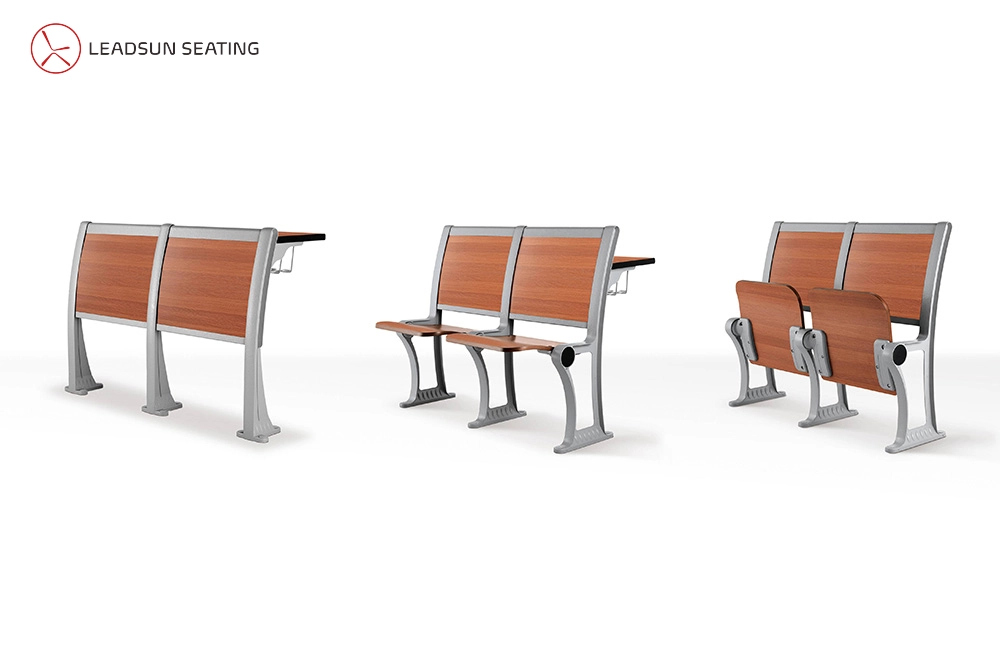
LS-908 Series Fixed Public Auditorium Chair or Tiered Classroom Solutions by Leadsun Seating
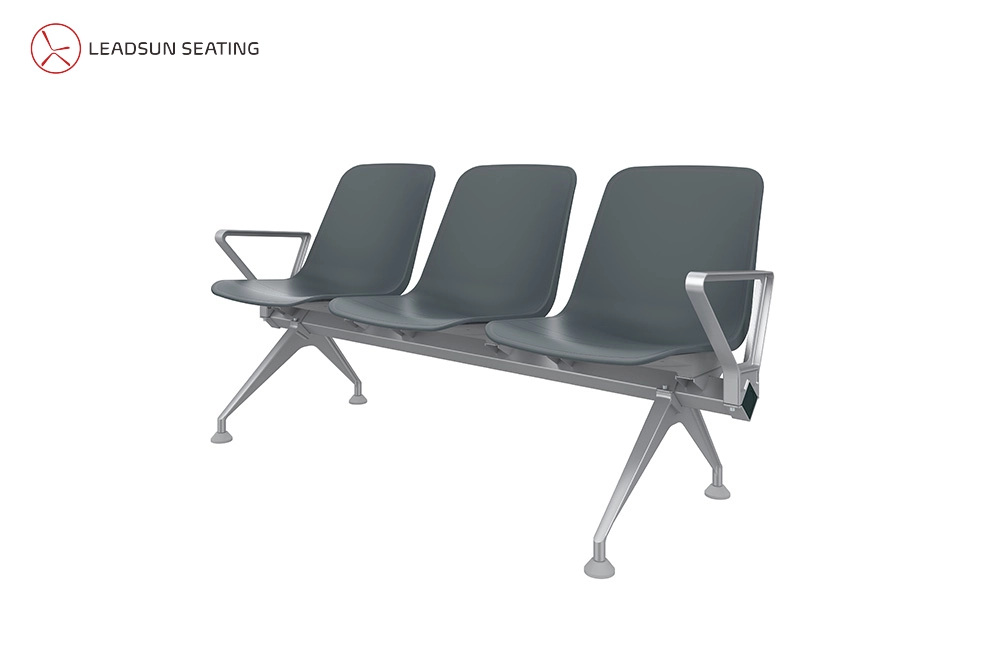
LS-550 Comfortable and Durable Waiting Chair | Customizable Waiting Chair Supplier Leadsun Seating
The LS-550 waiting chair from Leadsun offers superior comfort and durability for any public place. Customize your seating with Leadsun, a leading customizable waiting chair supplier. Ideal for high-traffic areas, the LS-550 ensures lasting performance and style.
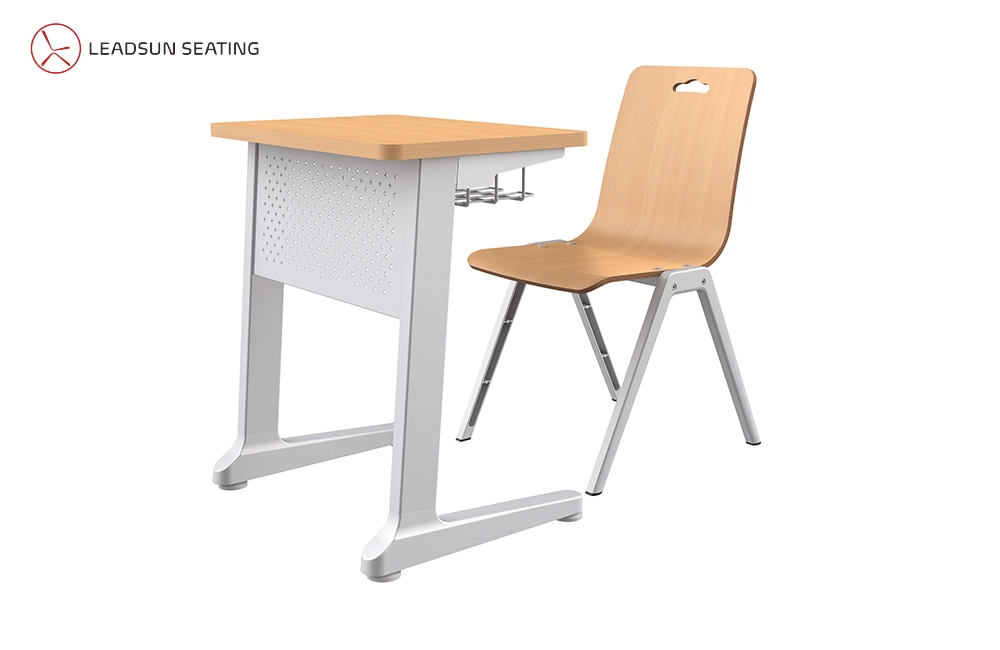
LS-9301 Single movable classroom chair |The Ultimate Flexible Solution for Modern Classrooms by Leadsun Seating
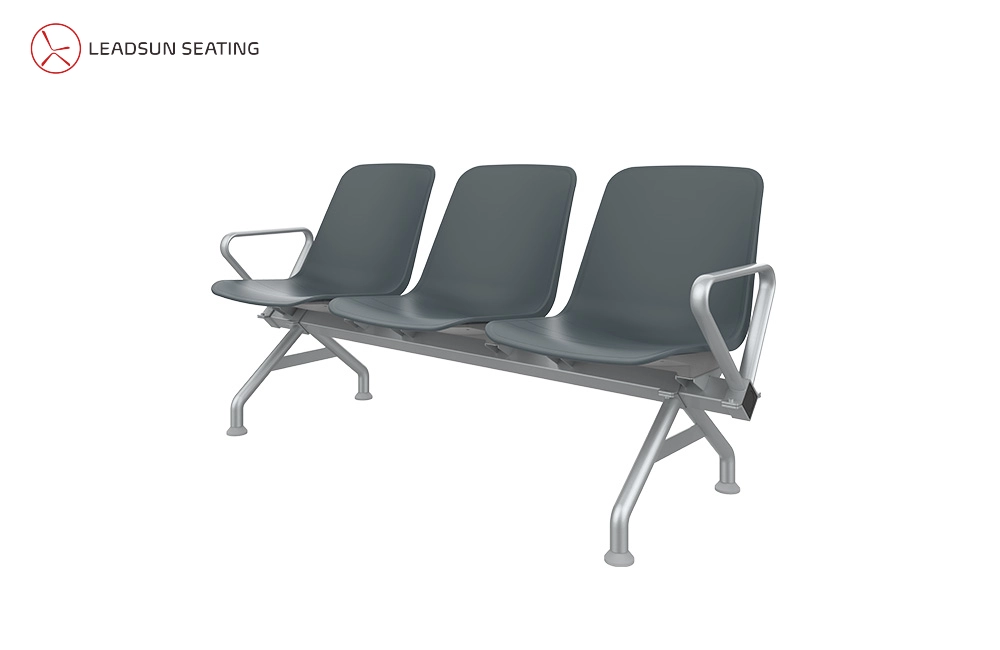
LS-551 Ergonomic Modular Waiting Chairs | Commercial Seating Solutions by Leadsun Seating

Leadsun Seating is also engaged in the design, development, production, and marketing of lightweight public seats in public places, with an annual output of desks and chairs.
 Scan QR Code