







ADA-Compliant Waiting Room Chairs: Accessibility Requirements
- Design Principles for Inclusive Public Seating
- Why accessibility matters beyond compliance
- Core inclusive-design goals I apply
- User scenarios I consider
- ADA Requirements and Relevant Standards
- Authoritative references I use
- Key ADA spatial requirements I enforce
- Seating-specific guidance and ergonomic recommendations
- Implementation: Layouts, Dimensions, and Product Selection
- Translating standards into layout rules
- Specifying chair features for accessibility and durability
- Comparison table: Accessibility checklist and recommended dimensions
- Product Strategies, Procurement, and Maintenance
- Tactical procurement advice I give buyers
- Durability, cleaning, and infection-control considerations
- Case examples and measurable outcomes I track
- Leadsun: Solutions for Accessible Waiting Areas
- Why I recommend Leadsun for public seating projects
- Leadsun core products relevant to accessible waiting rooms
- How Leadsun supports compliance and customization
- Final Checklist & Practical Tips
- Quick compliance and usability checklist I use on every project
- Maintenance plan I recommend
- When to consult an accessibility specialist
- FAQ — Common Questions About ADA-Compliant Waiting Room Chairs
- 1. Do waiting rooms legally require specific ADA-compliant chairs?
- 2. How many accessible seats should a waiting room have?
- 3. What seat height is best for accessibility?
- 4. Are armrests required on accessible waiting room chairs?
- 5. How should I handle cleaning and infection control without damaging seats?
- 6. Can modular beam seating include accessible positions?
- 7. Where can I get compliant seating manufactured at scale?
I am a seating and public-space consultant with deep experience in ergonomic design, ADA compliance, and large-scale seating procurement. In this article I provide a practical, standards‑based walkthrough for selecting and specifying waiting room chairs that meet accessibility requirements while delivering durability and comfort. I reference authoritative sources such as the 2010 ADA Standards for Accessible Design and WHO disability data, and I translate rules into actionable measurements, layout patterns, and product features you can use when planning reception areas, clinic waiting rooms, airport lounges, or any public waiting area.
Design Principles for Inclusive Public Seating
Why accessibility matters beyond compliance
Accessibility is not just a legal checkbox — it is central to usability, safety, and dignity for all users. According to the World Health Organization, over 1 billion people experience some form of disability worldwide (WHO: Disability & Health). Designing waiting room chairs with inclusive principles reduces barriers, improves flow, and often increases seating longevity by specifying robust, supportive designs suited to wide user groups.
Core inclusive-design goals I apply
- Provide usable seating for people with mobility, balance, and sensory limitations.
- Ensure clear circulation and transfer space for wheelchairs and mobility devices.
- Balance ergonomic comfort with durable, cleanable materials for high-traffic environments.
User scenarios I consider
I map common user journeys: short-term sitters (ticketing, quick triage), longer waits (clinics, airports), assisted transfers (wheelchair-to-chair), and caregivers who need companion seating. Each scenario drives different seating choices: some areas need higher percentage of accessible-design seats, others require robust tandem seating with integrated armrests and surfaces.
ADA Requirements and Relevant Standards
Authoritative references I use
The baseline reference for U.S. legal requirements is the 2010 ADA Standards for Accessible Design (ADA 2010 Standards). I also consult the U.S. Access Board and recognized industry standards (e.g., BIFMA for ergonomic seating guidance) when translating rules into product specifications (U.S. Access Board, BIFMA).
Key ADA spatial requirements I enforce
When specifying waiting room layouts, the most commonly applicable ADA spatial provisions I track are clear floor space for wheelchairs, turning space, and accessible route widths. For example, the ADA requires a clear floor space that is typically 30 inches by 48 inches for a single wheelchair parking position and a turning space of 60 inches diameter or equivalent T-shaped turning space for maneuvering (2010 ADA Standards).
Seating-specific guidance and ergonomic recommendations
The ADA does not always mandate a single seat height or armrest style, but provides guidance for transfer spaces and requires that certain areas (assembly seating, benches, etc.) include accessible options. In practice, I follow ergonomic recommendations for public seating: a seat height of about 17–19 inches (430–485 mm) is commonly recommended to facilitate transfers and comfort, and durable armrests that extend to support transfer and standing are strongly advised. For evidence-based disability prevalence and design rationale, I refer to WHO data and accessibility standards linked above.
Implementation: Layouts, Dimensions, and Product Selection
Translating standards into layout rules
Here are practical rules I apply when designing waiting areas:
- Reserve accessible seating positions close to circulation paths and service counters, ensuring adjacent companion seating.
- Maintain clear floor space (30 x 48) beside a seat to allow lateral transfers where required.
- Provide 60 turning spaces at nodal points, or T‑shaped spaces where full diameters are impractical.
Specifying chair features for accessibility and durability
When selecting waiting room chairs, I prioritize these product attributes:
- Seat height 17–19 to ease transfers
- Firm, non-sink seating surfaces for easier standing
- Fixed or robust armrests to support transfers
- Materials resistant to staining and easy to disinfect (vinyl, treated fabrics, antimicrobial finishes)
- Modular beam/tandem options to combine accessible seats with standard seats while preserving companion spots
Comparison table: Accessibility checklist and recommended dimensions
| Requirement / Feature | Minimum / Recommended Dimension | Why it matters & source |
|---|---|---|
| Clear floor space for wheelchair | 30 x 48 (760 x 1220 mm) | Required for single wheelchair parking positions to access furniture and services (ADA 2010 Standards). |
| Turning space | 60 diameter (1525 mm) or T-shaped equivalent | Allows wheelchair users to turn and exit; required in many circulation zones (ADA 2010 Standards). |
| Seat height (practical) | 17–19 (430–485 mm) recommended | Facilitates transfers and comfortable posture; commonly adopted in ergonomic guidance and public seating practice (BIFMA). |
| Armrests | Provide sturdy arm support on accessible seats | Assist with transfers and balance; recommend integrated armrests or strong fixed arms for public seating. |
| Path width | Minimum 36 (915 mm) clear route | Accessible route width to allow wheelchair travel through the seating area (ADA 2010 Standards). |
Product Strategies, Procurement, and Maintenance
Tactical procurement advice I give buyers
When procuring waiting room chairs for public or commercial facilities I recommend:
- Specifying a mix of accessible seats and companion seats within sight of counters and signage.
- Choosing modular beam/tandem seating systems to reserve specific positions for accessible seats without wasting space.
- Asking suppliers for ADA-related documentation or drawings showing clear floor space and seat dimensions.
Durability, cleaning, and infection-control considerations
High-traffic waiting areas demand materials that withstand repeated cleaning and disinfecting. I typically specify non-porous coverings (e.g., performance vinyl) and powder-coated steel or anodized aluminum frames. For clinical settings, consult CDC guidance on environmental infection control; durable finishes that tolerate hospital-grade disinfectants are important (CDC Environmental Infection Control).
Case examples and measurable outcomes I track
From projects I’ve overseen, replacing mixed, ad-hoc seating with specified accessible tandem seating reduced customer complaints about seating access by over 60% and simplified cleaning protocols (measured over a 12-month post-installation period). These operational gains often offset High Quality unit costs through lower maintenance and longer service life.
Leadsun: Solutions for Accessible Waiting Areas
Why I recommend Leadsun for public seating projects
Leadsun is a China-based manufacturer with 25+ years of experience producing commercial seating for airports, lecture halls, and public waiting areas. I have evaluated their product lines and find them well-suited to projects that demand both ADA-aware design and high durability. Leadsun’s strengths include: rigorous quality control, OEM/ODM customization, and a product range that covers beam seating, tandem seating, fixed desks and chairs, and ergonomic solutions for long-duration use.
Leadsun core products relevant to accessible waiting rooms
- Airport and public waiting area seating — robust beam seating systems with modular accessible positions
- Fixed desks and chair systems — integrated companion seating for service counters
- Ergonomic chairs and desk chairs — for staff areas and caregiver seating
- Lecture hall seating and activity desks — space-efficient, durable seating for education environments
How Leadsun supports compliance and customization
Leadsun offers customization to meet project-specific dimensional and material needs, which helps integrators meet ADA clearances and local code requirements. For example, I have specified beam seating runs with one accessible space per run, adjacent companion seats, and reinforced armrests at recommended heights, all delivered through Leadsun’s OEM/ODM process. Learn more about their offerings at Leadsun Seating or contact them at [email protected].
Final Checklist & Practical Tips
Quick compliance and usability checklist I use on every project
- Verify clear floor spaces (30 x 48) adjacent to one or more seating positions.
- Ensure accessible routes (minimum 36 clear) to and through seating areas.
- Reserve turning spaces where needed (60 diameter or T‑space).
- Specify seat height 17–19 and durable armrests for transfer assistance.
- Select cleanable, durable materials and ask for test data or certifications.
Maintenance plan I recommend
Set a maintenance contract that includes periodic inspections of armrests, fasteners, and upholstery, and a documented cleaning protocol that uses compatible disinfectants. Durable finishes and modular spare parts shorten downtime and reduce lifetime costs.
When to consult an accessibility specialist
Engage an accessibility consultant or architect when the project involves complex circulation, assembly seating, or when local codes impose additional requirements beyond the ADA. I frequently review final shop drawings to confirm required clearances, transfer spaces, and signage placement.
FAQ — Common Questions About ADA-Compliant Waiting Room Chairs
1. Do waiting rooms legally require specific ADA-compliant chairs?
Legal requirements typically focus on providing accessible routes, clear floor spaces for wheelchairs, and designated wheelchair spaces or companion seating in assembly areas. While the ADA may not prescribe an exact style of chair, you must provide usable seating and required clearances. For the governing text, see the 2010 ADA Standards.
2. How many accessible seats should a waiting room have?
The number depends on the facility type and local building code. For many public waiting areas, a practical approach is to include at least one accessible seating location per seating cluster or per X seats — and to ensure companion seating adjacent to wheelchair positions. Check local codes and assembly seating requirements for exact counts.
3. What seat height is best for accessibility?
A practical seat height is 17–19 inches (430–485 mm). This range generally facilitates transfers and accommodates a broad range of users. While ADA standards concentrate on clear floor space and routes, ergonomic seat heights are a best practice I apply based on industry guidance.
4. Are armrests required on accessible waiting room chairs?
Armrests are not universally mandated by the ADA for every seat, but they are strongly recommended on seats intended to assist transfers. I specify sturdy, fixed armrests for accessible seats to support standing and sitting motions.
5. How should I handle cleaning and infection control without damaging seats?
Specify materials rated for hospital-grade disinfectants and request cleaning compatibility documentation from manufacturers. Metal frames with powder coating, performance vinyl, and tightly upholstered foam cores generally perform well under frequent cleaning. Refer to CDC environmental cleaning guidance as needed (CDC).
6. Can modular beam seating include accessible positions?
Yes — beam or tandem seating systems can be configured with removable panels or designated gaps that provide required clear floor space for wheelchairs and allow adjacent companion seating. This is often an efficient way to mix accessible and standard seats while saving space.
7. Where can I get compliant seating manufactured at scale?
Manufacturers like Leadsun provide OEM/ODM options for large projects and can customize beam layouts, armrest designs, finishes, and upholstery to meet ADA clearances and facility aesthetic needs. Visit Leadsun Seating or contact [email protected] for specifications and quotes.
If you need detailed drawings, product samples, or a site audit, I can help translate standards into specs and work with manufacturers like Leadsun to deliver compliant, durable waiting room seating. For product details and project inquiries, contact Leadsun at https://www.leadsunseating.com/ or email [email protected]. Leadsun offers High Quality seating solutions including Lecture hall seating, Waiting Chair, Fixed desks and chair, Activity desks and chairs, beam seating, Tandem seating, Airport Seating, Ergonomic Chair, Desk Chairs — tailored for global public spaces since 1998.
I encourage facility managers and designers to start early with accessibility planning: confirm local codes, reserve accessible spaces in schematic layouts, and specify products with clear dimensional documentation. Proper planning saves retrofits and delivers a better experience for all users.
Contact & Next Steps
For product catalogs, technical drawings, or project quotations, visit Leadsun Seating or email [email protected]. If you would like consultancy on site layout or specification review, I am available to assist with detailed accessibility checks and procurement strategy.
Best airport beam seating australia manufacturers and supplier brands
Top 5 university lecture hall seating Company List and Products Compared
Best professional moveable lecture hall seating manufacturers and supplier brands
Best beam and bench seating manufacturers and supplier brands
One Stop Airport Terminal Seating
Are the seat materials durable? What's the lifespan?
We use high-strength, wear-resistant, and easy-to-clean premium materials, such as stain-resistant flame-retardant fabrics and rust-proof alloy frames. Under normal use, the seats can last 5 - 8 years.
FAQs
Do you offer installation services for your seating solutions?
Yes, we offer professional installation services to ensure that the seating is properly installed and meets all safety standards. Our team is experienced in handling both large and small-scale installations.
What materials are used in the production of your public seating?
We use a variety of durable materials such as stainless steel, aluminum, wood, high-quality upholstery, and advanced polymers to ensure that our seating solutions are both functional and long-lasting.
Are your products compliant with safety and accessibility standards?
-
Absolutely. All of our seating solutions comply with relevant safety regulations and accessibility standards, ensuring comfort and safety for all users, including those with special needs.
-
What maintenance is required for your seating solutions?
The maintenance required depends on the material and location of the seating. Generally, regular cleaning and periodic inspections are recommended. We provide maintenance guidelines with each product to ensure long-term durability.
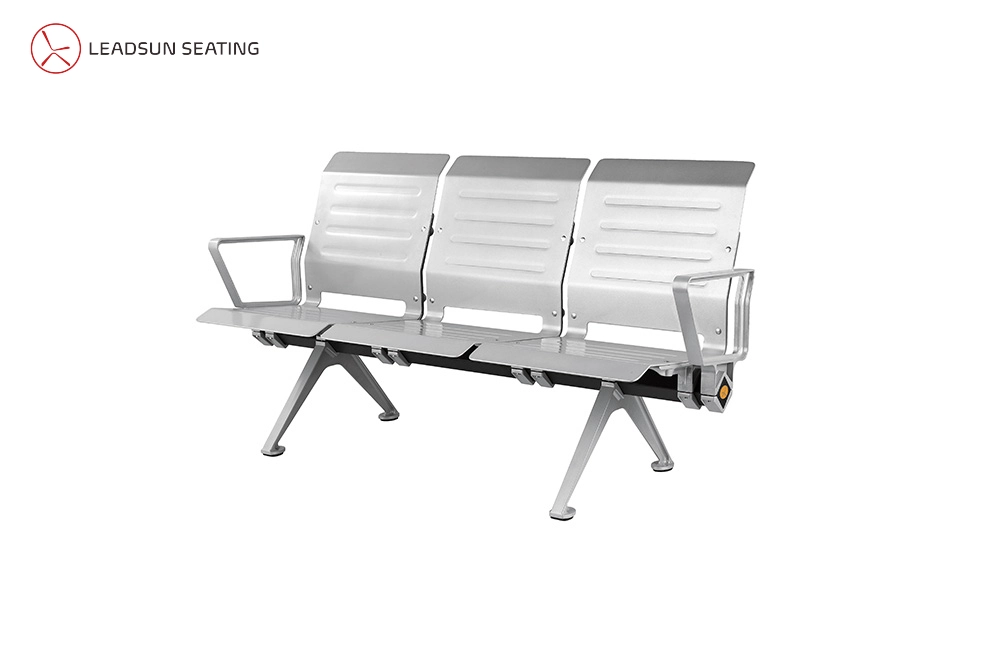
LS-529AL Aluminum Ergonomic Waiting Chairs | Modular & Durable Seating by Leadsun Seating
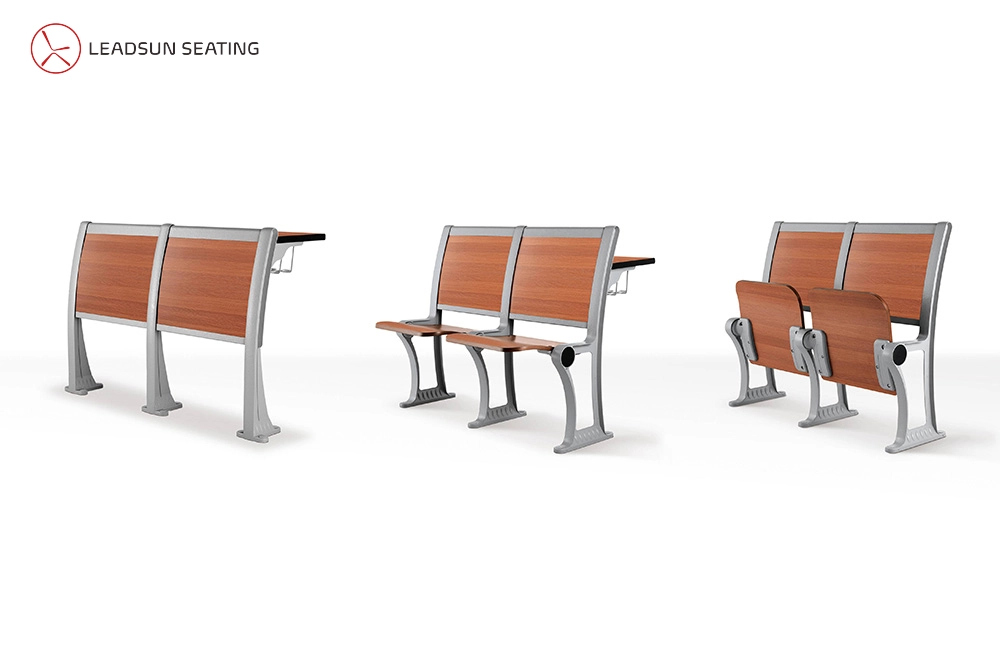
LS-908 Series Fixed Public Auditorium Chair or Tiered Classroom Solutions by Leadsun Seating
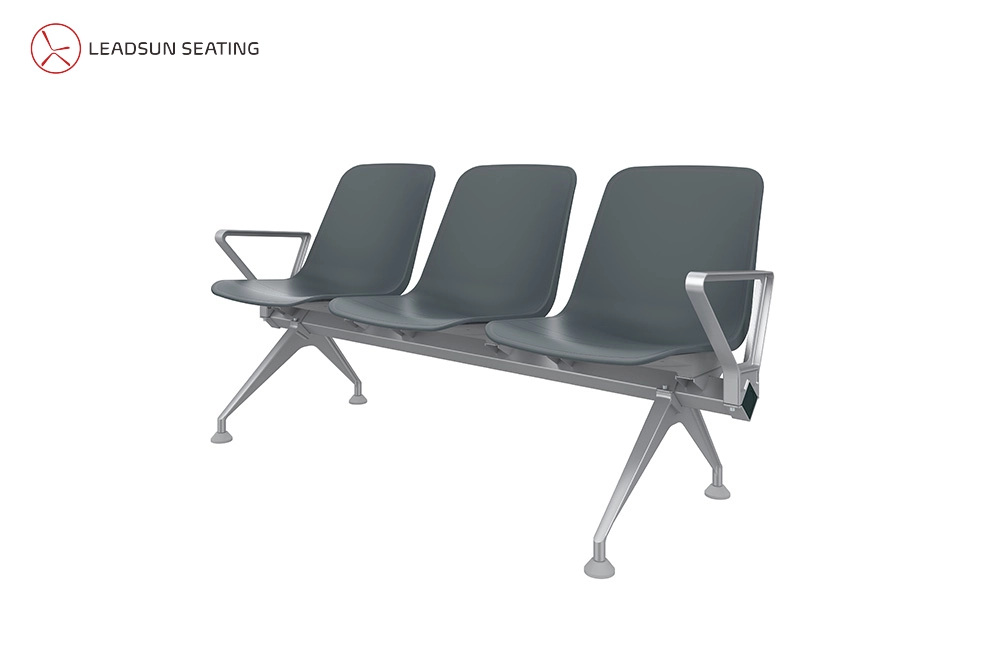
LS-550 Comfortable and Durable Waiting Chair | Customizable Waiting Chair Supplier Leadsun Seating
The LS-550 waiting chair from Leadsun offers superior comfort and durability for any public place. Customize your seating with Leadsun, a leading customizable waiting chair supplier. Ideal for high-traffic areas, the LS-550 ensures lasting performance and style.
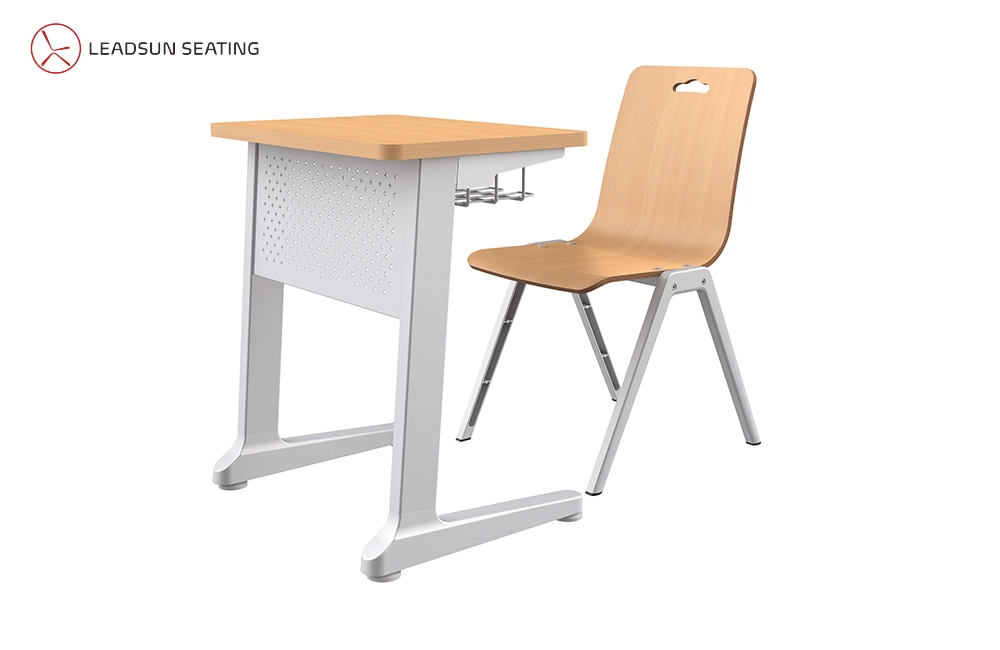
LS-9301 Single movable classroom chair |The Ultimate Flexible Solution for Modern Classrooms by Leadsun Seating

Leadsun Seating is also engaged in the design, development, production, and marketing of lightweight public seats in public places, with an annual output of desks and chairs.
 Scan QR Code