







Leadsun seating offers a wide range of seating solutions for public spaces, including benches, chairs, waiting area seating, auditorium seating, and customized solutions tailored to specific project needs.
How does ergonomics shape airport and lecture hall seating?
2026-02-24
Detailed, procurement-focused answers for airport seating and lecture hall seating buyers: ergonomics, sightlines, materials, power integration, ADA access, modularity, maintenance KPIs and lifecycle cost — actionable specs and standards to use during purchasing.
- 1. How do I calculate sightlines and seat pitch for fixed lecture hall seating to guarantee ADA-compliant wheelchair spaces and unobstructed views without costly tier reconstruction?
- 2. What upholstery, frame and fire-retardant specs should I demand for high-traffic airport terminal seating to minimize lifecycle cost and ensure compliance?
- 3. How can integrated power and USB modules be retrofitted into existing lecture hall benches and airport terminal seating without violating fire codes or voiding warranties?
- 4. Which ergonomic seat dimensions and adjustability features reduce musculoskeletal complaints across diverse users (students, travelers) in lecture halls and terminals?
- 5. How do I evaluate modular seating systems for future reconfiguration, acoustics and maintenance in multipurpose lecture halls and airport lounges?
- 6. What inspection, maintenance schedule and KPIs should I include in service contracts to extend warranty life and reduce total cost of ownership for airport and lecture hall seating?
1. How do I calculate sightlines and seat pitch for fixed lecture hall seating to guarantee ADA-compliant wheelchair spaces and unobstructed views without costly tier reconstruction?
Answer:Begin with the audience line-of-sight principle: the viewer’s eye height and the vertical and horizontal offsets between rows determine required riser height and row pitch (seat-to-seat front-to-back distance). For most adult users, use an eye height of 1,150–1,250 mm when seated (approximately 45–49 in). Practical ranges and steps:
- Seat pitch (row spacing): 800–920 mm (31.5–36.2 in) is common for lecture halls that balance legroom, ADA clearances and capacity. Narrower than 800 mm risks discomfort; larger than 920 mm reduces seating capacity and can increase construction costs.
- Riser height: 150–200 mm (6–8 in) per row often suffices when paired with appropriate stagger to maintain clear view of the stage/ screen. Auditoriums with steep sightline requirements may need 200–300 mm (8–12 in) risers.
- Sightline formula: use the “C-value” (clear sightline) used in theatre design — C = (eye height of the patron behind - eye height of the patron in front) + riser height - (required viewing over heads). A C-value of 75–110 mm (3–4.3 in) typically ensures unobstructed views for presentation stages and screens; aim for 90 mm as a conservative target in lecture halls.
- ADA wheelchair spaces: plan wheelchair locations at intervals to provide sightline parity — both front-row/side and integrated mid-row platforms. ADA/IBC require accessible routes and clear floor space (consult local code), so reserve blocks of width equal to one or two seats plus adjacent companion seating. Place companion seats so wheelchair users have equivalent sightlines.Procurement tips:
- Request a CAD sightline study from vendors based on your stage/screen dimensions and finished floor elevations. Require the vendor to supply C-value calculations and 3D renderings.
- Insist on a reversible seat plan: modular platforms vs. fixed concrete tiers so future changes are less costly.Standards & references: follow local building codes (IBC) and best-practice sightline guides used by theatre/lecture-hall designers; require vendor-submitted sightline calculations during bid evaluation.
2. What upholstery, frame and fire-retardant specs should I demand for high-traffic airport terminal seating to minimize lifecycle cost and ensure compliance?
Answer:High-throughput airport seating requires materials that resist abrasion, staining, flame spread, UV fading, vandalism and heavy cleaning regimens.Key material specifications to require in tender documents:
- Abrasion resistance: specify industry-standard tests such as Wyzenbeek or Martindale. For terminals and high-traffic public areas, require a Wyzenbeek result of at least 100,000 double rubs or Martindale 40,000+ cycles (specify which test method is used).
- Flammability and smoke: require compliance certificates for relevant fire standards (e.g., NFPA standards and local code requirements). Also request manufacturer certificates for CAL TB 117-2013 or equivalent where applicable, plus documentation showing compliance with your jurisdiction’s assembly and combustible materials rules.
- Cleanability: require fabrics rated for hospital-grade cleaning agents and disinfectants. Ask for a written compatibility list for common cleaners (bleach solutions, quaternary ammonium products).
- Frame and finish: powder-coated steel or anodized aluminum frames with anti-corrosion treatments, closed-weld joints and tamper-resistant fasteners. For life-cycle cost control prefer replaceable seat shells and bolt-on armrests.
- Warranty expectations: structural warranty 5–10 years (steel/aluminum frame), replacement-on-failure clause for mechanical components; fabric warranty 2–5 years depending on expected exposure.Procurement tips:
- Request independent lab test reports, not just manufacturer claims.
- Include a clause for on-site mockup/field trial (2–4 weeks) before mass delivery for a terminal project to validate cleanability, comfort and maintenance procedures.
3. How can integrated power and USB modules be retrofitted into existing lecture hall benches and airport terminal seating without violating fire codes or voiding warranties?
Answer:The major risks when retrofitting power: electrical code noncompliance, interfering with flame barriers or upholstery fire ratings, and voiding manufacturer warranties. To mitigate:
- Use UL-listed/CE-certified retrofit kits that are specifically designed for furniture installations and come with installation instructions certified by a licensed electrician.
- Verify insulation and temperature ratings: cables and modules should be rated for enclosed spaces and for the ambient temperatures expected in your venue.
- Maintain fire integrity: any cutouts or pockets in seat shells should be sealed with materials that maintain the original fire rating. If the original furniture was fire-tested as an assembly, altering it may change the rating — require the retrofit vendor to provide a statement that the retrofit preserves the assembly’s rating or supply re-certification documents.
- Accessibility & safety: position outlets to avoid trip hazards and ensure they don’t block egress paths. Ensure GFCI protection where required by local electrical code.Procurement checklist:
- Insist on field installation by licensed contractors and a final inspection certificate for code compliance.
- Include warranty extension conditions with the retrofit vendor: confirm that the seat manufacturer’s structural warranty will remain in effect after retrofit, or secure a separate warranty from the power module supplier.
4. Which ergonomic seat dimensions and adjustability features reduce musculoskeletal complaints across diverse users (students, travelers) in lecture halls and terminals?
Answer:Ergonomics reduces fatigue and improves satisfaction. For fixed and semi-fixed seating used by broad demographics, specify dimensions and features that accommodate the 5th–95th percentile of adult populations:
- Seat height: 420–480 mm (16.5–18.9 in). Use 430–460 mm as a practical design target to suit most adults while keeping sightlines consistent.
- Seat depth: 380–460 mm (15–18 in). For lecture seating, choose 400–430 mm to allow back contact while ensuring that shorter users can rest feet.
- Seat width: 450–520 mm (18–20.5 in) for individual fixed seats; bench sections can be modularized in 480–520 mm increments.
- Lumbar support: fixed contour providing 30–40 mm forward lumbar at approximately 100–200 mm above seat pan. If offering adjustable seats, provide 20–40 mm of adjustable lumbar range.
- Armrests: offer armrests at 200–260 mm above seat pan; ensure widths allow for entry/exit and don’t obstruct mobility aids.
- Seat angle and cushioning: a slight forward slope (0–5 degrees) reduces posterior pressure; use high-density foam (35–45 kg/m3) with a firmer top layer to retain shape under heavy use.Testing and verification:
- Require vendor to provide anthropometric compliance data and lab comfort testing results.
- Field trials are invaluable: run a two-week occupancy test and a short user-survey for comfort and ingress/egress feedback.Standards: align with ergonomics guidance from ISO (ergonomics of human-system interaction) and relevant national ergonomic design guides; request documentation in bids.
5. How do I evaluate modular seating systems for future reconfiguration, acoustics and maintenance in multipurpose lecture halls and airport lounges?
Answer:Procure modular seating if your space hosts multiple event types or you expect layout changes. Key evaluation dimensions:
- Reconfiguration time and tools: measure how long a trained crew needs to reconfigure a set number of seats. Specify target times in the RFP (for example: reconfigure 200 seats in under 3 hours with a 2-person crew).
- Acoustic impact: modular seating can change room acoustics. Ask vendors for acoustic data or independent testing showing seat backing absorption coefficients. Choose seat back materials and spacing that contribute to target reverberation times for your space type (lecture vs. lounge).
- Connection systems: prefer bolt-on or snap-in connectors that do not require specialized tools. Look for integrated location pins for fast alignment and anti-tip mechanisms.
- Maintenance and replaceability: modular seats should allow single-component replacement (seat shell, upholstery, armrest) without removing entire rows. Request mean time to repair (MTTR) metrics and spare-parts availability guarantees.Procurement clauses:
- Require spare-part kits (5–10% of seat count) and guaranteed parts availability (e.g., 10 years).
- Include performance-based acceptance: test reconfiguration, sound performance and maintenance procedures in final acceptance testing.
6. What inspection, maintenance schedule and KPIs should I include in service contracts to extend warranty life and reduce total cost of ownership for airport and lecture hall seating?
Answer:A proactive maintenance program reduces downtime and lifetime cost.Recommended inspection schedule and KPIs:
- Weekly: visual cleanliness and upholstery spot checks in high-traffic areas.
- Monthly: fastener torque checks, armrest and backrest function tests.
- Quarterly: mechanical function checks (folding seats, swivel mechanisms), frame corrosion inspection, and checking power modules/USB outlets.
- Annual: full safety inspection, upholstery condition report, and replacement plan for components showing >20% wear.KPIs to include in the contract:
- Uptime: target 98–99% seating availability for terminals and 95% for lecture halls during operational hours.
- Response time: priority repair within 24–48 hours; noncritical repairs within 7–14 days.
- Mean time to repair (MTTR): track average hours per repair; aim for <8 hours for component swaps on-site.
- Cost per seat per year: calculate all maintenance, parts and labor divided by the seat count to compare vendors — typical benchmarks vary, but in heavy-use public spaces aim for <$50–$150 per seat/year depending on finish levels and warranty coverage.Contractual clauses:
- Include preventive maintenance schedules, spare-parts kits, certified technician responses and life-cycle cost modeling.
- Negotiate outcome-based penalties or credits tied to KPI miss rates (e.g., credits if uptime falls below agreed targets).
Conclusion:Choosing the right lecture hall or airport seating means balancing ergonomics, code compliance, durability and total cost of ownership. When procuring, use measurable specs (seat dimensions, abrasion cycles, fire certificates), require sightline and acoustic studies, include retrofit and electrical safety clauses for power modules, and embed performance-based maintenance KPIs into service contracts. This approach reduces long-term expenses, improves user comfort and minimizes operational disruptions.
Advantages summary: ergonomically designed, modular, ADA-compliant seating lowers fatigue and complaints, improves sightlines and accessibility, accelerates reconfiguration, reduces maintenance costs and extends asset life while meeting fire and safety codes.
For a tailored quote and to discuss airport seating or lecture hall seating options, contact us at www.leadsunseating.com or [email protected].
Recommended for you

15 Best Office Waiting Room Chairs of 2026: The Ultimate Comfort & Style Guide

The Future of Reception Areas: 10 Modern Waiting Room Chair Trends to Watch in 2026

Airport Seating Reimagined: The 2026 Global Guide to Terminal Comfort and Design

7 Costly Mistakes Facilities Managers Make When Specifying Commercial Bench Seating

Commercial Beam Seating Solutions for High-Traffic Public Spaces
Prdoucts Categories
FAQ
FAQs
What materials are used in the production of your public seating?
We use a variety of durable materials such as stainless steel, aluminum, wood, high-quality upholstery, and advanced polymers to ensure that our seating solutions are both functional and long-lasting.
Are your products compliant with safety and accessibility standards?
-
Absolutely. All of our seating solutions comply with relevant safety regulations and accessibility standards, ensuring comfort and safety for all users, including those with special needs.
-
What types of public seating solutions does Leadsun seating provide?
One Stop Airport Terminal Seating
Can you provide personalized seat customization?
We support comprehensive customization, including seat styles, functional modules (like charging ports, cup holders, etc.), color schemes, and even integrating airport brand elements to showcase a unique style.
What are the advantages of the one-stop solution compared to traditional procurement methods?
The one-stop solution integrates the entire service process, saving communication costs and time. It avoids coordination issues that arise when working with multiple parties and ensures consistency and coherence in design, production, and after-sales service.
You may also like
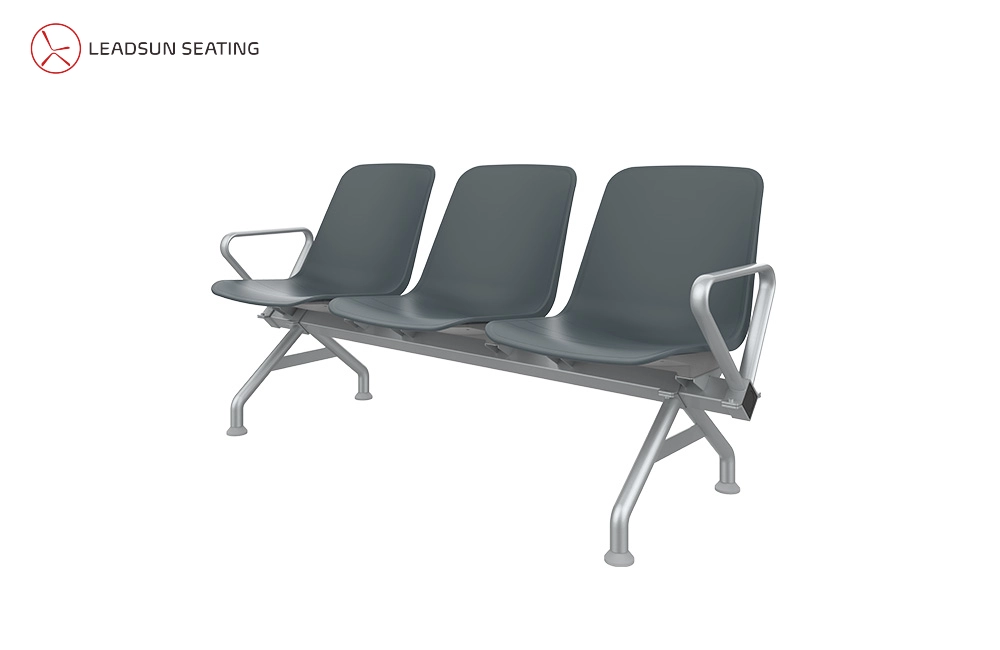
LS-551 Ergonomic Modular Waiting Chairs | Commercial Seating Solutions by Leadsun Seating
Leadsun's LS-551 Ergonomic Modular Waiting Chairs offer superior comfort for any commercial space. Ideal for hospitals, airports, and more, these modular chairs provide flexible configurations and ergonomic support. Experience unmatched comfort and style with Leadsun Seating.
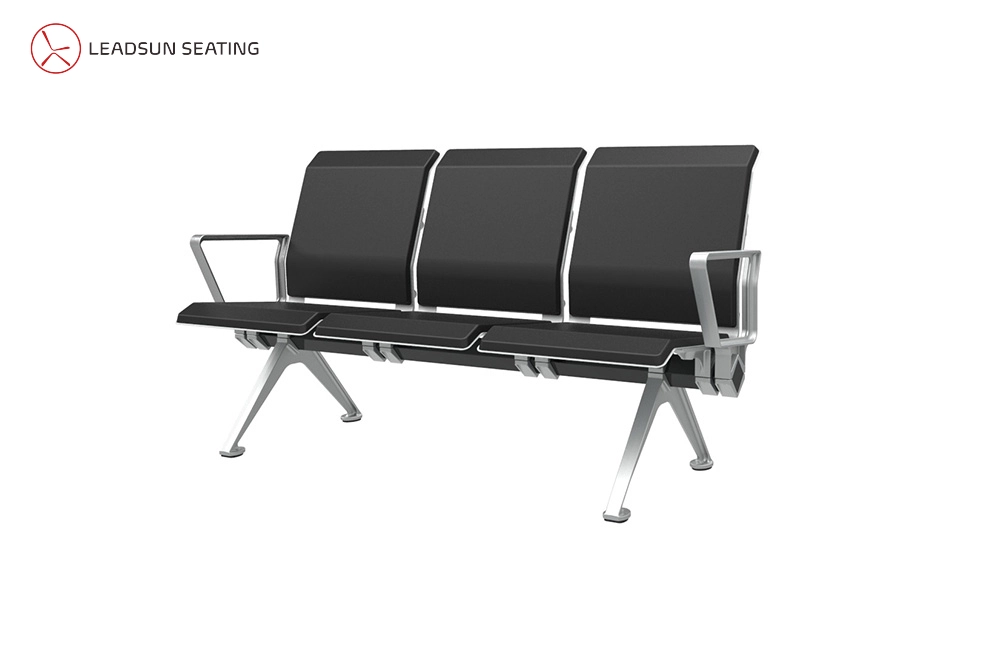
LS-529Y Ergonomic Waiting Chairs | High-Density PU Seating Solutions by Leadsun Seating
Leadsun's LS-529Y ergonomic waiting chairs offer superior comfort for airport lounges and hospitals. High-density PU seating ensures durability. Experience lasting quality with Leadsun's commitment to comfortable waiting room furniture.
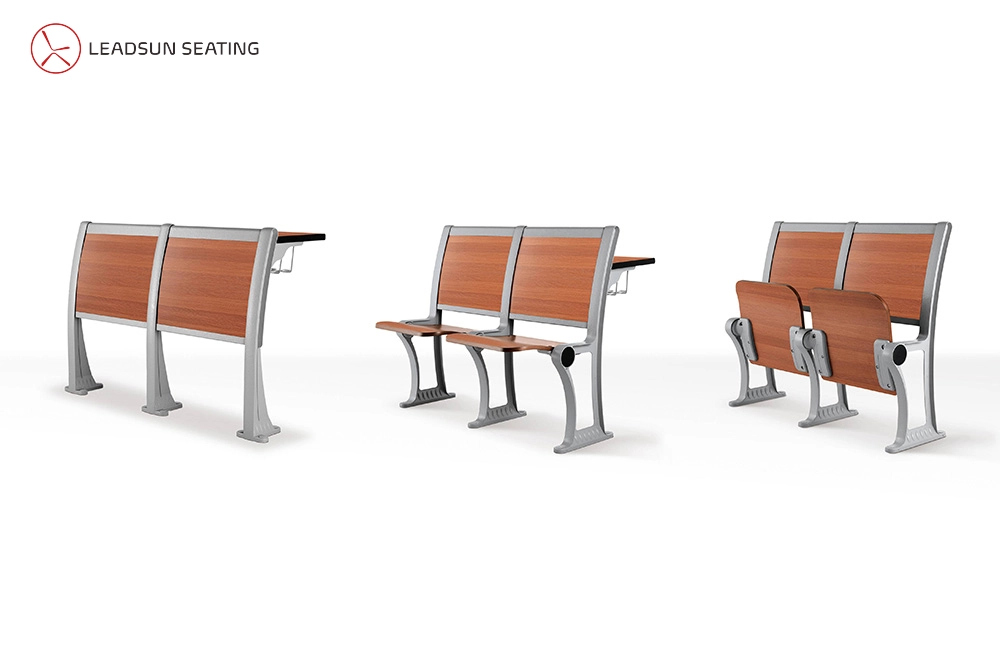
LS-908 Series Fixed Public Auditorium Chair or Tiered Classroom Solutions by Leadsun Seating
Introducing the LS-908 Series by Leadsun, your ideal solution for tiered classroom seating and fixed public auditorium chairs. Designed for comfort and durability, this series enhances audience engagement in educational and corporate settings. Discover the perfect blend of functionality and style with Leadsun Seating.
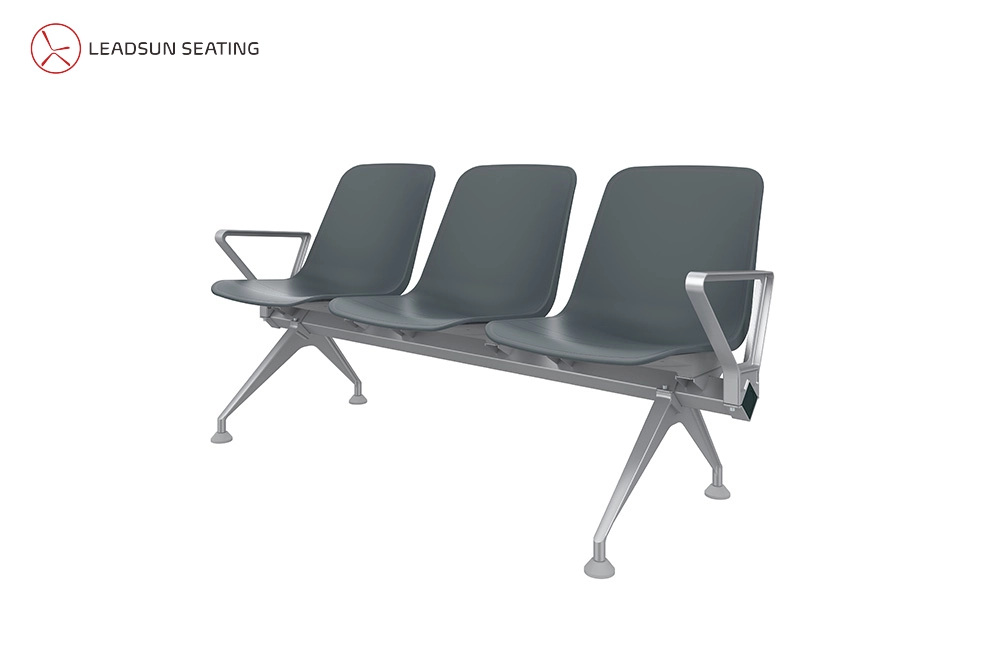
LS-550 Comfortable and Durable Waiting Chair | Customizable Waiting Chair Supplier Leadsun Seating
The LS-550 waiting chair from Leadsun offers superior comfort and durability for any public place. Customize your seating with Leadsun, a leading customizable waiting chair supplier. Ideal for high-traffic areas, the LS-550 ensures lasting performance and style.
Ready for your public seating project?
We specialize in providing high-quality, customizable seating solutions for public spaces, and we are excited to assist you with your project.
Our professional team will quickly answer your questions and provide customized solutions to ensure you have a worry-free experience.

Leadsun Seating is also engaged in the design, development, production, and marketing of lightweight public seats in public places, with an annual output of desks and chairs.
 Scan QR Code