







How do you choose waiting room chairs for medical clinics?
- 1) What seat width, depth and spacing should I specify for mixed-age medical clinic waiting rooms to maximize comfort and room capacity?
- 2) Which upholstery and finish materials hold up to daily disinfecting with hospital-grade agents without degrading?
- 3) What frame construction and load ratings should I require to ensure 10+ years of heavy use in a high-traffic clinic?
- 4) How should I design a waiting room layout to reduce perceived wait times and maintain infection control during peak hours?
- 5) For clinics that host patient-education sessions, are linked beam seating or modular lounge seating a better buy when space must double as a small lecture hall?
- 6) What precise procurement (RFP) specs and test data should I include to avoid low-cost seating that fails infection control, durability or accessibility requirements?
- Concluding summary: advantages of specifying the right waiting room chairs and lecture hall seating
How to Choose Waiting Room Chairs for Medical Clinics & Lecture Hall Seating
Choosing the right patient seating and lecture hall seating requires combining infection-control materials, durable construction, accessibility compliance and good space planning. Below are six specific, beginner-focused questions that frequently lack in-depth answers online, followed by practical, evidence-based solutions you can act on when purchasing waiting room chairs and lecture seating.
1) What seat width, depth and spacing should I specify for mixed-age medical clinic waiting rooms to maximize comfort and room capacity?
Too often buyers pick standard reception chairs without basing choices on actual anthropometrics or clinic flow. To balance comfort and capacity, use these evidence-based dimensions and layout rules:
- Seat width: specify 18–22 inches (460–560 mm) per standard adult seat. For bariatric seating, specify 30–40 inches (760–1015 mm) and a reinforced frame. Use a mix: at least one bariatric seat per cluster if your clinic serves diverse body sizes.
- Seat depth: 16–18 inches (405–455 mm) is typical for adult waiting seating; deeper seats (18–20 in) are fine for lounge-style chairs. For elderly patients, shallower seats (16 in) improve ability to stand.
- Seat height: 17–19 inches (430–485 mm) supports most adults and aligns with ADA guidance for accessible seating heights.
- Armrests and transfer clearance: armrests should be 7–9 inches (175–230 mm) above seat plane and sturdy enough to assist standing. Leave a minimum 36-inch (915 mm) clear aisle for wheelchair circulation and at least one 30x48-inch (760x1220 mm) clear floor space for wheelchair placement in the waiting zone.
- Spacing between seats and clusters: for linear seating, allow 6–12 inches between armrests when paired seats encourage social proximity; for bench or modular seating, maintain 24–30 inches between clusters to enable caregiver movement and cleaning access.
- Per-person area planning: budget ~18–24 sq ft per person as a starting density in a typical clinic waiting area (includes circulation). Adjust for local code and expected peak occupancy.
Applying these specs in CAD or space-planning software produces a layout that preserves sightlines, circulation and ADA-compliance while maximizing seating density.
2) Which upholstery and finish materials hold up to daily disinfecting with hospital-grade agents without degrading?
Material failure from regular cleaning is a top cause of premature replacement. Specify materials tested for chemical compatibility and abrasion:
- Preferred materials: antibacterial, bleach-cleanable polyurethane (TPU) or medical-grade vinyl (PVC) with welded seams. These provide low porosity and withstand frequent wiping with quaternary ammonium compounds and diluted sodium hypochlorite if manufacturer-verified.
- Seam construction: welded or heat-sealed seams are far more resistant to fluid ingress and disinfectants than stitched seams with caulking. Request seam detail drawings in the RFP.
- Foam and fire safety: specify high-resilience, closed-cell or treated foam that meets local fire codes and is listed as compliant with TB117-2013 (or local equivalent) for public buildings. Confirm whether the foam is certified to maintain integrity after repeated cleaning.
- Abrasion and wear: require upholstery rated for heavy commercial use. For woven options (if used), request Wyzenbeek double-rub testing ≥100,000 cycles; for coated fabrics, request industry-standard abrasion and tensile tests.
- Chemical compatibility testing: demand manufacturer-provided test reports proving upholstery and finishes resist the specific disinfectants your infection control team uses (e.g., 0.1%–0.5% sodium hypochlorite, EPA-registered disinfectants). Include frequency and concentration in the spec so results are relevant.
- Cleaning protocol: integrate a cleaning regimen aligned with CDC guidance for environmental infection control in healthcare facilities. Ensure stain- and germ-resistant surfaces can be wiped between patients with approved agents without losing color, texture or seam integrity.
Buying upholstery without verified disinfectant compatibility causes premature peeling, stiffening or color change. Always request lab reports or manufacturer declarations for cleaning agents you intend to use.
3) What frame construction and load ratings should I require to ensure 10+ years of heavy use in a high-traffic clinic?
Durability depends on material gauge, weld quality, and design details. Specify measurable mechanical requirements:
- Frame materials: specify welded steel or aluminum frames with powder-coat finish. For high-traffic clinics, heavy-gauge steel (e.g., 14–16 gauge for structural members) improves longevity.
- Welds and joints: require continuous welds at high-stress junctions and gussets or reinforced brackets on legs and armrests. Specify visible-weld inspection or NDT documentation for large orders if needed.
- Load ratings: standard seats: minimum 300–400 lb (136–181 kg) static load per seat. Bariatric seats: 600–1,000 lb (272–454 kg) depending on use. Ask for third-party test data or BIFMA/EN testing results to substantiate claims.
- Standards and testing: request conformity reports to relevant performance standards (e.g., ANSI/BIFMA X5.1 for general seating or EN 16139 for non-domestic seating). These standards verify fatigue, stability and strength performance under repeated use.
- Finish durability: powder-coat finishes resist chips and rust better than liquid paints. For coastal clinics, specify corrosion-resistant coatings and stainless-steel fasteners.
- Warranty and spare parts: require a minimum 5-year warranty on frame integrity and at least 2–3 years on upholstery for busy environments; negotiate spare seat modules and replacement fabric color matching as part of the contract to reduce downtime over a 10+ year lifecycle.
Asking manufacturers for test reports (BIFMA/EN) and realistic warranty commitments separates long-lived products from low-cost, short-lived imports.
4) How should I design a waiting room layout to reduce perceived wait times and maintain infection control during peak hours?
Perceived wait time depends on environment, comfort and visibility. For clinics, also maintain infection control and staff circulation:
- Cluster seating: arrange small clusters (2–4 seats) rather than long linear rows. Clusters create perceived privacy and reduce the impression of crowding. Include at least one family cluster (bench plus two chairs) for caregivers with children.
- Sightlines and information: position display screens or check-in desks so patients can see progress updates; visible staff activity can reduce anxiety. Provide clear signage and sightlines to minimize roaming.
- Materials and hygiene: choose easy-to-clean surfaces and provide visible sanitation stations. During infectious outbreaks, enable spacing flexibility—modular seating allows operators to increase distance between seats quickly.
- Acoustic and visual comfort: use warm lighting, matte surfaces to reduce glare, and acoustic panels to lower ambient noise—quieter spaces improve perceived comfort.
- Circulation and staff access: leave a clear 36-inch minimum corridor for gurneys and wheelchairs where applicable and provide direct paths from waiting areas to exam rooms to reduce cross-traffic.
- Multi-functional zones: designate separate zones for family waiting, children’s area (with wipeable, anti-microbial toys or furniture) and educational/lecture seating to avoid cross-contamination and make flows predictable.
Combining clustered seating, visible cleaning practices and efficient circulation reduces perceived wait times while meeting infection-control goals.
5) For clinics that host patient-education sessions, are linked beam seating or modular lounge seating a better buy when space must double as a small lecture hall?
Both have trade-offs. Choose based on frequency of lectures, AV needs, accessibility and the desired level of comfort:
- Linked beam seating (row seating):
- Pros: durable, space-efficient, easy to clean, consistent anchor points for fixed power or tablet arms, good for fixed-audience scenarios.
- Cons: less flexible for reconfiguration, can feel institutional, may require more planning for ADA transfer spaces and sightlines.
- Modular lounge seating:
- Pros: reconfigurable into clusters for breakout groups, more comfortable for informal education, easier to reposition for different uses (small group education, reception overflow).
- Cons: can be less space-efficient, may have more seams and joints that require cleaning, sometimes higher initial cost per seat.
- Hybrid recommendation: combine a bank of linked beam seats in a tiered or stepped lecture footprint for formal sessions and modular lounge clusters around the perimeter for small groups and waiting. Use removable tablet arms, integrated power and AV access on beam rows so seats can serve both lecture and waiting functions.
- Accessibility and sightlines: ensure movable seating zones include wheelchair spaces dispersed through the audience and that beam seating rows don’t block evacuation routes. For lecture use, plan sightlines and riser heights or use sloped floors for visibility if group sizes exceed ~12 people.
For multi-use clinics, a carefully specified hybrid system usually delivers the best balance of durability, flexibility and infection-control performance.
6) What precise procurement (RFP) specs and test data should I include to avoid low-cost seating that fails infection control, durability or accessibility requirements?
A weak RFP invites cheap, non-compliant offers. Include measurable, verifiable items:
- Scope and use profile: define expected daily cycles, peak occupancy and cleaning frequency (e.g., 300 patient-seatings per day; cleaned with EPA-approved disinfectants 4x daily).
- Material and finish specs: list upholstery type, color fastness, chemical compatibility requirements and seam construction (e.g., welded seams, specified disinfectants and concentrations for compatibility testing).
- Performance standards: require third-party test compliance such as ANSI/BIFMA X5.1 (or equivalent) for strength/durability, EN 16139 for non-domestic seating, and abrasion testing (Wyzenbeek ≥100,000 double rubs for heavy-use fabrics).
- Load and safety: state static load capacity per seat (e.g., 400 lb min) and bariatric seat ratings if relevant. Require stability testing results and documentation of fire-code compliance per local jurisdiction (list applicable codes).
- Cleaning validation: request chemical compatibility test reports for the disinfectants you use and accelerated aging or cleaning-cycle test results demonstrating performance after X cleanings (specify expected cleaning cycles per year).
- Warranty and spares: define minimum warranty terms (e.g., 5 years on frame, 3 years on upholstery) and require a spare parts package (number of spare seats/modules and fabric remnants for 10-year color match).
- Delivery, installation and maintenance: specify on-site installation, damage liability, installation tolerances, and recommended maintenance schedule. Require installation crew certifications for anchored seating or riser systems.
- Documentation and labeling: require product data sheets, material safety data sheets (MSDS) for finishes, and a bill of materials with manufacturer contact info. Ask for sample panels and references from three healthcare clients.
An RFP with specific performance targets, test reports and service requirements filters out low-cost suppliers who cannot substantiate claims.
Concluding summary: advantages of specifying the right waiting room chairs and lecture hall seating
Investing time up front on correct specifications—seat dimensions, chemical-compatible upholstery, welded seams, tested frames, appropriate load ratings, and a detailed RFP—yields measurable advantages: longer lifecycle and lower total cost of ownership, compliance with accessibility and fire codes, reduced infection risk through cleanable surfaces, improved patient comfort and perceived wait times, and the flexibility to repurpose seating for lectures or patient education. Selecting durable, hospital-grade patient seating and modular lecture solutions also minimizes downtime and replacement costs and supports a safer, more welcoming clinic environment.
For a customized quote and space-planning assistance tailored to your clinic or lecture hall needs, contact Leadsun Seating at www.leadsunseating.com or email [email protected].

15 Best Office Waiting Room Chairs of 2026: The Ultimate Comfort & Style Guide

The Future of Reception Areas: 10 Modern Waiting Room Chair Trends to Watch in 2026

Airport Seating Reimagined: The 2026 Global Guide to Terminal Comfort and Design

7 Costly Mistakes Facilities Managers Make When Specifying Commercial Bench Seating

Commercial Beam Seating Solutions for High-Traffic Public Spaces
One Stop Airport Terminal Seating
Are the seat materials durable? What's the lifespan?
We use high-strength, wear-resistant, and easy-to-clean premium materials, such as stain-resistant flame-retardant fabrics and rust-proof alloy frames. Under normal use, the seats can last 5 - 8 years.
What are the advantages of the one-stop solution compared to traditional procurement methods?
The one-stop solution integrates the entire service process, saving communication costs and time. It avoids coordination issues that arise when working with multiple parties and ensures consistency and coherence in design, production, and after-sales service.
Can you provide personalized seat customization?
We support comprehensive customization, including seat styles, functional modules (like charging ports, cup holders, etc.), color schemes, and even integrating airport brand elements to showcase a unique style.
Are there any successful cases we can refer to?
We’ve provided services to numerous international and major domestic airports. We can offer detailed case materials, on-site photos, and client testimonials, so you can get a clear understanding of the solution’s effectiveness.
FAQs
Are your products compliant with safety and accessibility standards?
-
Absolutely. All of our seating solutions comply with relevant safety regulations and accessibility standards, ensuring comfort and safety for all users, including those with special needs.
-
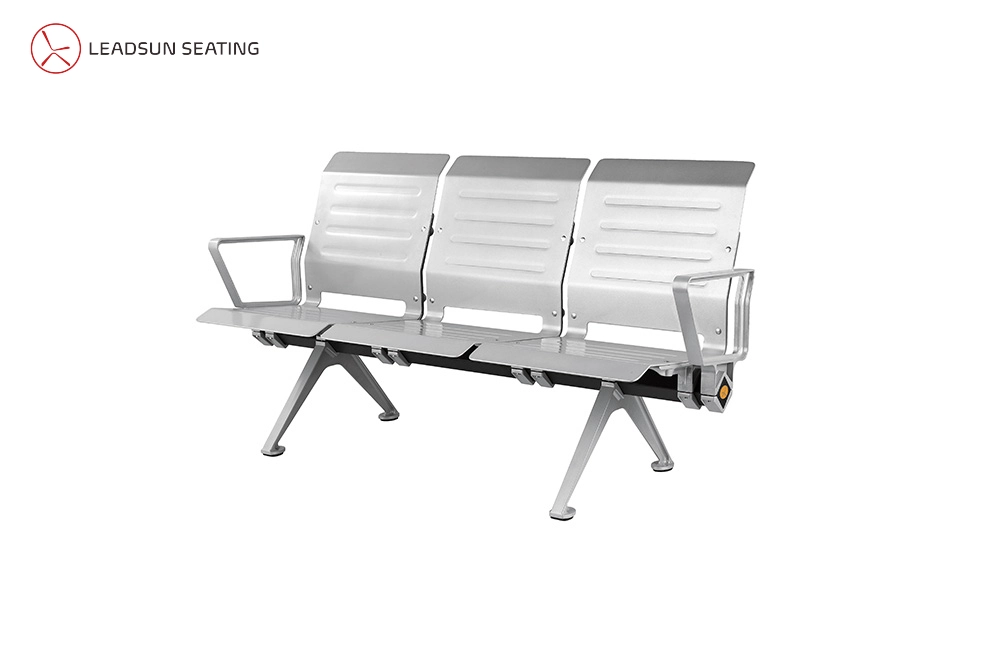
LS-529AL Aluminum Ergonomic Waiting Chairs | Modular & Durable Seating by Leadsun Seating
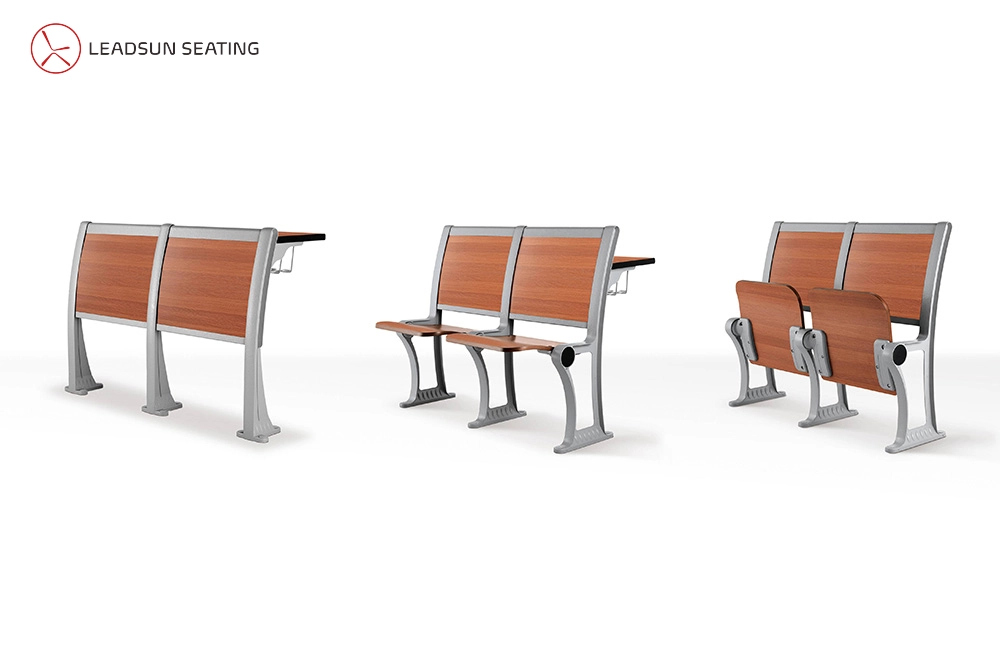
LS-908 Series Fixed Public Auditorium Chair or Tiered Classroom Solutions by Leadsun Seating
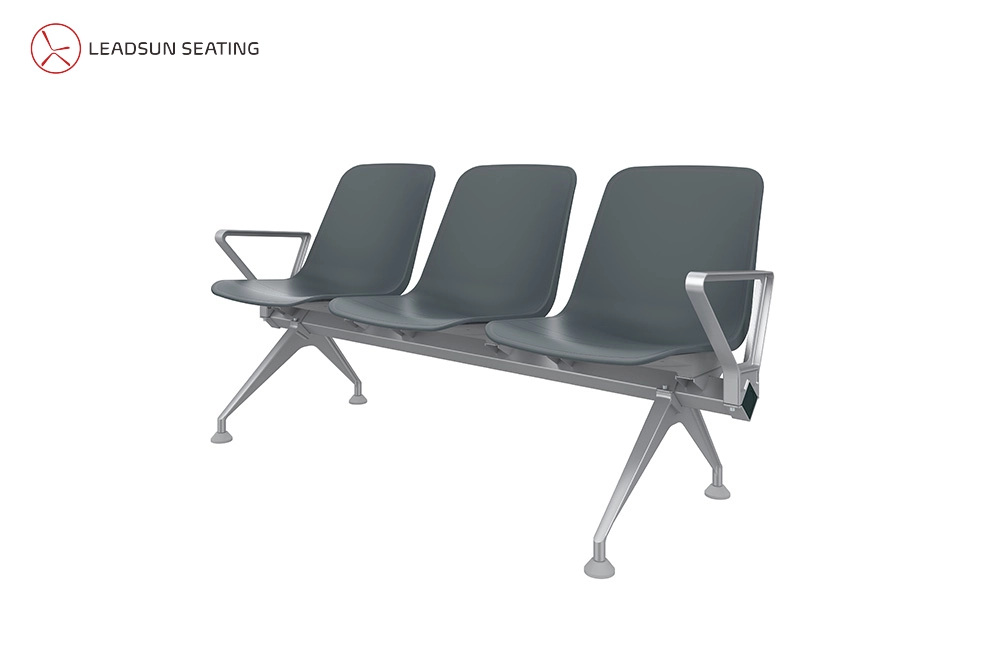
LS-550 Comfortable and Durable Waiting Chair | Customizable Waiting Chair Supplier Leadsun Seating
The LS-550 waiting chair from Leadsun offers superior comfort and durability for any public place. Customize your seating with Leadsun, a leading customizable waiting chair supplier. Ideal for high-traffic areas, the LS-550 ensures lasting performance and style.
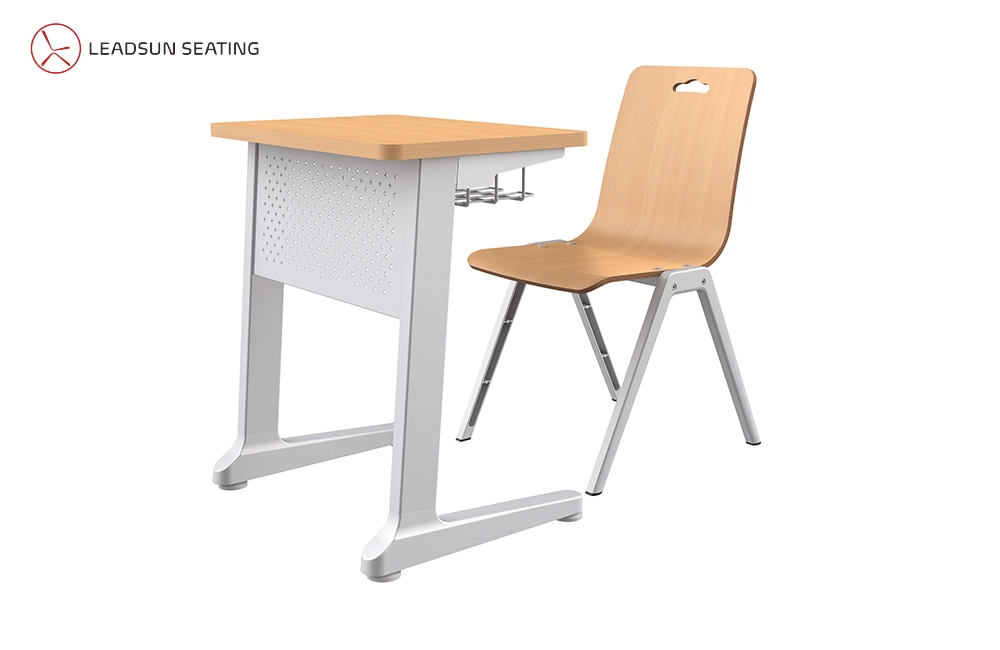
LS-9301 Single movable classroom chair |The Ultimate Flexible Solution for Modern Classrooms by Leadsun Seating
Ready for your public seating project?
We specialize in providing high-quality, customizable seating solutions for public spaces, and we are excited to assist you with your project.
Our professional team will quickly answer your questions and provide customized solutions to ensure you have a worry-free experience.

Leadsun Seating is also engaged in the design, development, production, and marketing of lightweight public seats in public places, with an annual output of desks and chairs.
 Scan QR Code