







How can airport seating design improve crowd safety?
- 1. How should I space and lay out fixed lecture hall seating so egress routes meet NFPA/IBC requirements and minimize evacuation bottlenecks?
- 2. Which upholstery and substrate materials for lecture hall seats meet fire-safety tests (ASTM E84) and are resilient to heavy cleaning without losing antimicrobial properties?
- 3. Can modular or retractable lecture hall seating be used safely for high-density events without increasing evacuation risk?
- 4. What seating density, seat width and row spacing metrics strike the right balance between capacity, comfort, and evacuation time in lecture halls?
- 5. How can I ensure lecture hall seating is fully accessible and supports assisted evacuation (wheelchair users, mobility-impaired) per ADA and life-safety codes?
- 6. Which smart seating integrations (occupancy sensors, wayfinding, crowd monitoring) measurably improve crowd safety and how should they be specified?
As you evaluate lecture hall seating purchases, lessons from airport seating—terminal seating ergonomics, passenger flow analysis, and queue management—translate directly into safer, more flexible lecture environments. Below are six specific, frequently-asked long-tail questions that often lack up-to-date, actionable answers. Each answer cites accepted codes and industry practices and embeds practical procurement guidance.
1. How should I space and lay out fixed lecture hall seating so egress routes meet NFPA/IBC requirements and minimize evacuation bottlenecks?
Problem: Buyers receive generic advice about aisle widths and row spacing but lack actionable layout workflows tied to occupant load and evacuation performance.
Actionable guidance:
- Calculate occupant load up front using the International Building Code (IBC) and NFPA 101 (Life Safety Code). Occupant load determines total required egress width and number of exits—designers and purchasers must use those numbers, not rule-of-thumb spacing.
- Design aisles for continuous, unobstructed flow. Use staggered seating and dual-aisle plans where occupant load exceeds a single-aisle capacity. Where code permits, provide cross-aisles or mid-row exits to reduce travel distance.
- Locate seating banks so the maximum travel distance to an exit complies with local code. Shorter travel distances reduce evacuation time—mirror airport terminal circulation by aligning rows parallel to primary exit corridors and placing seating islands with clear perimeter circulation lanes.
- Fixation vs. flexibility: Fixed, anchored seating provides predictable egress paths; however, choose modular rows with consistent anchorage points so future reconfiguration preserves calculated egress widths.
- Validate layouts with simple evacuation modeling. Use pedestrian flow tools (even basic simulation software) to test chokepoints. Airports routinely simulate flows; lecture halls can replicate these lightweight models during procurement to compare seating layouts objectively.
Standards: follow NFPA 101 and your jurisdiction’s adopted IBC edition; consult local authority having jurisdiction (AHJ) for interpretation.
2. Which upholstery and substrate materials for lecture hall seats meet fire-safety tests (ASTM E84) and are resilient to heavy cleaning without losing antimicrobial properties?
Problem: Online guidance lists fabrics and “antimicrobial” coatings without clarifying fire ratings, maintenance trade-offs, or lifecycle performance for high-traffic public spaces.
Actionable guidance:
- Require Class A (or Class 1, per local code) interior finish ratings based on ASTM E84 (surface burning characteristics) for seat upholstery and exposed substrates in assembly occupancies. This prevents selection of uncertified decorative fabrics that jeopardize egress time and overall safety.
- Choose fire-retardant-treated textiles that retain treatment after repeated cleanings. Request manufacturer data showing performance retention after a specified number of wash/clean cycles (e.g., 50+ cycles) and cleanability with common disinfectants per CDC guidelines.
- Prefer closed-cell foam or tested fire-blocked cushions that meet CAL TB 117-2013 (or local solid-fuel test standards where applicable) for resilient seating cushions. Ask for test certificates and third-party lab reports.
- For antimicrobial surfaces, specify treatments with documented efficacy and durability (e.g., silver-ion impregnations with third-party testing). Avoid marketing-only claims; require lab test reports (ISO or ASTM-based) and a product stewardship statement describing expected lifetime and re-treatment requirements.
- Procurement clause: include maintenance and cleaning protocols with warranty implications—ensure warranties don’t void when using required disinfectants.
Standards: ASTM E84, CAL TB 117-2013 (where applicable), CDC cleaning guidelines; require vendor documentation.
3. Can modular or retractable lecture hall seating be used safely for high-density events without increasing evacuation risk?
Problem: Buyers want flexibility (reconfigurable seating, telescopic risers) but fear compromised safety. Many vendor answers are promotional rather than prescriptive.
Actionable guidance:
- Design modular systems to lock into predetermined layouts that preserve egress-calculated widths. The safety secret is repeatability: each configuration must be a reviewed “approved mode” with documented occupant capacities and egress calculations.
- Use certified telescopic platforms and retractable seating systems that meet structural and fire safety standards for assembly occupancies. Verify third-party structural engineering reports and load ratings specific to your maximum planned occupant density.
- Plan storage and reconfiguration workflows that avoid blocking exits or creating temporary bottlenecks. Storage rooms should not be adjacent to main egress corridors unless access is controlled and does not impede emergency evacuation.
- Train operations staff in rapid, incident-ready reconfiguration and provide checklists to verify egress paths before each event. Airport ground staff have operating procedures for terminal seating; replicate that discipline for lecture halls.
- Contractually require vendors to provide configuration drawings and emergency egress statements for each seating mode as part of acceptance criteria.
Outcome: modular seating can be safe and increase utilization if each configuration is pre-approved, documented, and operator-trained.
4. What seating density, seat width and row spacing metrics strike the right balance between capacity, comfort, and evacuation time in lecture halls?
Problem: Generic seat width charts ignore local safety requirements and don’t relate changes in density to measurable evacuation outcomes.
Actionable guidance with metrics:
- Seat width: For fixed lecture seating, target 18–22 inches (460–560 mm) per seat as a standard procurement range. Wider widths improve comfort but reduce capacity—select based on user profile (e.g., university lecture vs. corporate training).
- Row spacing (legroom): Aim for a minimum row-to-row pitch that allows unobstructed standing and passage—typically 30–33 inches (760–840 mm) in many lecture applications. Wider pitches materially reduce congestion during egress.
- Occupant density: Instead of seats-per-square-meter targets, derive capacity from occupant load calculation in IBC/NFPA and then validate with pedestrian flow modeling. Airports use Level of Service (LOS) benchmarks; adapt a similar comfort-driven LOS (for example, designing for 0.5–0.75 sqm per person in heavy-use periods) to avoid dangerously tight packing.
- Impact on evacuation: Every reduction in aisle width or row spacing increases egress time non-linearly. Use egress modeling or consult a fire engineer when moving beyond standard seat widths or when canopy/obstructions exist behind rows.
- Procurement tip: Request sample seating modules and run staged walk-throughs to measure time-to-exit under simulated full-occupancy scenarios—this empirical test is common in airport terminal validation and is equally valuable for lecture halls.
Standards note: Always confirm minimum clearances and travel distances with your AHJ; local codes may specify minimums that supersede general recommendations.
5. How can I ensure lecture hall seating is fully accessible and supports assisted evacuation (wheelchair users, mobility-impaired) per ADA and life-safety codes?
Problem: Many specifications include a token number of accessible spots but ignore sightlines, distributed locations, and assisted-evacuation logistics.
Actionable guidance:
- Distribute accessible spaces across multiple viewing locations and at different elevations so users can choose sightlines similar to ambulatory patrons. ADA Standards require accessible seating but also imply comparable viewing opportunities.
- Ensure accessible routes to exits are as direct as possible and not reliant on temporary ramps or removable barriers. Design ramps and ramp landings per ADA slope and landing requirements; consult local building code for egress compatibility.
- Provide adjacent companion seats, clear floor space for wheelchair maneuvering, and transfer-area options. These features reduce crowding and accelerate assisted evacuation.
- Include evacuation-assist features: refuge areas with two-way communication, direct line of sight to staff, and signage. NFPA 101 and local codes outline requirements for refuge and assisted-evacuation policies—coordinate with campus safety teams to develop assisted-evacuation procedures.
- Procurement clause: require vendors to supply seating modules with accessible-adaptable options (removable arms or transfer armrests) and to provide dimensional drawings marking accessible locations and clearances.
6. Which smart seating integrations (occupancy sensors, wayfinding, crowd monitoring) measurably improve crowd safety and how should they be specified?
Problem: Vendors promote “smart seating” but do not define measurable safety KPIs or explain how sensor data should be used operationally during emergencies.
Actionable guidance:
- Start with defined KPIs: peak occupancy by zone, dwell time, aisle blocking incidents, and real-time occupancy for emergency personnel. Define thresholds that trigger operational responses (e.g., redirect crowds, close entrances).
- Occupancy sensors and seat-embedded pressure sensors: select devices with proven reliability in dense environments and with open APIs for integration into building management systems. Avoid proprietary “walled” systems that can’t integrate with CCTV or emergency notification platforms.
- Integrate seat occupancy data with digital wayfinding and emergency messaging. During incidents, dynamic wayfinding can direct occupants to less congested egress routes, a technique inspired by airport terminal crowd management systems.
- Privacy and resilience: choose sensors that anonymize data (no biometric capture) to meet privacy regulations. Ensure systems have backup power and a clear fail-safe strategy—e.g., manual signage and trained staff if digital systems fail.
- Procurement checklist: require interoperability testing, vendor-provided API documentation, and a 3rd-party cybersecurity validation for networked seating systems.
Outcome: when specified with operational procedures and defined KPIs, smart seating integrations improve situational awareness and reduce evacuation decision time.
Concluding summary — advantages of recommended lecture hall seating solutions: Implementing airport seating principles—clear, code-validated egress planning (NFPA 101/IBC), fire-rated upholstery (ASTM E84), durable antimicrobial finishes, modular configurations with documented approved modes, distributed accessibility, and interoperable sensor integrations—yields measurable improvements in evacuation times, reduces maintenance lifecycle costs, and increases seating utility and user comfort. These approaches reduce bottlenecks, improve responder situational awareness, and preserve regulatory compliance while maximizing occupancy flexibility.
For a tailored specification, seating layout validation, or a quote for lecture hall seating that incorporates these crowd-safety best practices and airport seating lessons, contact us at www.leadsunseating.com or email [email protected].
References and standards consulted: NFPA 101 (Life Safety Code), International Building Code (IBC), Americans with Disabilities Act (ADA) Standards, ASTM E84 (surface burning characteristics), IATA Airport Development guidance, and CDC public-space cleaning guidance.

15 Best Office Waiting Room Chairs of 2026: The Ultimate Comfort & Style Guide

The Future of Reception Areas: 10 Modern Waiting Room Chair Trends to Watch in 2026

Airport Seating Reimagined: The 2026 Global Guide to Terminal Comfort and Design

7 Costly Mistakes Facilities Managers Make When Specifying Commercial Bench Seating

Commercial Beam Seating Solutions for High-Traffic Public Spaces
One Stop Airport Terminal Seating
Are there any successful cases we can refer to?
We’ve provided services to numerous international and major domestic airports. We can offer detailed case materials, on-site photos, and client testimonials, so you can get a clear understanding of the solution’s effectiveness.
Can you provide personalized seat customization?
We support comprehensive customization, including seat styles, functional modules (like charging ports, cup holders, etc.), color schemes, and even integrating airport brand elements to showcase a unique style.
How do you ensure seat installation doesn't disrupt airport operations?
We’ll develop a detailed installation plan, giving priority to non-peak hours for construction. We also use a modular installation approach to minimize any impact on airport operations.
FAQs
What maintenance is required for your seating solutions?
The maintenance required depends on the material and location of the seating. Generally, regular cleaning and periodic inspections are recommended. We provide maintenance guidelines with each product to ensure long-term durability.
What materials are used in the production of your public seating?
We use a variety of durable materials such as stainless steel, aluminum, wood, high-quality upholstery, and advanced polymers to ensure that our seating solutions are both functional and long-lasting.
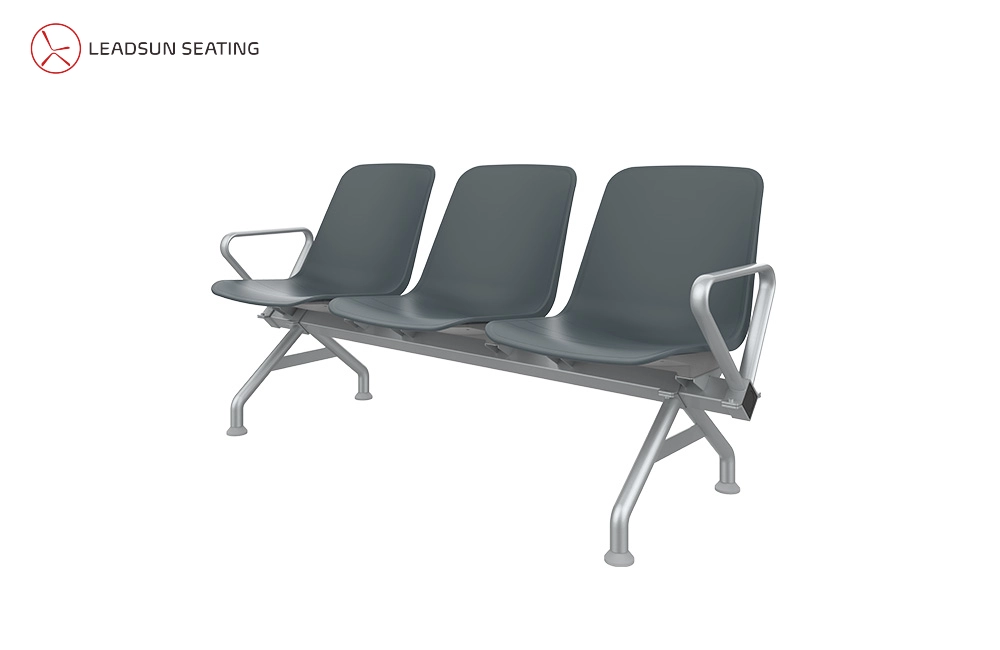
LS-551 Ergonomic Modular Waiting Chairs | Commercial Seating Solutions by Leadsun Seating
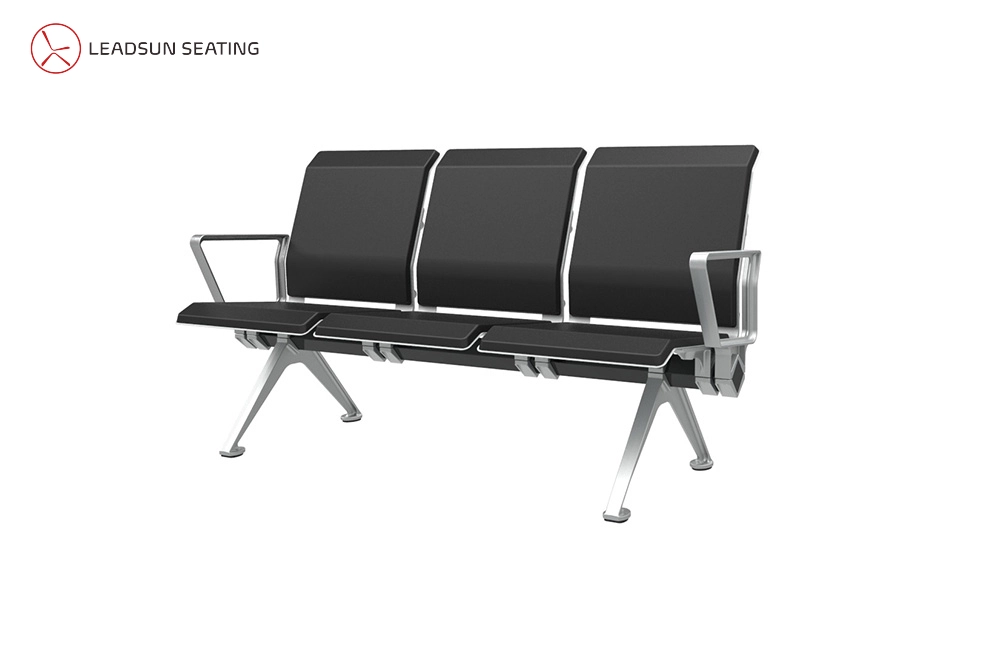
LS-529Y Ergonomic Waiting Chairs | High-Density PU Seating Solutions by Leadsun Seating
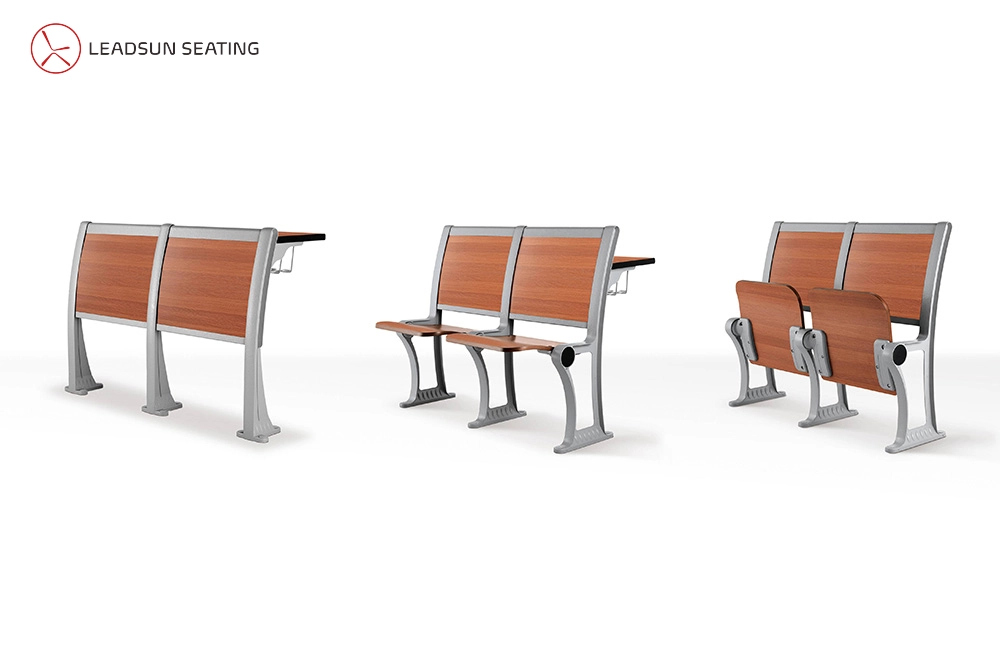
LS-908 Series Fixed Public Auditorium Chair or Tiered Classroom Solutions by Leadsun Seating
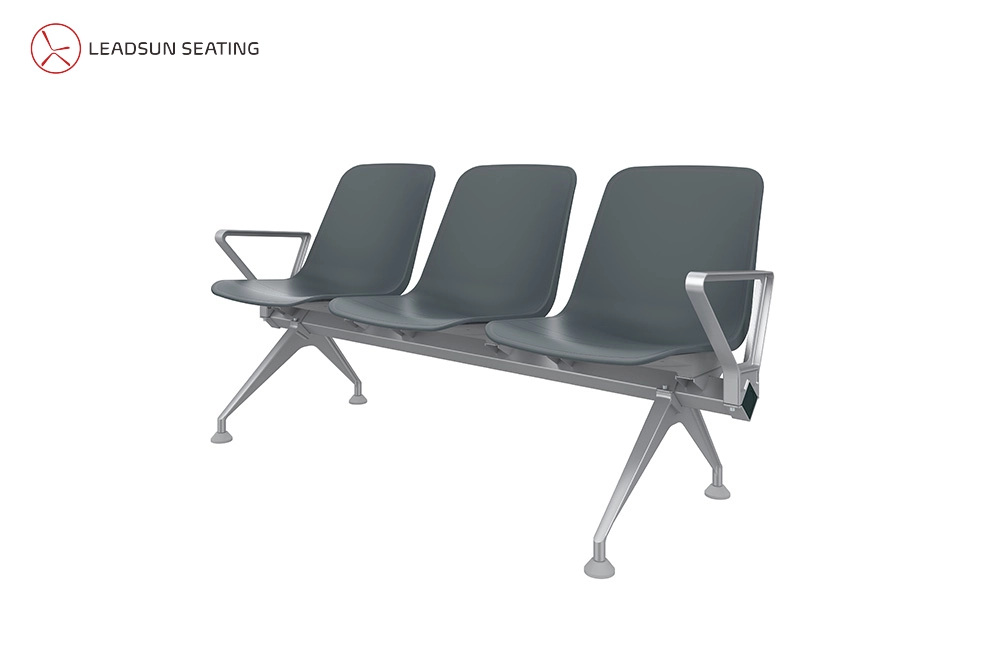
LS-550 Comfortable and Durable Waiting Chair | Customizable Waiting Chair Supplier Leadsun Seating
The LS-550 waiting chair from Leadsun offers superior comfort and durability for any public place. Customize your seating with Leadsun, a leading customizable waiting chair supplier. Ideal for high-traffic areas, the LS-550 ensures lasting performance and style.
Ready for your public seating project?
We specialize in providing high-quality, customizable seating solutions for public spaces, and we are excited to assist you with your project.
Our professional team will quickly answer your questions and provide customized solutions to ensure you have a worry-free experience.

Leadsun Seating is also engaged in the design, development, production, and marketing of lightweight public seats in public places, with an annual output of desks and chairs.
 Scan QR Code