







What is commercial bench seating and where is it used?
- 1. How do I calculate bench seat width and row spacing to maximize capacity, sightlines and comfort without violating ADA and egress requirements?
- 2. What mounting and subfloor preparation should I specify to avoid bench sagging, squeaks and to meet seismic/durability expectations?
- 3. Which materials and upholstery balance fire-code compliance, abrasion resistance and acoustics for lecture-hall bench seating?
- 4. How do I integrate power, data and ADA-compliant wheelchair spaces into bench seating during retrofits without blowing the budget?
- 5. What are realistic lifecycle costs and maintenance intervals for commercial bench seating versus individual chairs?
- 6. Should I choose modular (removable/telescopic) or fixed bench seating for a multi-use lecture hall to optimize flexibility and conversion time?
Leadsun Seating—drawing on years of commercial seating, education-sector installs, and product testing—answers six targeted, under-addressed questions beginners face when specifying commercial bench seating for lecture halls and auditoriums. The guidance below blends practical spec ranges, maintenance expectations, and compliance checkpoints (ADA, local egress/NFPA), helping facility managers and planners make defensible purchasing decisions.
1. How do I calculate bench seat width and row spacing to maximize capacity, sightlines and comfort without violating ADA and egress requirements?
Start with a user-first approach: comfortable seat width, adequate row spacing for ingress/egress, and sightline geometry. Industry practice for lecture-hall bench seating typically aims for seat widths in the 18–22 inch (460–560 mm) range per person when benches are continuous. Narrower seating (closer to 18) increases capacity but reduces comfort for long lectures; wider seating enhances comfort and accommodates larger users.
Row spacing (seat-to-seat pitch) for bench seating is commonly designed between 32–36 inches (810–915 mm) to allow standing, passing, and egress. When the lecture hall has a raked floor, measured sightlines become critical: set bench risers and row offsets so a seated eye height sees over the head of the person in front. For bench runs without staggered seating, increase vertical rake or add a 2–4 inch (50–100 mm) rise per row to preserve sightlines.
Compliance checkpoints:
- Provide accessible (ADA) locations dispersed across the venue—don’t cluster all wheelchair spaces at the back. Consult the current ADA standards for the exact number and placement rules in your jurisdiction.
- Ensure aisle widths and egress paths meet local building and fire codes (refer to NFPA 101 Life Safety Code and local authority having jurisdiction for required clear widths and travel distances).
Practical steps when planning:
- Prepare a scaled seating plan showing bench lengths, seat markers every 18–22 and parallel aisles to verify capacity and egress.
- Mock a row in full scale on-site to validate comfort and sightlines before final ordering.
- Factor in seat end treatments for armrests, integrated flip-up desks, or gaps for access points.
2. What mounting and subfloor preparation should I specify to avoid bench sagging, squeaks and to meet seismic/durability expectations?
Bench longevity and safety start with mounting strategy and substrate evaluation. Permanent bench seating can be floor-mounted (anchored to concrete slab or steel riser), freestanding with anti-tip anchors, or rail-mounted on continuous steel beams. Choose the mounting method to suit your floor type and intended permanence.
Key specifications to include in purchase and installation documents:
- Substrate inspection: verify slab flatness, thickness and reinforcement. Require core drilling reports and concrete pull-test values (psi) if anchors will be used in critical egress rows.
- Anchor types: use code-appropriate mechanical anchors or cast-in anchors for concrete slabs; where seismic forces matter, specify seismic-rated anchors and restraint systems per local seismic codes.
- Continuous support vs point supports: continuous steel beam supports reduce local deflection and squeak risk compared with thin intermittent legs—specify minimum beam profiles and corrosion-resistant coatings.
- Isolate noise and vibration: include non-metallic pads or rubber isolators between bench supports and the finished floor to reduce squeaks and sound transmission.
Installation notes:
- Require vendor-supplied installation diagrams, torque specs for anchors, and final on-site QA testing (spot checks for deflection and anchor pull-out).
- Include commissioning steps: walk-through after installation, and retorque anchors after an initial occupancy period (90 days) to detect settling.
3. Which materials and upholstery balance fire-code compliance, abrasion resistance and acoustics for lecture-hall bench seating?
Select materials that meet three simultaneous needs: safety (fire), durability (abrasion & wear), and acoustic performance (sound absorption/reflectance). Typical commercial bench seat constructions combine a structural substrate (plywood or durable laminate over steel), a cushioning layer, and a performance fabric.
Material guidance:
- Fire and smoke: specify upholstery and foam that comply with applicable local fire codes and widely accepted test methods. Many venues require fabrics with proven flame-retardant properties; confirm compliance with applicable standards in your jurisdiction (for example, local building codes reference NFPA or local test methods).
- Abrasion resistance: for high-traffic educational settings, select fabrics with high double-rub/Wyzenbeek ratings (commercial performance ranges). Vinyls and heavy-duty woven fabrics typically perform best over long use and are easier to clean.
- Acoustics: choose backed upholstery and bench-end baffles or upholstered panels where sound absorption is needed. Hard bench undersides and floor reflections can increase reverberation—consider acoustic panels or absorptive seat fronts if lecture clarity is a priority.
- Finishes: powder-coated steel supports, high-pressure laminate (HPL) tabletops, and sealed edges on wood surfaces extend life in high-use lecture halls.
Procurement tip: ask manufacturers for third-party test reports (fire certificate, abrasion test results, lightfastness) and request sample panels for onsite acoustic and comfort trials.
4. How do I integrate power, data and ADA-compliant wheelchair spaces into bench seating during retrofits without blowing the budget?
Integrating power/data and accessible seating requires early coordination between AV, electrical, accessibility planners and the bench seating vendor. Retrofits are more constrained than new construction, so plan for conduit paths, floor boxes, and accessible locations before ordering benches.
Practical checklist:
- Map desired power/data needs per bench run (e.g., laptop power every 6–8 seats, shared USB charging at aisle ends). Early AV/IT drawings reduce costly field changes.
- Floor boxes and conduit: where benches remain fixed, integrate floor boxes at bench ends or under leg beams; in retrofit projects, use surface-mounted raceways only if approved by code and aesthetics teams.
- ADA integration: distribute wheelchair spaces across the venue—not only at the back. Companion seating should be immediately adjacent. Confirm local ADA or accessibility code requirements for the number of wheelchair spaces and their placement; treat switching between bench and removable module seats as a means to create accessible locations.
- Visibility and assistive listening: accessible seats should provide equivalent sightlines to speakers and access to assistive listening systems. Include clear sightline verification in the AV plan.
Cost-conscious strategies:
- Group power/data runs into shared trunking under continuous bench beams to reduce per-seat wiring costs.
- Use removable bench modules in limited areas to create accessible spaces on a flexible basis rather than reworking entire rows.
5. What are realistic lifecycle costs and maintenance intervals for commercial bench seating versus individual chairs?
Lifecycle cost depends on initial materials, daily wear, cleaning regimen, and how often components (upholstery, hardware) are replaced. Bench seating often yields lower per-seat cost and easier cleaning (continuous surfaces) but can incur higher repair complexity for integrated systems (power or folding desks).
Budgeting guidelines:
- Initial cost: bench seating commonly reduces installed cost per seat compared with fully upholstered individual chairs because of fewer discrete components and simpler anchoring.
- Maintenance cycle: schedule regular inspections every 6–12 months for mechanical fasteners, anchor torque, and upholstery condition. Minor squeaks or loose bolts should be corrected immediately.
- Upholstery replacement: expect mid-life upholstery refresh depending on fabric choice and traffic—plan for upholstery replacement rather than full seat replacement. In higher-traffic academic settings, plan a refresh every 7–12 years for heavily used benches, longer for heavy-duty fabrics.
- Serviceable parts: choose benches with replaceable modules (seat panels, cushions, hardware kits) so repairs don’t require full-row replacement.
When comparing to individual chairs: factor in cleaning labor (benches can be faster to wipe), storage needs (individual chairs may be easier to reconfigure), and the projected lifetime (both solutions commonly last 15–25 years with routine maintenance; warranty coverage and spare-parts availability will influence total cost of ownership).
6. Should I choose modular (removable/telescopic) or fixed bench seating for a multi-use lecture hall to optimize flexibility and conversion time?
Decision drivers are frequency of reconfiguration, storage options, staff resources, and budget. Modular bench seating (removable modules or telescopic systems) offers flexibility for exams, concerts, or flat-floor setups, but increases initial cost and requires storage space. Fixed benches are less expensive and secure but limit reuse scenarios.
Consider these factors:
- Changeover time: telescopic or retractable bench systems allow faster conversions (often mechanized or assisted), while manual removable benches require labor to remove, stack and store.
- Storage footprint: modular systems need dedicated storage that is dry, secure and sized for stacked modules. If storage is remote, factor transport time and labor into operations costs.
- Durability: mobile modules should be reinforced at lifting points and designed for repeated handling; verify caster and stacking protection to prevent damage during storage.
- Cost-benefit: run a use-case analysis—calculate cost per conversion (labor + time) versus the High Quality for a modular/telescopic system. For venues reconfigured frequently (weekly), modular systems pay off faster.
Implementation tip: pilot a modular solution for one bay or a group of rows to validate conversion times, storage logistics and staff processes before committing to a full-hall system.
Leadsun Seating’s team can provide specification templates, sample materials, and on-site mock-ups to validate sightlines, accessibility and AV integration before purchase.
Conclusion — Advantages of commercial bench seating: Commercial bench seating offers economical per-seat costs, streamlined cleaning and maintenance, higher density capacity for lecture halls, and flexible solutions via removable or telescopic modules. Properly specified bench seating—using durable finishes, tested upholstery, seismic-aware anchoring and integrated AV/power provisions—delivers a long service life with predictable maintenance. Bench systems also allow continuous aesthetic runs that enhance sightlines and create unified acoustical/visual zones in lecture halls.
Contact us for a free consultation and quote: www.leadsunseating.com or [email protected].

15 Best Office Waiting Room Chairs of 2026: The Ultimate Comfort & Style Guide

The Future of Reception Areas: 10 Modern Waiting Room Chair Trends to Watch in 2026

Airport Seating Reimagined: The 2026 Global Guide to Terminal Comfort and Design

7 Costly Mistakes Facilities Managers Make When Specifying Commercial Bench Seating

Commercial Beam Seating Solutions for High-Traffic Public Spaces
One Stop Airport Terminal Seating
How long is the production cycle? Can you deliver on time?
The production cycle depends on the order size and customization complexity. We’ll create a detailed production plan in advance and have a professional logistics and installation team in place to ensure on-time delivery and efficient implementation.
What are the advantages of the one-stop solution compared to traditional procurement methods?
The one-stop solution integrates the entire service process, saving communication costs and time. It avoids coordination issues that arise when working with multiple parties and ensures consistency and coherence in design, production, and after-sales service.
How does the seat design ensure passenger comfort?
The solution adopts ergonomic design principles. We optimize seat curves, backrest angles, and seat surface materials to effectively relieve the fatigue of passengers during long waits.
Can the solution meet the needs of airports of different sizes?
Whether it’s a small regional airport or a large international hub, we can customize the seating types and layout plans according to passenger flow, terminal area size, and functional positioning. This ensures we flexibly meet the requirements of all types of airports.
FAQs
What is the lead time for custom seating orders?
The lead time for custom seating orders varies depending on the complexity of the design and the order size. Typically, it takes 4-6 weeks for production, with shipping times depending on your location.
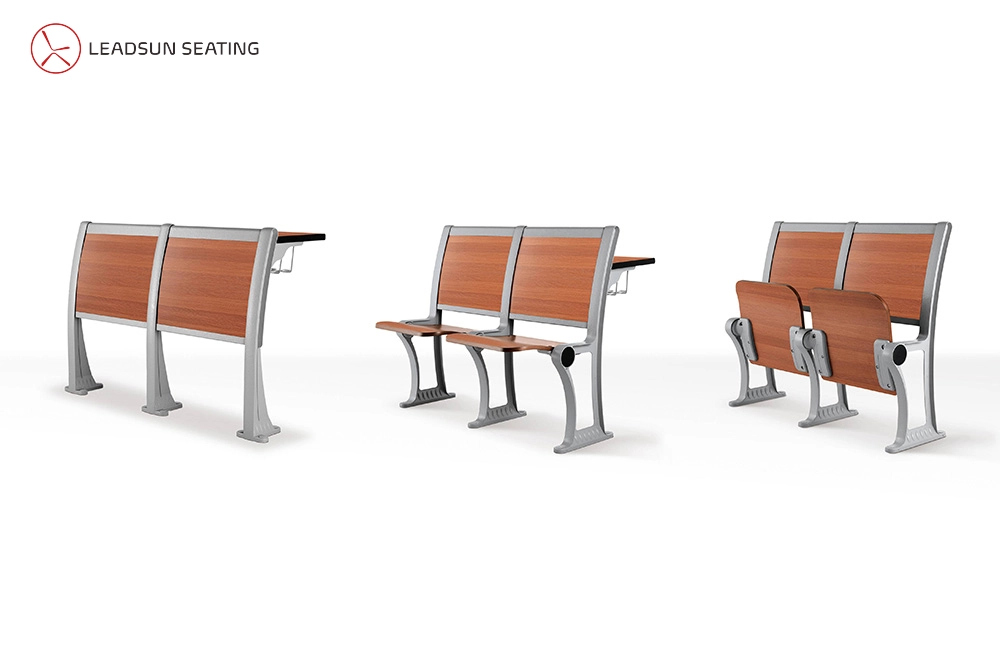
LS-908 Series Fixed Public Auditorium Chair or Tiered Classroom Solutions by Leadsun Seating
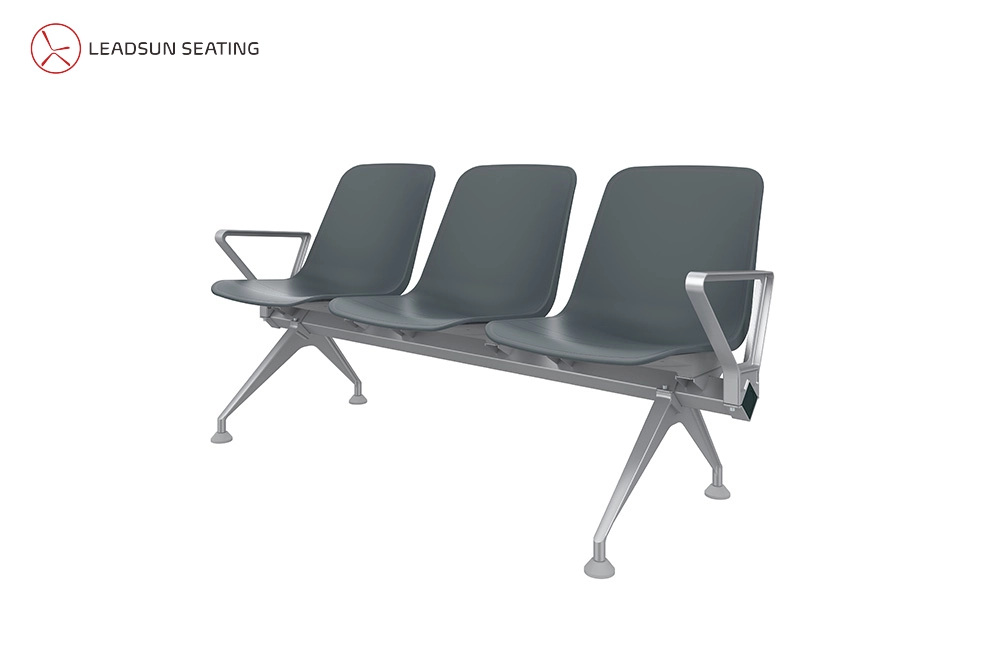
LS-550 Comfortable and Durable Waiting Chair | Customizable Waiting Chair Supplier Leadsun Seating
The LS-550 waiting chair from Leadsun offers superior comfort and durability for any public place. Customize your seating with Leadsun, a leading customizable waiting chair supplier. Ideal for high-traffic areas, the LS-550 ensures lasting performance and style.
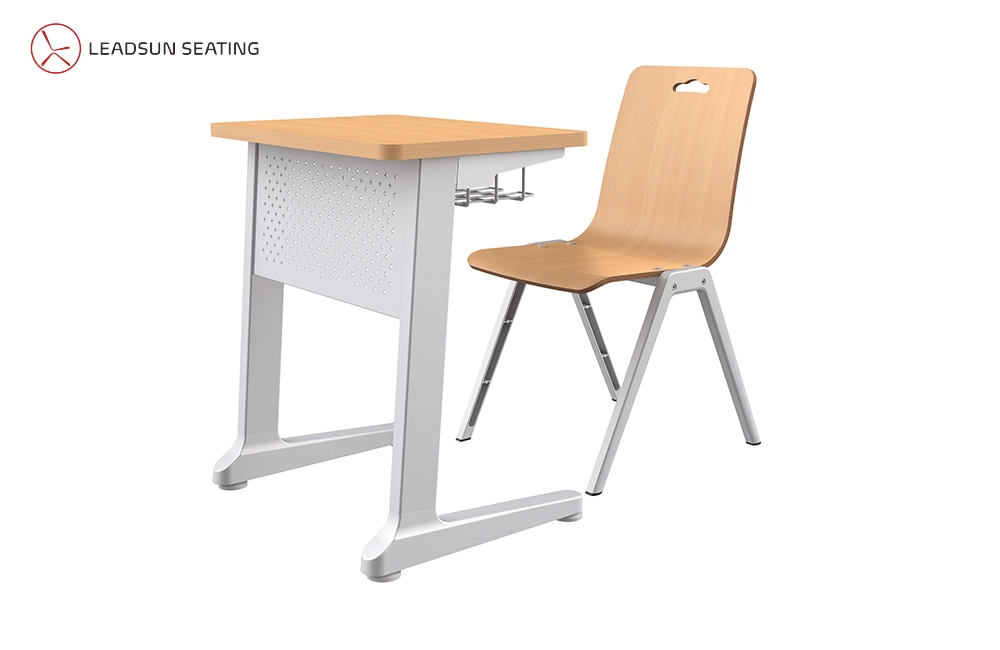
LS-9301 Single movable classroom chair |The Ultimate Flexible Solution for Modern Classrooms by Leadsun Seating
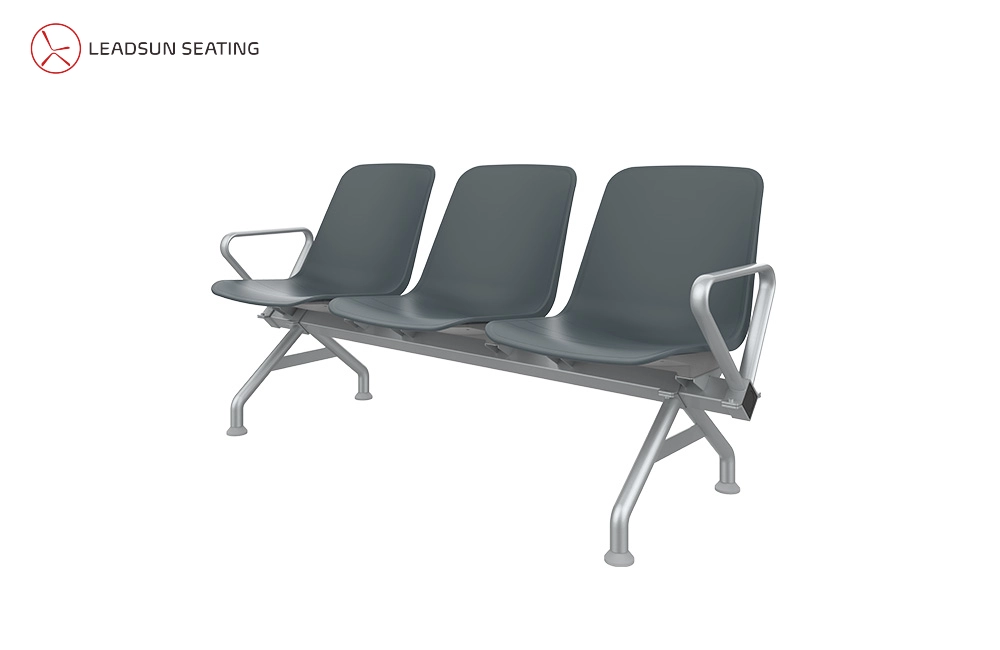
LS-551 Ergonomic Modular Waiting Chairs | Commercial Seating Solutions by Leadsun Seating
Ready for your public seating project?
We specialize in providing high-quality, customizable seating solutions for public spaces, and we are excited to assist you with your project.
Our professional team will quickly answer your questions and provide customized solutions to ensure you have a worry-free experience.

Leadsun Seating is also engaged in the design, development, production, and marketing of lightweight public seats in public places, with an annual output of desks and chairs.
 Scan QR Code