







How does maintenance affect airport seating lifecycle costs?
- 1. How do preventive maintenance schedules (cleaning, fastener checks, upholstery care) quantitatively change lifecycle cost per seat in high-traffic terminals?
- 2. What is the cost-benefit of replacing upholstery annually versus instituting a scheduled deep-clean and spot repair program for anti-microbial fabrics?
- 3. How does modular seating (replaceable modules vs full-seat replacement) affect repair turnaround time and lifecycle costs for both airport and lecture hall seating?
- 4. What maintenance records and KPIs should facility managers track to forecast replacement budgets and prove maintenance ROI for airport seating?
- 5. How much does corrosion control (powder-coating, stainless steel, regular inspections) reduce unplanned replacement in coastal or humid airports, and what specification language ensures vendors deliver appropriate corrosion resistance?
- 6. How should lifecycle cost analysis incorporate passenger-flow disruption (downtime) and custodial labor when scheduling seating maintenance in busy terminals or lecture halls?
- Concluding summary: Advantages of proactive maintenance and modular, durable seating
How Does Maintenance Affect Airport Seating Lifecycle Costs? A Practical Guide for Lecture Hall & Terminal Buyers
As specifiers, facility managers and procurement teams evaluate airport seating and lecture hall seating, maintenance strategy is the single biggest controllable factor that determines total cost of ownership. This article answers six specific long-tail questions that are often underserved online, embedding practical lifecycle-cost methods, inspection regimes, and procurement criteria you can use when making purchasing decisions.
1. How do preventive maintenance schedules (cleaning, fastener checks, upholstery care) quantitatively change lifecycle cost per seat in high-traffic terminals?
Preventive maintenance reduces failure rates and labor for reactive repairs, extending useful life and lowering lifecycle cost per seat. To quantify the effect, build a simple lifecycle-cost (TCO) model per seat using this structure:
- TCO per seat (NPV) = Initial purchase price + Σ (Annual maintenance cost + Annual repair cost + Downtime cost) / (1+r)^t − Salvage value discounted
Key inputs and how maintenance changes them:
- Repair frequency: A robust preventive program (monthly inspections, quarterly fastening checks, semi-annual upholstery deep-clean) typically reduces unscheduled repair frequency by 30–60% compared with reactive-only regimes. Lower repair frequency directly reduces annual repair cost and parts spending.
- Repair severity: Early detection keeps failures small (fastener tighten, hinge lubrication) rather than full component replacement (arm/rest assemblies), reducing per-event costs by an order of magnitude.
- Service life: Consistent preventive care allows seats to reach or exceed the manufacturer stated design life. While exact years vary by product, hitting design life reduces the annualized capital cost because replacement is deferred.
- Downtime/disruption: Predictable maintenance windows scheduled during off-peak minimize passenger flow impacts; unscheduled repairs cause passenger rerouting, indirect labor and opportunity costs that can be modeled as hourly disruption costs multiplied by expected disruption hours.
Actionable steps:
- Run the TCO model using your facility’s labor rates and parts costs. Compare scenarios: (a) reactive-only, (b) minimal preventive, (c) full preventive program. Use the NPV result to show dollars saved per seat.
- Track and report actual repair frequency and mean time to repair (MTTR) to validate the model and justify preventive spend.
2. What is the cost-benefit of replacing upholstery annually versus instituting a scheduled deep-clean and spot repair program for anti-microbial fabrics?
Annual replacement is rarely cost-effective unless fabrics are vandalized or safety-compromised. For anti-microbial textiles and coated fabrics, scheduled deep-cleaning plus spot repairs is almost always the lower-cost path and preserves seating appearance and hygiene.
How to compare options:
- Calculate direct materials cost: annual replacement cost vs. deep-clean chemical and labor cost plus occasional patch/repair part.
- Factor in downtime: replacement often requires removing the seat or taking the area out of service for longer.
- Account for lifecycle impact: replacement resets the wear clock but increases waste and can increase long-term procurement spend.
Best practice recommendation:
- Use anti-microbial, stain-resistant coated fabrics designed for high traffic. Implement daily surface wipe-downs, monthly inspections, and deep-cleaning every 6–12 months depending on passenger volumes and contamination risk. Reserve full upholstery replacement for failure beyond repair or when refurbishment cost approaches replacement cost (use a threshold—e.g., 60–70% of new seat unit cost).
3. How does modular seating (replaceable modules vs full-seat replacement) affect repair turnaround time and lifecycle costs for both airport and lecture hall seating?
Modularity is a major lever for lowering both downtime and lifecycle costs. Replaceable modules (armrests, cushion packs, back shells, mounting plates) let technicians swap components quickly, reducing MTTR and keeping more seats in service.
Advantages quantified:
- Faster repairs: Modular swaps often take minutes rather than hours. Faster MTTR reduces passenger-impact costs and labor charges tied to prolonged repairs.
- Lower parts costs: Individual modules cost less than full assemblies and allow inventory optimization—keeping high-turn items on-hand reduces emergency procurement High Qualitys.
- Refurbishment options: Modules can be upgraded (e.g., new fabric, new foam) without replacing frames, stretching the capital asset life.
Procurement checklist:
- Require BOM-level spare parts lists and lead times in procurement documents.
- Specify tool-less or common-tool replacement for modules where possible to speed repairs.
- Negotiate an initial spare-parts package with the supplier sized to expected failure rates derived from pilot installations.
4. What maintenance records and KPIs should facility managers track to forecast replacement budgets and prove maintenance ROI for airport seating?
Good data turns maintenance from a cost center into a measurable investment. Track these KPIs at the seat-row and product-family level:
- Failure rate (events per 1,000 seat-days)
- Mean time to repair (MTTR) and mean time between failures (MTBF)
- Average repair cost per event (parts + labor)
- Percentage of maintenance that is preventive vs reactive
- Downtime hours per month caused by seating maintenance
- Inventory turn rate for spare parts
Use these data points to forecast replacement budgets with a probabilistic model: estimate remaining useful life by product family and multiply expected replacement counts by current unit prices, then escalate for inflation and discount to present value if needed. Demonstrate maintenance ROI by showing how reduced failure rates and MTTR lower annual repair spend and postpone capital replacement.
5. How much does corrosion control (powder-coating, stainless steel, regular inspections) reduce unplanned replacement in coastal or humid airports, and what specification language ensures vendors deliver appropriate corrosion resistance?
Coastal environments accelerate corrosion risk; corrosion control substantially reduces unplanned replacement and safety-related removals. Materials and coatings that materially reduce lifecycle costs include 316 stainless steel for exposed fasteners and components, marine-grade anodized aluminum, and high-quality thermoset powder-coatings with proper surface pretreatment.
Specification guidance to reduce risk:
- Mandate corrosion-resistant fasteners (316 stainless) and sealed interfaces on exteriors exposed to salt air.
- Require coating systems with documented salt-spray testing (e.g., ASTM B117) and specify minimum hours of resistance appropriate to site (specify expected C5-M corrosivity class for marine/coastal in procurement when applicable).
- Include inspection points for corrosion on quarterly checklists; track corrosion-related repairs as a KPI to enforce warranty claims.
Result: Correct material and coating choices plus scheduled inspections reduce premature frame replacement and associated labor. In procurement, require documentation and factory test results rather than vague “corrosion-resistant” claims.
6. How should lifecycle cost analysis incorporate passenger-flow disruption (downtime) and custodial labor when scheduling seating maintenance in busy terminals or lecture halls?
Downtime and custodial labor are often omitted in simple TCO models but can be significant in busy environments. Include these elements in your lifecycle cost as indirect operating costs.
How to model disruption costs:
- Estimate passenger flow impact: measure average seated passenger value (e.g., incremental customer service or staffing required to re-seat passengers) or use a flat hourly operational cost for the affected area during maintenance.
- Calculate downtime cost = expected maintenance hours × hourly disruption cost. For example, a maintenance that closes 10 seats for 4 hours should include that time multiplied by a per-hour disruption cost reflecting additional staff or passenger-handling time.
- Include custodial labor as recurring labor cost: daily cleaning time per seat-row × custodial wage × frequency.
Scheduling strategy:
- Shift recurring preventive tasks to predictable off-peak windows to reduce disruption cost in the TCO model.
- Batch similar tasks (fastener checks, lubrication) across many seats in one outage to reduce per-seat downtime costs.
Concluding summary: Advantages of proactive maintenance and modular, durable seating
Choosing corrosion-resistant materials, modular designs and a documented preventive maintenance program produces measurable advantages: lower annual repair spend, shorter MTTR, fewer unscheduled outages, and extended asset life — all of which reduce total cost of ownership for airport seating and lecture hall seating. Tracking KPIs (failure rate, MTTR, repair cost) and modeling downtime in TCO calculations allows procurement and operations to make evidence-based decisions and justify preventive spend. In specification documents insist on BOM-level spare parts, corrosion-test data, and maintenance-friendly modularity to maximize ROI.
For an accurate lifecycle cost model tailored to your terminal or lecture hall (including a pro-forma TCO spreadsheet and recommended preventive schedule), contact Leadsun Seating for a quote and site-specific recommendations: www.leadsunseating.com or [email protected].

15 Best Office Waiting Room Chairs of 2026: The Ultimate Comfort & Style Guide

The Future of Reception Areas: 10 Modern Waiting Room Chair Trends to Watch in 2026

Airport Seating Reimagined: The 2026 Global Guide to Terminal Comfort and Design

7 Costly Mistakes Facilities Managers Make When Specifying Commercial Bench Seating

Commercial Beam Seating Solutions for High-Traffic Public Spaces
FAQs
What is the lead time for custom seating orders?
The lead time for custom seating orders varies depending on the complexity of the design and the order size. Typically, it takes 4-6 weeks for production, with shipping times depending on your location.
Do you offer installation services for your seating solutions?
Yes, we offer professional installation services to ensure that the seating is properly installed and meets all safety standards. Our team is experienced in handling both large and small-scale installations.
What materials are used in the production of your public seating?
We use a variety of durable materials such as stainless steel, aluminum, wood, high-quality upholstery, and advanced polymers to ensure that our seating solutions are both functional and long-lasting.
One Stop Airport Terminal Seating
Can you provide personalized seat customization?
We support comprehensive customization, including seat styles, functional modules (like charging ports, cup holders, etc.), color schemes, and even integrating airport brand elements to showcase a unique style.
Are there any successful cases we can refer to?
We’ve provided services to numerous international and major domestic airports. We can offer detailed case materials, on-site photos, and client testimonials, so you can get a clear understanding of the solution’s effectiveness.
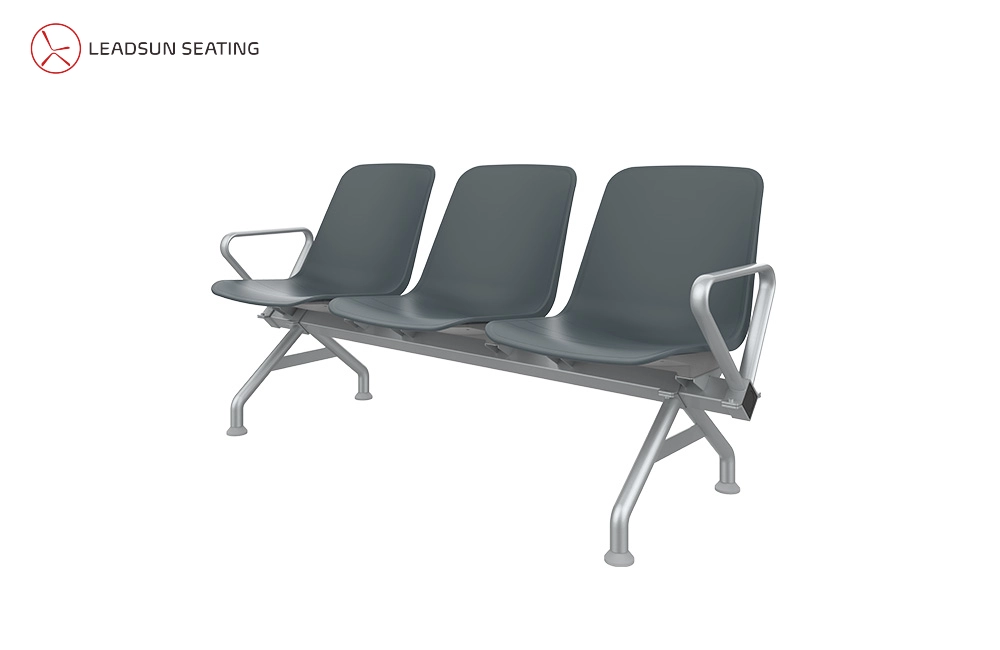
LS-551 Ergonomic Modular Waiting Chairs | Commercial Seating Solutions by Leadsun Seating
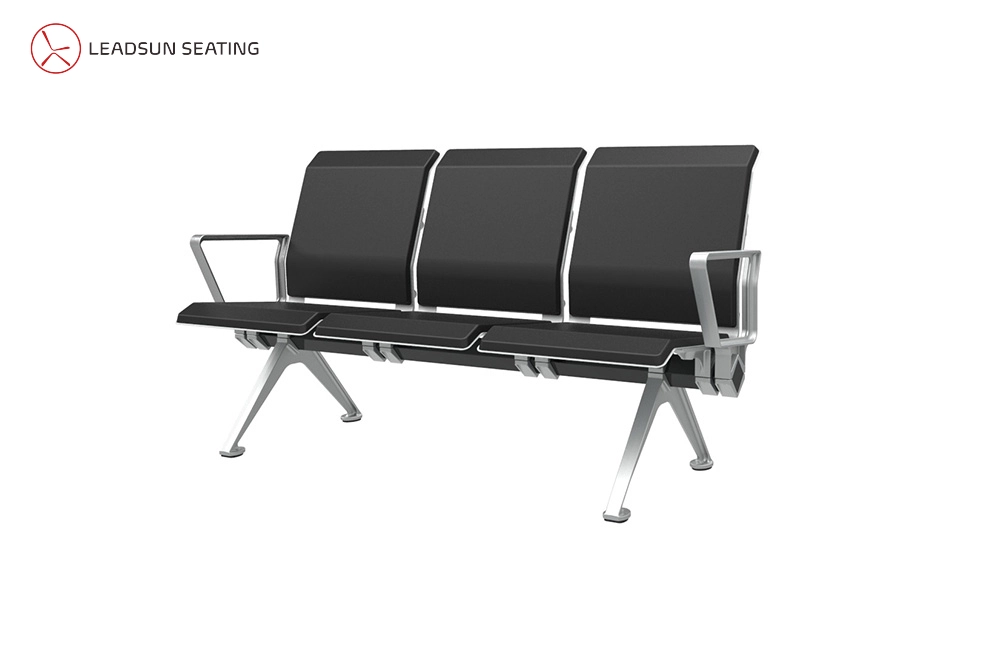
LS-529Y Ergonomic Waiting Chairs | High-Density PU Seating Solutions by Leadsun Seating
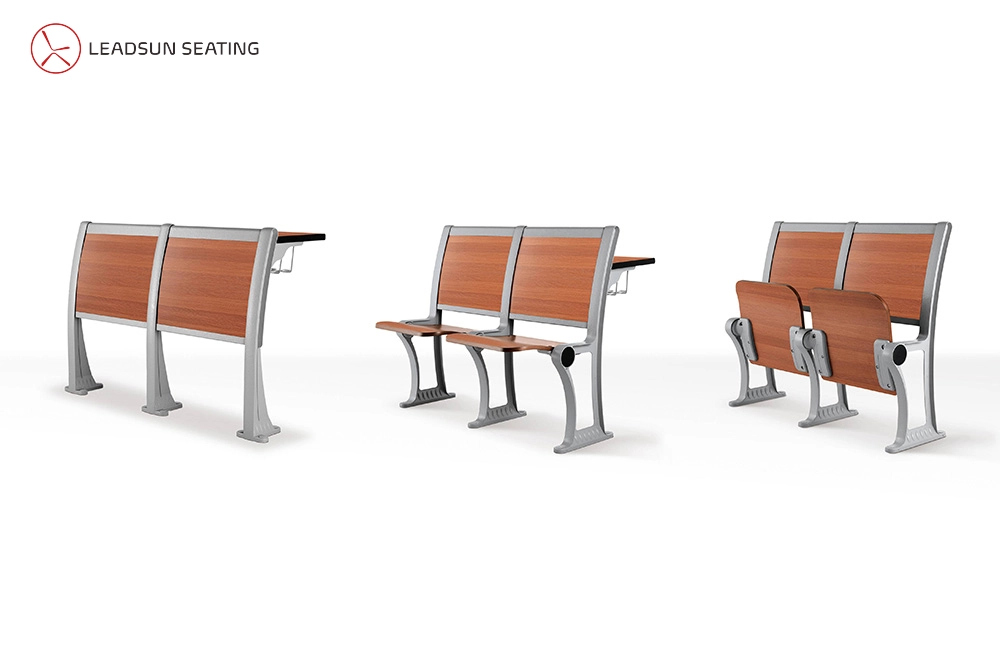
LS-908 Series Fixed Public Auditorium Chair or Tiered Classroom Solutions by Leadsun Seating
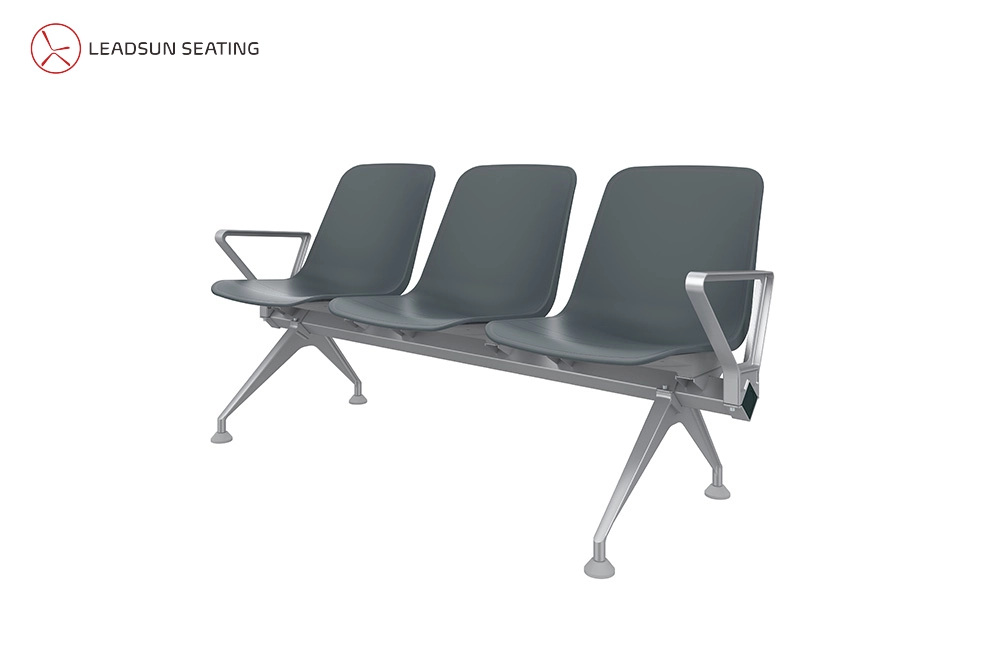
LS-550 Comfortable and Durable Waiting Chair | Customizable Waiting Chair Supplier Leadsun Seating
The LS-550 waiting chair from Leadsun offers superior comfort and durability for any public place. Customize your seating with Leadsun, a leading customizable waiting chair supplier. Ideal for high-traffic areas, the LS-550 ensures lasting performance and style.
Ready for your public seating project?
We specialize in providing high-quality, customizable seating solutions for public spaces, and we are excited to assist you with your project.
Our professional team will quickly answer your questions and provide customized solutions to ensure you have a worry-free experience.

Leadsun Seating is also engaged in the design, development, production, and marketing of lightweight public seats in public places, with an annual output of desks and chairs.
 Scan QR Code