







Leadsun seating offers a wide range of seating solutions for public spaces, including benches, chairs, waiting area seating, auditorium seating, and customized solutions tailored to specific project needs.
What is smart airport seating and how does it work?
2026-02-13
Practical, standards-based answers for procurement teams on adapting smart airport seating tech and commercial-grade durability to lecture hall seating—covering sensors, power, upholstery specs, AV integration, maintenance and contract clauses.
- 1. What is smart airport seating and how does it work — and can its occupancy analytics be adapted for lecture hall seating?
- 2. How do I run power and data to tiered lecture hall seating with integrated USB, wireless charging and seat sensors without creating code violations or maintenance headaches?
- 3. Which upholstery and foam specifications should I require to match airport seating durability for a 300–500 seat lecture hall?
- 4. What is the realistic lifecycle, maintenance schedule and total cost of ownership (TCO) for smart, mechanized lecture hall seats versus fixed plastic or wooden tiered seating?
- 5. How can I integrate seat power ports and smart sensors with campus AV and Wi‑Fi without causing RF interference or safety problems?
- 6. What procurement and warranty clauses should I include to avoid tech obsolescence and spare-part shortages for smart lecture hall seating?
- Conclusion: Advantages of choosing smart, airport-grade lecture hall seating from Leadsun Seating
Smart Airport Seating & Lecture Hall Seating: 6 Deep Questions for Buyers
Leadsun Seating (www.leadsunseating.com) answers six under-addressed, technical buyer questions about applying airport seating durability and smart seating technology to lecture hall seating and auditorium chairs. Embedded semantic concerns—seat occupancy sensors, USB charging ports, wireless charging, PoE, Wyzenbeek/Martindale abrasion, fire-retardant certification and procurement clauses—are treated with actionable specs and RFP language you can use.
1. What is smart airport seating and how does it work — and can its occupancy analytics be adapted for lecture hall seating?
Smart airport seating packages combine sensors, local controllers and networked communications to report seat status (occupied, vacant, reserved), cleaning needs, and dwell-time analytics. Typical sensor types in deployed airport systems are:
- Infrared (IR) proximity or passive IR (PIR) modules for presence detection with low power draw.
- Pressure or load-cell sensors under cushions for direct occupancy detection and weight-based presence reporting.
- Capacitive sensors built into armrests or seatbacks that detect touch or occupancy.
Data aggregation usually occurs at a local gateway which forwards messages using low-power radio (BLE mesh, Zigbee, or LoRaWAN) or campus infrastructure (Wi‑Fi or Ethernet). On the software side, REST/JSON APIs and message queues (MQTT) let airports feed dashboards, analytics engines and building management systems (BMS).
How this maps to lecture halls:
- Occupancy analytics: Pressure/load-cell sensors under each seat give precise seat-by-seat attendance and dwell-time data. Use them for attendance verification, HVAC-optimized ventilation (demand-controlled ventilation), and contact-tracing workflows when required.
- Network design: For fixed tiered seating, run low-voltage cabling back to under-floor or plenum-mounted gateways. BLE or LoRa are ideal where running Ethernet to every seat is impractical; PoE-powered gateways are common where Ethernet is available.
- Privacy and policy: Lecture halls must conform to campus privacy policies. Do not store personally identifiable data on-device; use hashed IDs and provide clear signage. Include anonymization requirements in RFPs.
Spec language to include in an RFP: Provide per-seat occupancy sensing using sensors with local aggregation. System shall expose a REST API and MQTT feed and support secure TLS 1.2+ transport. Sensors must support OTA firmware updates and anonymize user data by default.
2. How do I run power and data to tiered lecture hall seating with integrated USB, wireless charging and seat sensors without creating code violations or maintenance headaches?
Key constraints are local electrical code, serviceability, and future-proofing. Use these engineering-practical approaches:
- Power: For per-seat power (USB-A/C, wireless Qi pads), consider centralized DC power distribution or PoE. IEEE 802.3af/at/bt provide 15.4W/30W/60–100W per port respectively; PoE is attractive because it carries data and power over a single CAT6 cable and centralizes UPS protection. For high-wattage wireless or powered armrests, use local low-voltage distribution with centralized, UL-listed power supplies and per-run breakers.
- Data: Where low latency or high bandwidth is not critical, BLE or Zigbee can reduce cabling. For seat-level power ports (USB), run at least CAT6 back to access plates located under aisles or in plinths for easier maintenance. Avoid spur wiring into inaccessible risers.
- Access & serviceability: Design seating runs with removable access panels every 8–12 seats and provide a continuous service chase under the riser for conduit. Use quick-disconnects for seat modules so custodial/technical staff can remove individual seats without cutting cable or power.
- Safety & code: Require GFCI/RCD protection for circuits that supply user-accessible outlets. All supply equipment must be UL/CE certified and installed per local electrical code. Include an on-site electrical acceptance test in the scope.
RFP snippet: Provide integrated per-seat power (USB-C PD 30W or PoE++) and seat occupancy cabling with accessible service chase and removable access panels. All electrical components shall be UL/CE listed; include GFCI protection for user-accessible outlets. Provide as-built riser diagrams.
3. Which upholstery and foam specifications should I require to match airport seating durability for a 300–500 seat lecture hall?
Lecture halls are high-traffic environments. Airport seating is built to heavy commercial standards that translate well. Focus on three measurable attributes:
- Abrasion resistance: Specify heavy-duty upholstery with Wyzenbeek double-rub ratings ≥100,000 for North American projects or Martindale ratings ≥40,000–50,000 (Europe) for woven textiles. For heavy vinyl/PU, specify commercial-grade formulations tested to equivalent cycles.
- Foam resilience & fire performance: Use CMHR (combustion-modified high-resilience) foam where required by code, and require compliance with local furniture flammability standards (examples: CAL TB117-2013 in the U.S., BS 7176/EN 1021 variants in U.K./EU). Ask for manufacturer test certificates with batch numbers.
- Indoor air quality and sustainability: Require GREENGUARD Gold or equivalent low-VOC certification for fabrics and adhesives if the campus has IAQ or sustainability targets.
Test/documentation to request: lab certificates for Wyzenbeek/Martindale results, manufacturer foam technical data sheet with ILD/HR values, and fire test compliance certificates. Also request colorfastness and seam strength tests for maintenance reliability.
4. What is the realistic lifecycle, maintenance schedule and total cost of ownership (TCO) for smart, mechanized lecture hall seats versus fixed plastic or wooden tiered seating?
Lifecycle expectations differ by class of product:
- Fixed non-electronic seating (molded plastic, plywood): Typical service life of 15–25 years in lecture halls with routine maintenance. Low failure rate, inexpensive repairs, low energy cost.
- High-end commercial seating (airport-grade frames, heavy upholstery): Expect 15–20 years structural life with proper care; upholstery replacement cycles every 7–12 years depending on wear.
- Smart/mechanized seats (integrated sensors, actuators, power ports): Structural life may match high-end seating, but electronics commonly see a shorter lifecycle—plan for component refresh (sensors, control boards, power modules) every 4–7 years. Batteries (if any) and capacitors require scheduled replacement.
Maintenance schedule (practical baseline for a 500-seat lecture hall with smart features):
- Daily/after-event: Quick visual check and trash clearance by custodial staff.
- Monthly: Inspect and test a random sample (5–10%) of USB ports, wireless chargers, and seat sensors; clean upholstery per manufacturer's instructions.
- Quarterly: Run a systems health check for gateways and perform firmware updates; inspect wiring runs and access panels.
- Annual: Full inspection of seat frames, hinges, electrical testing, and replacement of consumables (grommets, small fasteners). Plan upholstery deep-cleaning and foam spot-repairs.
TCO components to budget for: initial purchase, installation (cabling, power, commissioning), annual maintenance (labor and parts ~1–3% of initial cost/year for non-electronic seats; 3–7% for smart seats), software subscription/licensing for analytics, and mid-life component refresh for electronics. Include a spare-parts kit on day 1: 1–2% of seat count in critical modules (control boards, sensors, power modules).
5. How can I integrate seat power ports and smart sensors with campus AV and Wi‑Fi without causing RF interference or safety problems?
Interfacing seating electronics with campus networks and AV requires co-engineering across facilities, IT and AV teams. Key actions:
- Segmentation: Put seat-related devices on a separate VLAN with strict ACLs so they cannot inadvertently expose the campus network. Use DHCP reservations and network access control (802.1X) for wired endpoints.
- EMI/EMC control: Shield power and data cables (CAT6 STP) where runs are adjacent to AV signal cabling. Specify ferrite bead suppression where motor drivers or wireless charging modules could radiate noise. Ensure products have CE/FCC/EMC declarations.
- Wireless planning: Coordinate with the campus wireless team. Wireless chargers (Qi) operate at low power and rarely impair Wi‑Fi, but many seat sensors use BLE which shares 2.4 GHz; plan channel mapping and use BLE advertising parameters that reduce airtime. Consider BLE mesh frequency management and keep gateways on wired backhaul where possible.
- AV interference: For line-of-sight AV transmitters (wireless presentation systems), maintain physical separation from power converters and motors, and verify operation in a pre-installation RF test. Always include an on-site RF sweep during commissioning.
RFP insertion: Contractor will coordinate with campus IT/AV to produce a network segmentation and RF plan. All seat electronics must comply with FCC/CE emission limits and be tested for EMC. Contractor to provide EMI suppression measures and a commissioning RF sweep report.
6. What procurement and warranty clauses should I include to avoid tech obsolescence and spare-part shortages for smart lecture hall seating?
Include contract language that protects your institution during the expected service life and minimizes downtime:
- Warranty & support term: Require at least 5 years full coverage for electronics and 10 years structural warranty for frames. For small institutions where budgets are tight, insist on 3-year minimum for electronics but include optional extended support priced upfront.
- Spare-parts obligation: Require supplier to hold 3–5 years of critical spare parts after project completion or provide a documented obsolescence plan including cross-reference parts and upgrade paths.
- Firmware & security: Include an SLA for firmware updates for security vulnerabilities (e.g., patch within 30/60/90 days) and require secure signing of firmware images. Ask for a software escrow clause for the management platform if the seating vendor supplies a proprietary analytics backend.
- Open standards & APIs: Insist on documented REST APIs, MQTT endpoints and data export in CSV/JSON to avoid vendor lock-in—this allows campus IT or third parties to integrate analytics and dashboards should you change providers later.
- Acceptance tests & KPIs: Define factory acceptance and on-site commissioning tests (seat occupancy accuracy >98% over 24-hour test window, power port continuity, noise limits). Tie final payment to successful acceptance testing and training of staff.
Clause sample: Vendor shall maintain a spare-parts inventory sufficient for 5% of deployed seats for a period of 5 years post-installation or provide an approved alternate supplier. Vendor will provide secure OTA firmware updates for a minimum of 5 years and documented open APIs for data export without additional licensing fees.
Conclusion: Advantages of choosing smart, airport-grade lecture hall seating from Leadsun Seating
Adopting airport-grade durability and selective smart features for lecture hall seating delivers measurable benefits: longer service life, reduced upholstery and frame failures, actionable occupancy and cleaning analytics, and better energy management through demand-controlled ventilation. When power distribution (PoE or centralized DC), AV/IT coordination, and clear procurement clauses are in place, institutions gain a low-downtime, maintainable solution that scales with campus needs.
For a customized quotation and specification pack for auditorium chairs, fixed tiered seating or smart-seat retrofits, contact us at [email protected] or visit www.leadsunseating.com for project references and datasheets.
Recommended for you

15 Best Office Waiting Room Chairs of 2026: The Ultimate Comfort & Style Guide

The Future of Reception Areas: 10 Modern Waiting Room Chair Trends to Watch in 2026

Airport Seating Reimagined: The 2026 Global Guide to Terminal Comfort and Design

7 Costly Mistakes Facilities Managers Make When Specifying Commercial Bench Seating

Commercial Beam Seating Solutions for High-Traffic Public Spaces
Prdoucts Categories
FAQ
FAQs
What is the lead time for custom seating orders?
The lead time for custom seating orders varies depending on the complexity of the design and the order size. Typically, it takes 4-6 weeks for production, with shipping times depending on your location.
What types of public seating solutions does Leadsun seating provide?
Do you offer installation services for your seating solutions?
Yes, we offer professional installation services to ensure that the seating is properly installed and meets all safety standards. Our team is experienced in handling both large and small-scale installations.
One Stop Airport Terminal Seating
How does the seat design ensure passenger comfort?
The solution adopts ergonomic design principles. We optimize seat curves, backrest angles, and seat surface materials to effectively relieve the fatigue of passengers during long waits.
Are the seat materials durable? What's the lifespan?
We use high-strength, wear-resistant, and easy-to-clean premium materials, such as stain-resistant flame-retardant fabrics and rust-proof alloy frames. Under normal use, the seats can last 5 - 8 years.
You may also like
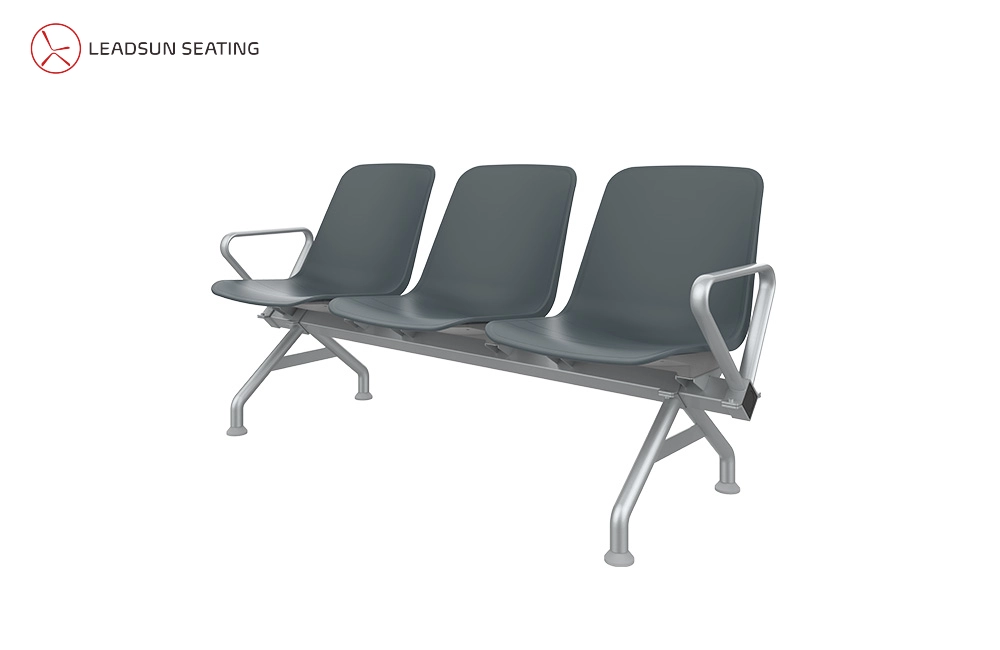
LS-551 Ergonomic Modular Waiting Chairs | Commercial Seating Solutions by Leadsun Seating
Leadsun's LS-551 Ergonomic Modular Waiting Chairs offer superior comfort for any commercial space. Ideal for hospitals, airports, and more, these modular chairs provide flexible configurations and ergonomic support. Experience unmatched comfort and style with Leadsun Seating.
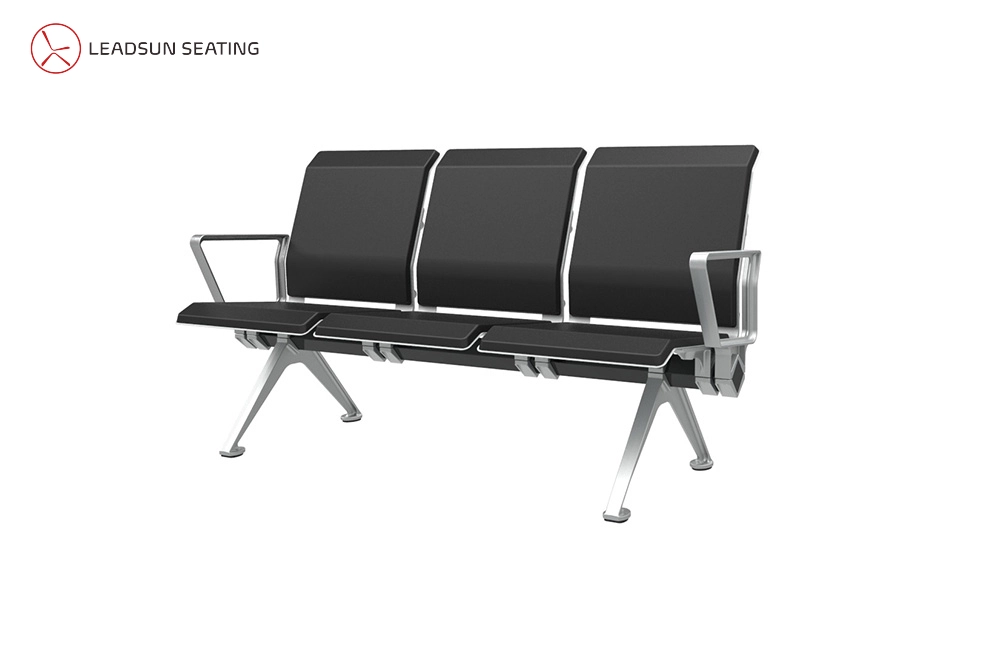
LS-529Y Ergonomic Waiting Chairs | High-Density PU Seating Solutions by Leadsun Seating
Leadsun's LS-529Y ergonomic waiting chairs offer superior comfort for airport lounges and hospitals. High-density PU seating ensures durability. Experience lasting quality with Leadsun's commitment to comfortable waiting room furniture.
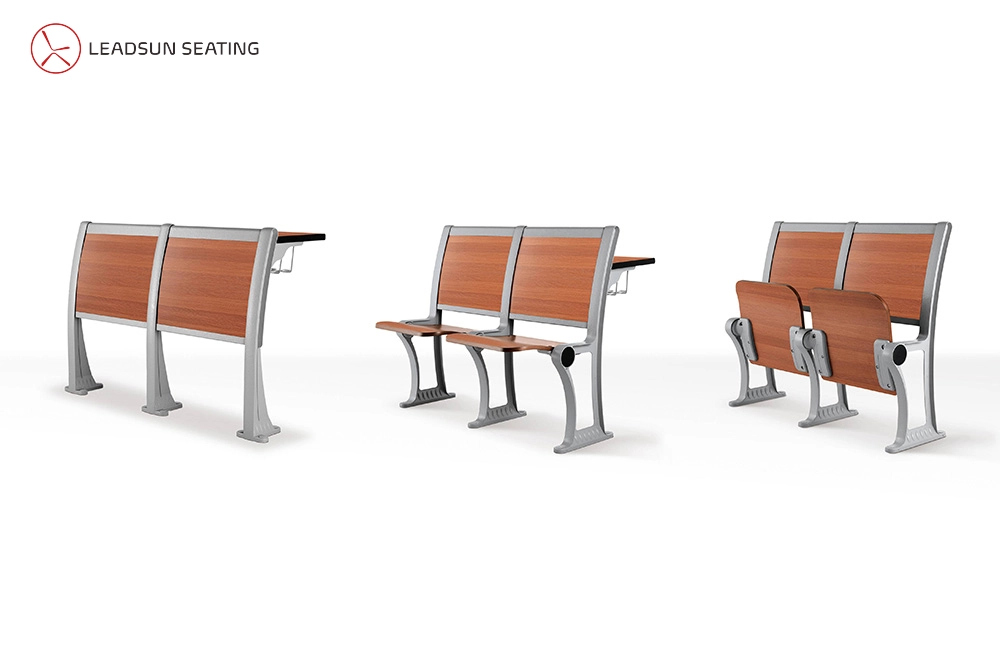
LS-908 Series Fixed Public Auditorium Chair or Tiered Classroom Solutions by Leadsun Seating
Introducing the LS-908 Series by Leadsun, your ideal solution for tiered classroom seating and fixed public auditorium chairs. Designed for comfort and durability, this series enhances audience engagement in educational and corporate settings. Discover the perfect blend of functionality and style with Leadsun Seating.
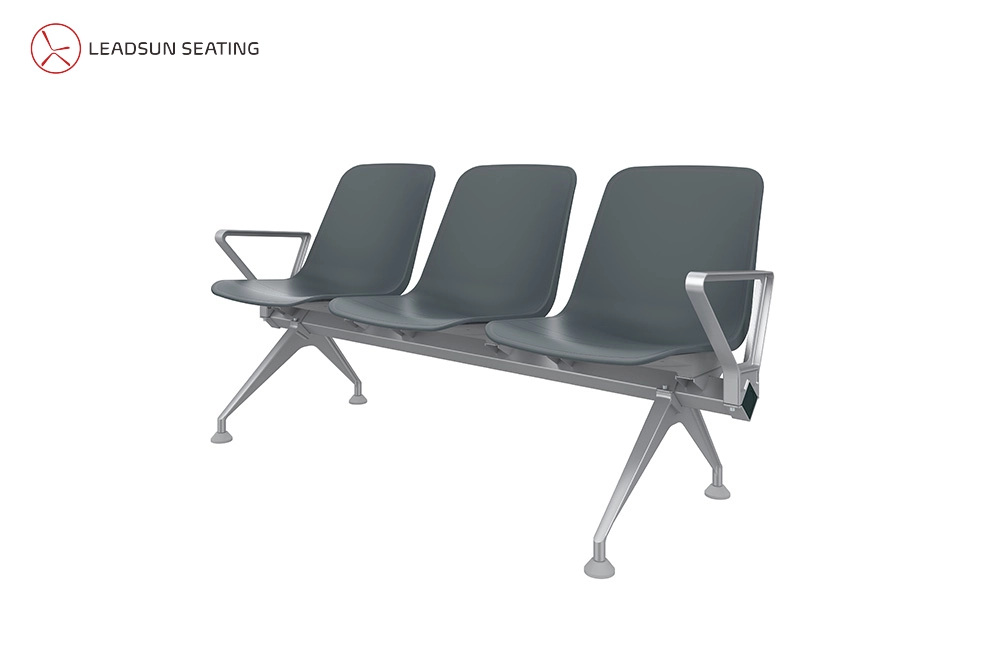
LS-550 Comfortable and Durable Waiting Chair | Customizable Waiting Chair Supplier Leadsun Seating
The LS-550 waiting chair from Leadsun offers superior comfort and durability for any public place. Customize your seating with Leadsun, a leading customizable waiting chair supplier. Ideal for high-traffic areas, the LS-550 ensures lasting performance and style.
Ready for your public seating project?
We specialize in providing high-quality, customizable seating solutions for public spaces, and we are excited to assist you with your project.
Our professional team will quickly answer your questions and provide customized solutions to ensure you have a worry-free experience.

Leadsun Seating is also engaged in the design, development, production, and marketing of lightweight public seats in public places, with an annual output of desks and chairs.
 Scan QR Code