







How to choose waiting area chairs for high-traffic spaces?
- 1. How do I specify upholstery that balances stain resistance, breathability and >100,000 Wyzenbeek durability for a lecture‑hall waiting area with frequent turnover?
- 2. Which fire, accessibility and procurement standards must I list in an RFP for waiting area chairs outside lecture halls?
- 3. How do I estimate lifecycle cost per seat (purchase, maintenance, cleaning, and replacement) for 200+ daily users in a lecture‑hall waiting area?
- 4. What anchoring and anti‑tip strategy should I use where waiting area chairs sit in corridors and near stair landings without creating trip hazards?
- 5. How do I select seat geometry (width, depth, armrest configuration) to accommodate diverse lecture audiences, ADA needs, and high turnover seating?
- 6. What foam density, suspension and cushion construction prevents sagging under continuous daily use while remaining repairable and flame‑compliant?
- Concluding summary: Why spec for durability, cleanability and repairability?
How to Choose Waiting Area Chairs for High-Traffic Spaces: Lecture Hall Seating Guide
As procurement managers, facility planners, and lecture hall designers, you need waiting area chairs that survive relentless traffic while remaining safe, cleanable, and comfortable. Below are six specific, under‑answered long‑tail questions with actionable, standards‑based answers to help you specify and buy the right seating.
1. How do I specify upholstery that balances stain resistance, breathability and >100,000 Wyzenbeek durability for a lecture‑hall waiting area with frequent turnover?
Problem: Many online guides recommend “stain‑resistant fabrics” without quantifying durability or specifying cleaning compatibility. For high-traffic lecture‑hall waiting areas you need a fabric that withstands abrasion, fluids, frequent disinfecting, and still breathes for occupant comfort.
Actionable spec:
- Performance tests: require Wyzenbeek double‑rub rating ≥ 100,000 for heavy commercial use (or Martindale ≥ 40,000 cycles where Martindale is used). Wyzenbeek (ASTM D4157) and Martindale (ISO 12947) are industry standard tests for abrasion resistance.
- Cleanability code: specify fabrics rated W (water‑based cleaners), S/W (solvent or water), or bleach‑cleanable if you need disinfectant compatibility. For infectious‑control environments, choose bleach‑cleanable or EPA‑registered disinfectant‑compatible textiles and confirm with manufacturer testing.
- Material types: vinyl/textile‑backed vinyl with polyurethane topcoat, high‑performance polyester blends, or treated Crypton/CleanFilm finishes often deliver the balance you need. Consider copper‑ or silver‑ion antimicrobial finishes only as adjuncts — they do not replace routine disinfection and must be EPA‑registered for antimicrobial claims.
- Breathability: where occupant comfort is a concern for long waits, choose engineered knits or ventilated vinyl composites, not thick non‑permeable PVC alone. Look for moisture vapor transmission rates (MVTR) or manufacturer breathability data if available.
- Compatibility test: require manufacturer to provide a cleaning matrix showing at least 30 cycles of common disinfectants (including bleach solutions and quaternary ammonium compounds) without color loss or coating failure.
Why this matters: specifying abrasion ratings and cleaning compatibility upfront prevents early upholstery failure and maintains infection‑control capability during outbreaks or routine cleaning.
2. Which fire, accessibility and procurement standards must I list in an RFP for waiting area chairs outside lecture halls?
Problem: Vendors often claim “meets code” without specifying which codes. You need precise standards to avoid non‑compliant deliveries and retrofit costs.
Standards and procurement language to include:
- Accessibility: reference the ADA Standards for Accessible Design (2010) for seating and circulation. Specify required numbers and locations of accessible seating and clear floor space (30 x 48 minimum) adjacent to seating banks where applicable.
- Fire & flammability: require compliance with local fire codes plus furniture flammability standards such as California Technical Bulletin 117‑2013 (TB117‑2013) for upholstered furniture, and where requested provide ASTM E84 / NFPA 255 surface burn characteristics for trim and upholstery if exposed to corridors. Note: specific local jurisdictions may require additional tests—ask vendors for documented test reports.
- Life safety: reference NFPA 101 (Life Safety Code) for egress and occupant load considerations that may affect seat placement near aisles and exits.
- Manufacturing quality: request ISO 9001 certification for suppliers or documented QA process; for welded steel frames, specify 14‑gauge minimum steel or equivalent structural rating and powder coat finish to resist chipping and corrosion.
- Warranty: demand a minimum 5‑year structural/frame warranty and 1–3 years for upholstery as baseline for high traffic installations; negotiate extended warranty on frames to 7–10 years for higher‑traffic lecture hall lobbies.
Why this matters: a clear RFP with standards prevents ambiguity, speeds approval, and avoids costly non‑conforming products at installation.
3. How do I estimate lifecycle cost per seat (purchase, maintenance, cleaning, and replacement) for 200+ daily users in a lecture‑hall waiting area?
Problem: Price per chair alone hides total cost of ownership (TCO). Buyers need a methodology to compare products by lifecycle cost, not unit price.
Step‑by‑step TCO model (5–10 year horizon):
- Initial cost: unit price × quantity + delivery/installation (include anchoring/bolting if required).
- Annual maintenance: estimate scheduled cleaning (labor + supplies), minor repairs (replacement arm caps, screws), and upholstery cleaning. Use vendor cleaning schedules and local labor rates. Example: for a heavy‑use seat, budget $8–$20/year for routine cleaning/maintenance per seat; commercial upholstery requiring frequent disinfecting will be at the higher end.
- Mid‑life refurb: plan for reupholstery or seat cushion replacement. For high‑traffic areas expect cushion recovery or partial reupholstery at year 4–7 depending on fabric durability—obtain vendor reupholstery pricing per seat.
- End‑of‑life replacement: estimate replacement year (typical heavy commercial life 7–15 years). Divide replacement cost by years to get annualized replacement reserve.
- Hidden costs: account for downtime/space closure, disposal and recycling fees, and warranty claims administration—typically 2–5% of initial cost per year combined.
Example simplified calculation for one seat (rounded):
- Initial: $250 purchase + $25 install = $275
- Annual maintenance: $15
- Mid‑life reupholstery at year 6: $120 (amortized $20/yr over 6 years)
- Expected replacement at year 10: $275/10 = $27.5/yr
- Estimated annual TCO ≈ $15 + $20 + $27.5 = $62.5/year (plus small overhead)
Why this matters: TCO reveals that higher initial costs for modular, repairable commercial seating often save money over 7–10 years versus cheap, non‑serviceable chairs that require full replacement.
4. What anchoring and anti‑tip strategy should I use where waiting area chairs sit in corridors and near stair landings without creating trip hazards?
Problem: Anchoring can prevent tipping and theft but poorly executed systems create trip hazards or complicate cleaning and reconfiguration.
Recommendations:
- Choose anchoring based on use case: for fixed runs in corridors, specify bolted‑to‑floor chairs with recessed anchor plates or countersunk bolts with flush covers to avoid trip hazards. For flexible lecture lobby areas that may be reconfigured, choose modular link systems that allow quick‑release anchors or weighted bases.
- Anti‑tip design: prefer chair frames with low center of gravity, back leg outriggers, or integrated toe clearance per manufacturer guidance. For bench systems, continuous baseplates distribute load and reduce point loading on floors.
- Fire egress and trip code checks: ensure that anchors and linking hardware do not reduce required clear width of aisles or egress paths per local building code and NFPA 101. Document anchor locations on as‑built drawings for future maintenance.
- Maintenance access: specify removable covers for anchor bolts to allow cleaning crews to vacuum and mop without obstructions. Avoid exposed bolts in paths of travel.
Why this matters: properly specified anchoring prevents injuries and liability while maintaining ADA clearances and cleaning efficiency.
5. How do I select seat geometry (width, depth, armrest configuration) to accommodate diverse lecture audiences, ADA needs, and high turnover seating?
Problem: Generic seat dimensions may exclude people with mobility devices or cause discomfort during long waits. Lecture‑hall lobbies often serve students, older visitors, and people with assistive devices.
Practical dimension guidance:
- Seat height: 17–19 inches (430–485 mm) is standard adult range. Maintain consistency across nearby seating to avoid tripping when people stand/sit.
- Seat width: min 18 inches (460 mm) per seat for standard seating; consider 20–22 inches for higher comfort or long waits. For seating banks, provide a mix (standard and wider) to serve larger individuals and parents with children.
- Seat depth: 16–18 inches (405–460 mm) supports most adults without causing edge pressure. For older adults or those with limited thigh support, shallower depths are preferred.
- Armrests: fixed armrests help users stand and sit safely — specify continuous armrests for supportive needs and removable or retractable arm modules where bariatric or transfer needs require more lateral space. Armrest height typically 6–9 inches above seat cushion; confirm with ergonomic testing in your user population.
- ADA & wheelchair adjacency: provide required wheelchair clear floor spaces adjacent to seating clusters; ensure armrests and seat geometry don’t impede lateral transfers for ambulatory transfers as required by ADA guidance.
Why this matters: specifying mixed geometries and supportive armrests reduces complaints and increases usable capacity for diverse populations.
6. What foam density, suspension and cushion construction prevents sagging under continuous daily use while remaining repairable and flame‑compliant?
Problem: Many buyers accept vague “high‑density foam” claims. Without specific foam density, ILD and suspension specs, cushions sag in 1–3 years in heavy rotation areas.
Technical guidance:
- Foam density: specify high‑resilience (HR) polyurethane foam with density of at least 1.8–2.8 lb/ft3 for seat cushions in heavy commercial applications. For longer life and firmer support, aim for 2.2–2.8 lb/ft3. Higher density improves recovery and reduces sag.
- ILD (Indentation Load Deflection): request ILD ratings appropriate to comfort vs support balance — common commercial seat ILD ranges are 30–45 for the top layer. Use a layered cushion approach (firmer core + softer comfort layer) to extend life and comfort.
- Suspension: demand sinuous wire or eight‑way hand‑tied springs for very heavy use; heavy gauge webbing with reinforced attachment is an acceptable lower‑cost option. Sinuous springs with welded steel frames (with load ratings) provide consistent support and are easier to service than pocketed constructions in public seating.
- Modularity & repairability: specify replaceable cushion panels and removable covers (zippered or accessible fasteners) that allow on‑site cushion replacement or reupholstery without removing entire frames. This reduces mid‑life costs and downtime.
- Flame compliance: ensure cushioning materials comply with TB117‑2013 or local flammability requirements; request manufacturer’s test certificates for foam used in seating cores.
Why this matters: concrete foam and suspension specifications reduce premature sagging, improve occupant comfort, and make mid‑life servicing feasible without full replacement.
Concluding summary: Why spec for durability, cleanability and repairability?
Waiting area chairs specified to heavy‑commercial standards — abrasion ratings (Wyzenbeek/Martindale), bleach or EPA‑registered disinfectant compatibility, robust steel frames, replaceable cushions and modular anchoring — minimize downtime and total cost of ownership. For lecture‑hall contexts where daily throughput is high, prioritize commercial seating with documented test reports, manufacturer cleaning matrices, and warranties that match expected lifecycle assumptions. Doing so gives you safer, cleaner, and longer‑lasting waiting areas that meet ADA and fire‑safety expectations while staying budget‑efficient over time.
For a tailored specification checklist, sample RFP language, or a quote for modular, ADA‑compliant waiting area chairs and lecture hall seating solutions, contact us at www.leadsunseating.com or [email protected].

15 Best Office Waiting Room Chairs of 2026: The Ultimate Comfort & Style Guide

The Future of Reception Areas: 10 Modern Waiting Room Chair Trends to Watch in 2026

Airport Seating Reimagined: The 2026 Global Guide to Terminal Comfort and Design

7 Costly Mistakes Facilities Managers Make When Specifying Commercial Bench Seating

Commercial Beam Seating Solutions for High-Traffic Public Spaces
One Stop Airport Terminal Seating
Can you provide personalized seat customization?
We support comprehensive customization, including seat styles, functional modules (like charging ports, cup holders, etc.), color schemes, and even integrating airport brand elements to showcase a unique style.
What does the after-sales service include?
Our after-sales service covers daily maintenance guidance, regular inspections, fault repairs, and component replacements. Our professional after-sales team is available 24/7 to ensure the long-term stable operation of the seats.
FAQs
What materials are used in the production of your public seating?
We use a variety of durable materials such as stainless steel, aluminum, wood, high-quality upholstery, and advanced polymers to ensure that our seating solutions are both functional and long-lasting.
Are your products compliant with safety and accessibility standards?
-
Absolutely. All of our seating solutions comply with relevant safety regulations and accessibility standards, ensuring comfort and safety for all users, including those with special needs.
-
What is the lead time for custom seating orders?
The lead time for custom seating orders varies depending on the complexity of the design and the order size. Typically, it takes 4-6 weeks for production, with shipping times depending on your location.
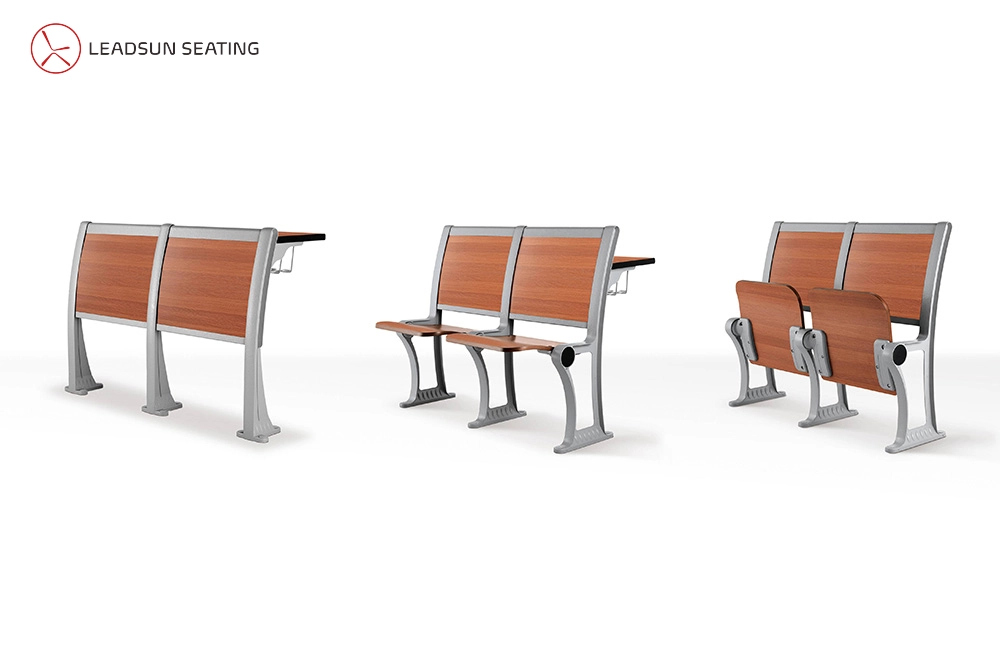
LS-908 Series Fixed Public Auditorium Chair or Tiered Classroom Solutions by Leadsun Seating
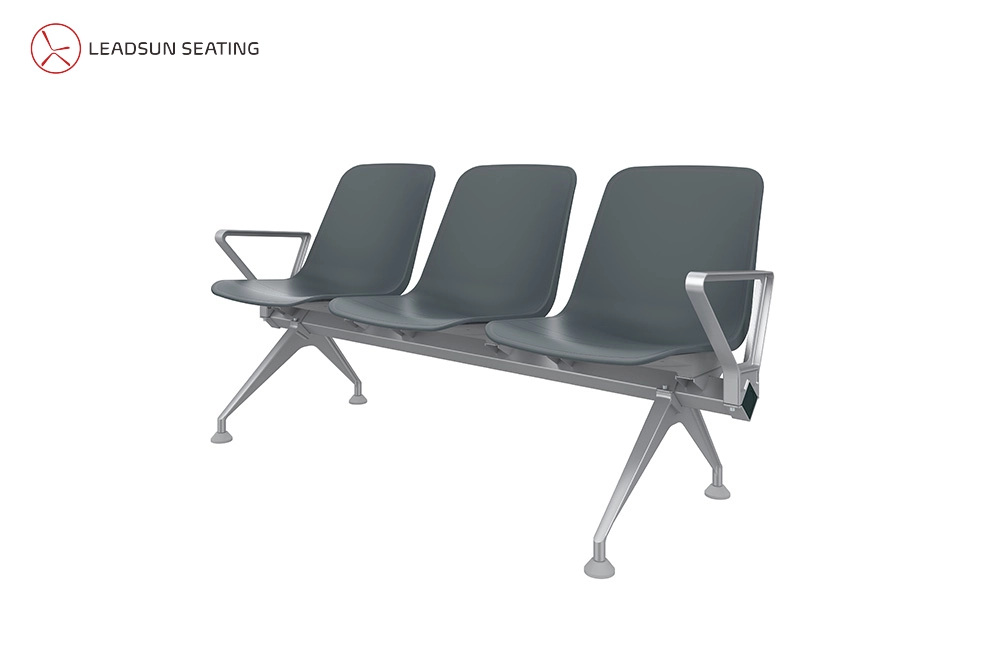
LS-550 Comfortable and Durable Waiting Chair | Customizable Waiting Chair Supplier Leadsun Seating
The LS-550 waiting chair from Leadsun offers superior comfort and durability for any public place. Customize your seating with Leadsun, a leading customizable waiting chair supplier. Ideal for high-traffic areas, the LS-550 ensures lasting performance and style.
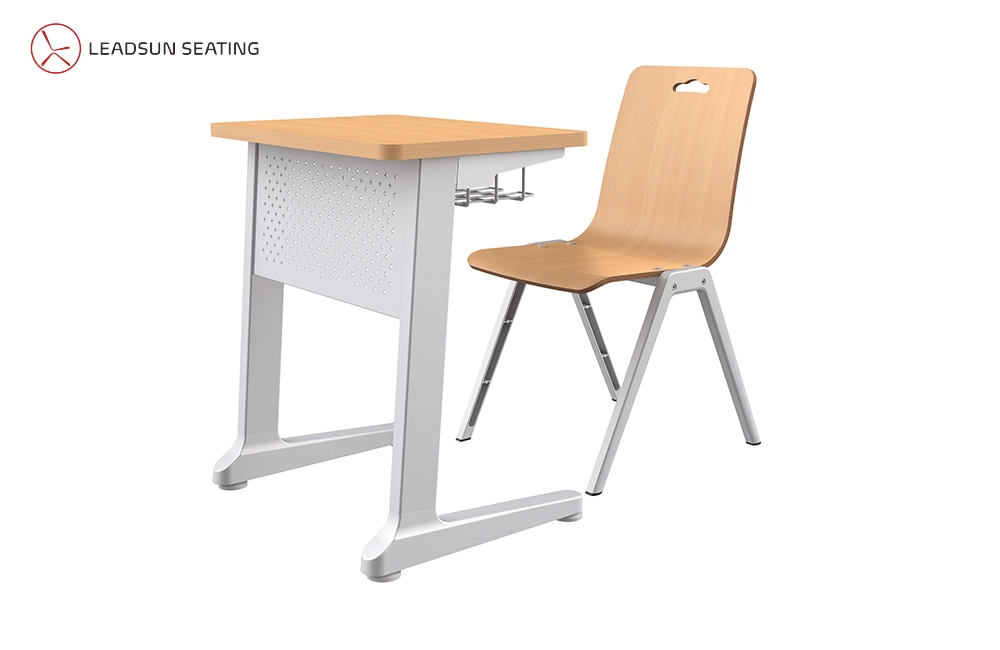
LS-9301 Single movable classroom chair |The Ultimate Flexible Solution for Modern Classrooms by Leadsun Seating
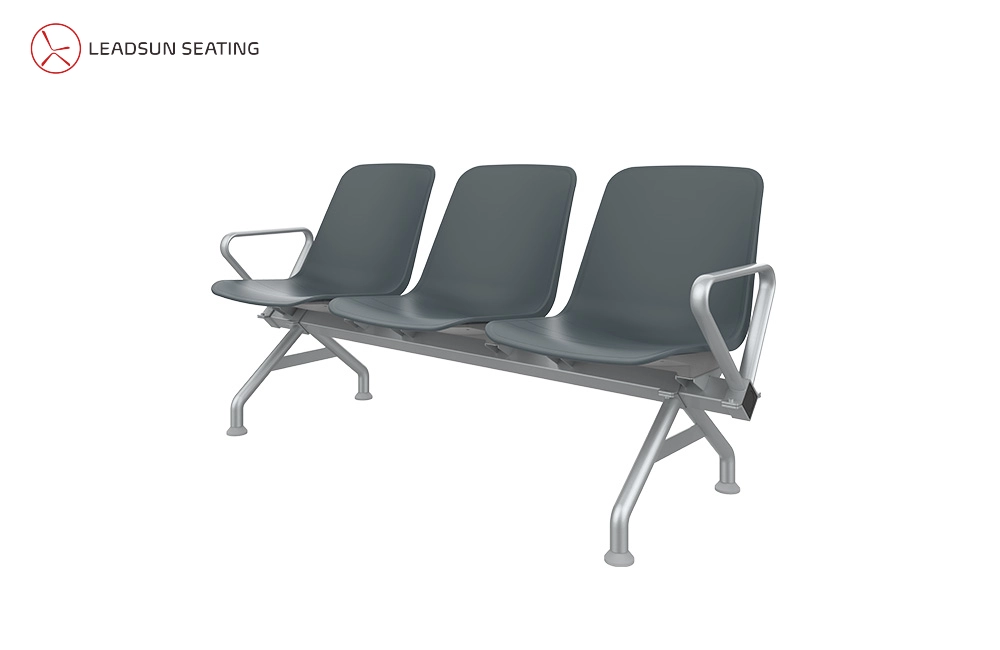
LS-551 Ergonomic Modular Waiting Chairs | Commercial Seating Solutions by Leadsun Seating
Ready for your public seating project?
We specialize in providing high-quality, customizable seating solutions for public spaces, and we are excited to assist you with your project.
Our professional team will quickly answer your questions and provide customized solutions to ensure you have a worry-free experience.

Leadsun Seating is also engaged in the design, development, production, and marketing of lightweight public seats in public places, with an annual output of desks and chairs.
 Scan QR Code