







What materials are used in durable airport seating?
- What materials are used in durable airport seating? 7 procurement questions every buyer should ask
- 1) For coastal terminals, which stainless-steel grade and finish should I specify to resist salt-spray corrosion long-term?
- 2) Which plastics deliver UV stability, impact resistance and flame performance for semi-outdoor or sunlit concourse seating?
- 3) What upholstery and foam specs resist heavy cleaning, hospital-grade disinfectants and frequent use without failing prematurely?
- 4) Which surface finishes reduce graffiti and vandal damage and are easiest to maintain?
- 5) How should seating be designed for fast on-site part replacement to cut downtime and lifecycle cost?
- 6) For budgeting, what are the real lifecycle-cost drivers (20-year horizon) when choosing stainless steel vs powder-coated steel vs aluminum?
- 7) Which sustainability and recyclability claims are verifiable — what should I ask the supplier for?
- Practical sample specification language you can copy into an RFP
- Closing procurement tips
- Why these answers matter to lecture-hall and airport seating buyers
- Leadsun: what we bring to your seating procurement
- References and sources (documents and data used to compile this guide)
What materials are used in durable airport seating? 7 procurement questions every buyer should ask
Procurement teams and facility managers for airports and large lecture halls need material answers that are specific, testable and future-proof. Below are seven long-tail, pain-point questions buyers commonly ask — with standards-based, actionable answers you can use directly in RFPs, technical specifications and supplier evaluations.
1) For coastal terminals, which stainless-steel grade and finish should I specify to resist salt-spray corrosion long-term?
Recommended material: austenitic stainless steel grade 316/316L for exposed structural and visible components; 304 may be acceptable for fully indoor, non-coastal zones.
Why: 316/316L contains molybdenum for superior pitting and crevice corrosion resistance in chloride environments (sea-air). 304 is less resistant to chlorides and will show surface staining sooner in coastal airports.
Procurement checklist (use these in specs):
- Material: EN/ASTM equivalent of 316L (e.g., UNS S31603). Specify mill certificates for chemistry and trace (heat) numbers.
- Surface finish: satin-grain finish (e.g., 320–400 grit) or specified Ra value (for example Ra ≤ 0.8 μm) to reduce visual staining while allowing cleanability.
- Passivation: post-fabrication nitric or citric passivation in accordance with ASTM A967 / ISO 15730; require passivation certificates.
- Accelerated test: require salt-spray resistance report (ASTM B117) or corrosion test data for representative assemblies; include acceptance criteria (no through-pitting or structural compromise after specified hours, e.g., supplier test data showing performance under relevant cycles).
- Fasteners: specify 316/316L fasteners (nuts/bolts/washers) and concealed fixing where possible to avoid galvanic corrosion.
Supply-side acceptance: require supplier to provide mill certs, passivation records and a sample tested under salt-spray (or published test report) for the finish and joint details.
2) Which plastics deliver UV stability, impact resistance and flame performance for semi-outdoor or sunlit concourse seating?
Recommended materials: glass-reinforced polypropylene (PP-GF) or ASA/PMMA blends for seat shells; HDPE (high-density polyethylene) is good for heavy-impact environments; consider reinforced injection-molded polypropylene for slimmer, shaped shells.
Key additives and treatments to require:
- UV-stabilizers and light stabilizing packages (hindered amine light stabilizers + UV absorbers) specified by supplier and validated with QUV or Xenon-arc accelerated weathering tests (e.g., ISO 4892 or ASTM G154/G155).
- Impact modifiers or glass-fiber reinforcement (specify glass-fiber % to achieve required stiffness and impact resistance under target temperatures).
- Flame performance: where required by building code, specify UL 94 rating (e.g., V-0 or HB as applicable), and local code compliance (local building and fire codes may specify surface-burning characteristics like ASTM E84 or equivalent).
Procurement checklist:
- Specify test reports for UV-weathering (color retention ΔE, gloss retention after X hours), impact resistance (Izod/Charpy), and flammability classification with lab reports.
- Ask for supplier disclosure of polymer type, fillers, % glass, and stabilizer systems — ensure they commit to long-term color and mechanical stability in sunlit concourses.
3) What upholstery and foam specs resist heavy cleaning, hospital-grade disinfectants and frequent use without failing prematurely?
Priority: choose upholstery and foams that withstand frequent cleaning agents, maintain barrier properties against liquid ingress and meet local fire/flammability rules for public assembly spaces.
Recommendations:
- Cover materials: waterproof/cleanable coated fabrics (polyurethane-coated polyester), high-performance vinyl (PVC), or specialized barrier systems such as Crypton®-type finishes. These provide stain resistance and can survive repeated disinfectant wipes when tested to supplier cleaning protocols.
- Topcoat resistance: require supplier tests demonstrating compatibility with common disinfectants (e.g., 70% isopropyl alcohol, quaternary ammonium compounds) according to an agreed accelerated abrasion/chemical exposure protocol; acceptance criteria: no cracking, delamination or >X% color change.
- Foam: specify medium-high density polyurethane foam with closed‑cell or treated surface/film barrier where liquids are a concern; for fire performance, specify conformity with local requirements (e.g., calorific/chemical retentions or CMHR foam standards where required by code).
- Seam construction: welded or sealed seams for liquid barriers; avoid open-stitched seams in high-traffic, high‑cleaning-age areas.
Procurement wording to use: Supplier must provide laboratory compatibility tests between specified upholstery and a list of cleaning agents (protocol supplied). Upholstery shall show no cracking, excessive color change (>ΔE threshold), or loss of seam integrity after 2,000 wipe cycles with 70% IPA and a quaternary ammonium compound per test protocol.
4) Which surface finishes reduce graffiti and vandal damage and are easiest to maintain?
Good finish choices: hard mechanical finishes (brushed stainless), anodized aluminum, high-durability thermoset powders and specialized anti-graffiti coatings.
Guidance:
- Brushed or satin stainless is highly scratch-tolerant and allows graffiti removal without stripping coatings.
- Anodized aluminum (Architectural AA) gives a hard, wear-resistant finish on aluminum components — specify class and thickness.
- Powder-coat: use high-specification thermoset powder coatings (e.g., TGIC polyester) or fluoropolymer (PVDF) coatings where color retention and weathering resistance are critical; require outdoor weathering and ASTM D3359 adhesion tests.
- Anti-graffiti coatings: either sacrificial or permanent clearcoats designed to allow solvent graffiti removal; specify test cycles for graffiti removal without substrate damage.
Procurement checklist: require supplier to provide a maintenance procedure that includes approved solvents and removal methods, and to deliver a mock-up panel for on-site approval; require coating lab reports (salt spray, adhesion, gloss/color retention).
5) How should seating be designed for fast on-site part replacement to cut downtime and lifecycle cost?
Design for modularity and serviceability, not just initial appearance. Key features that greatly reduce lifecycle cost:
- Modular seat modules: bolt-on seat shells and cushions secured with captive fasteners; no structural welding on-site repair points.
- Standardized mounting rails and brackets across the project so a limited spare-parts kit covers the entire installation.
- Quick-release fasteners or tamper-resistant bolts that allow removal by facility staff with a single tool; keep a clearly inventoried set of spares and a maintenance sheet in the building maintenance room.
- Documentation: supplier to provide an as-built parts list, service drawings and an agreed SLA for replacement parts (lead times in weeks). Specify MAINT: maximum allowable downtime per seat module and acceptable field-repair instructions for facility teams.
Procurement clause to include: All components subject to wear shall be replaceable within 30 minutes per seat by two maintenance technicians using hand tools; supplier to provide spare parts kit for first 5 years of operations. (Adjust time/kit sizes per project scale.)
6) For budgeting, what are the real lifecycle-cost drivers (20-year horizon) when choosing stainless steel vs powder-coated steel vs aluminum?
Key lifecycle cost drivers (procurement must evaluate beyond initial price):
- Initial material and fabrication cost (stainless typically higher than powder‑coated steel; aluminium price varies but often between steel and stainless depending on finish and fabrication complexity).
- Maintenance and cleaning frequency and cost — coatings that require frequent rework or touch-up increase OPEX.
- Corrosion/durability in the local microclimate (coastal chloride environments accelerate repainting and replacement of lower-grade steels).
- Replacement parts and downtime costs driven by modularity and spare part availability.
- End-of-life disposal or recycling value (stainless and aluminum have high recycled value and recyclability; powder‑coated steel may be less valuable but still recyclable).
Procurement approach: ask suppliers for a simple comparative life‑cycle cost (LCC) estimate for 20 years using project-specific assumptions: expected local maintenance schedule, typical repair rates, repaint intervals, and replacement rates. Require suppliers to provide realistic failure/replacement rates from similar installations (number of seat shells replaced per 1,000 seats per year) and references for installations older than 10 years.
7) Which sustainability and recyclability claims are verifiable — what should I ask the supplier for?
Do not accept generic sustainability claims. Ask explicitly for documentary proof:
- Environmental Product Declarations (EPDs) for seat assemblies or major components.
- Percentage recycled content by weight for metals/plastics and proof (certified mass-balance or supplier declarations with audit trail).
- End-of-life recyclability statements and procedures — e.g., stainless steel and aluminum are widely recyclable; ask for disassembly guidance and potential buy-back programs.
- Certifications: supplier ISO 14001 (environmental management) and ISO 9001 (quality management) are relevant; check for REACH/ROHS compliance for chemical restrictions.
- Local and global health/safety standards for finishes and flame retardants — request safety data sheets (SDS) and VOC emission testing if indoor air quality is a concern.
Procurement clause: Supplier must submit EPDs (or component-level LCA summary), recycled content certifications, and an end-of-life disassembly guide. Preference given to suppliers providing third-party-verified environmental reporting.
Practical sample specification language you can copy into an RFP
Seat shells to be injection-molded glass-reinforced polypropylene with UV-stabilizer package, color through, tested to ASTM G154 xenon/QUV for 2,000 hours with ΔE < 2. Structural frame to be 316L stainless steel, satin finish, milled/passivated to ASTM A967. Upholstery to be polyurethane-coated polyester with verified compatibility to listed disinfectants per supplier test report. All fasteners to be 316 stainless and seat modules to be field replaceable within 45 minutes by two technicians. Supplier must provide EPDs and maintenance manual.
Closing procurement tips
1) Require test reports and certificates — do not rely only on product claims. 2) Require a small on-site mock-up or sample run (2–6 seats) before mass delivery and installation. 3) Build a spare-parts kit into the contract and specify performance metrics (uptime %, repair turnaround times). 4) Ask for references of installations in similar climate zones and request independent condition photos of those installations after 5–10 years.
Why these answers matter to lecture-hall and airport seating buyers
Airport and lecture-hall seating are high-capacity, high-wear assets. The right material selection and specification language prevent early failures, reduce maintenance costs, simplify cleaning protocols, and protect passenger comfort and safety. Use the standards- and test-focused procurement language above to shift risk back to suppliers and get measurable guarantees.
Leadsun: what we bring to your seating procurement
Leadsun specializes in high-traffic public seating with experience across terminal and lecture-hall projects. Key advantages:
- Standards-first engineering: material choices and finishes specified to international test standards and supplied with test reports and mill certificates.
- Modular, serviceable designs that reduce downtime and total cost of ownership.
- Maintenance documentation and spare-parts kits provided with each installation.
- Support for sustainability procurement: EPDs, recycled-content disclosure and end-of-life guidance where available.
Contact Leadsun for a tailored spec, mock-up program and lifecycle cost comparison for your terminal or lecture-hall project.
References and sources (documents and data used to compile this guide)
- EN 16139 — Furniture — Strength, durability and safety — Requirements for non-domestic seating (European Committee for Standardization). Accessed 2026-02-07.
- BIFMA — Seating and furniture standards & test methods (Business and Institutional Furniture Manufacturers Association). Accessed 2026-02-07.
- ASTM B117 — Standard Practice for Operating Salt Spray (Fog) Apparatus. Accessed 2026-02-07.
- ASTM A967 — Standard Specification for Chemical Passivation Treatments for Stainless Steel Parts. Accessed 2026-02-07.
- UL 94 (Flammability of Plastic Materials) and ASTM E84 (Surface Burning Characteristics) — for flammability testing of plastics and surfaces. Accessed 2026-02-07.
- ASTM D4157 (Wyzenbeek) and ISO 12947 (Martindale) — textile abrasion test standards often referenced for contract upholstery durability. Accessed 2026-02-07.
- EPA — Antimicrobial Copper Alloys registration information (U.S. Environmental Protection Agency). Accessed 2026-02-07.
- ISO 14001 / ISO 9001 — Environmental and Quality Management System standards guidance for supplier certification. Accessed 2026-02-07.
For procurement sample clauses, maintenance test protocols and assistance preparing mock-up tests, contact Leadsun’s specification team for site- and climate-specific recommendations.

15 Best Office Waiting Room Chairs of 2026: The Ultimate Comfort & Style Guide

The Future of Reception Areas: 10 Modern Waiting Room Chair Trends to Watch in 2026

Airport Seating Reimagined: The 2026 Global Guide to Terminal Comfort and Design

7 Costly Mistakes Facilities Managers Make When Specifying Commercial Bench Seating

Commercial Beam Seating Solutions for High-Traffic Public Spaces
One Stop Airport Terminal Seating
Are there any successful cases we can refer to?
We’ve provided services to numerous international and major domestic airports. We can offer detailed case materials, on-site photos, and client testimonials, so you can get a clear understanding of the solution’s effectiveness.
How long is the production cycle? Can you deliver on time?
The production cycle depends on the order size and customization complexity. We’ll create a detailed production plan in advance and have a professional logistics and installation team in place to ensure on-time delivery and efficient implementation.
How do you ensure seat installation doesn't disrupt airport operations?
We’ll develop a detailed installation plan, giving priority to non-peak hours for construction. We also use a modular installation approach to minimize any impact on airport operations.
Can the solution meet the needs of airports of different sizes?
Whether it’s a small regional airport or a large international hub, we can customize the seating types and layout plans according to passenger flow, terminal area size, and functional positioning. This ensures we flexibly meet the requirements of all types of airports.
FAQs
What maintenance is required for your seating solutions?
The maintenance required depends on the material and location of the seating. Generally, regular cleaning and periodic inspections are recommended. We provide maintenance guidelines with each product to ensure long-term durability.
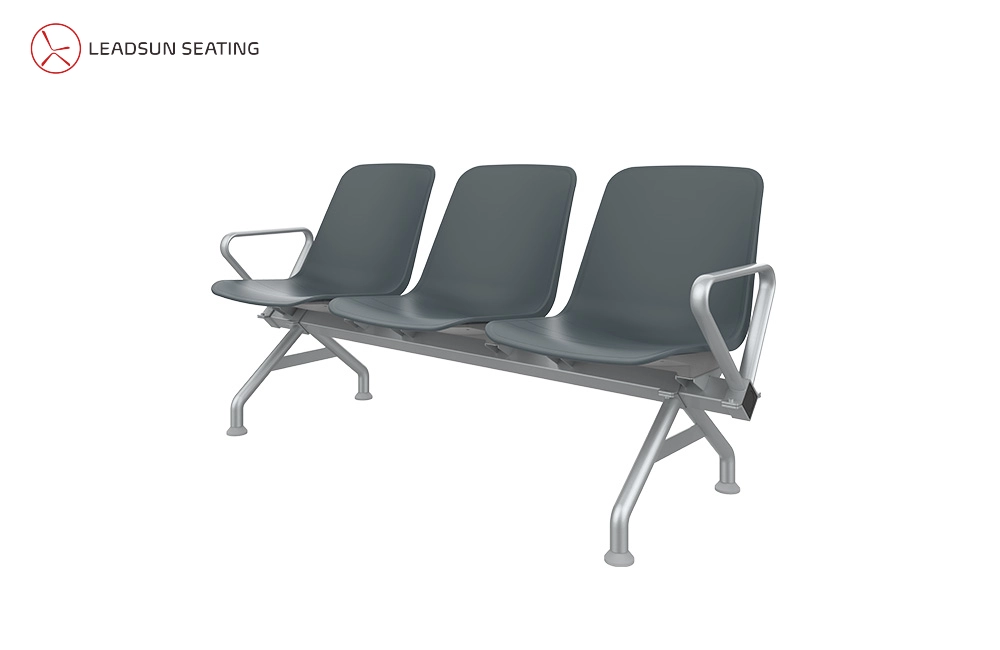
LS-551 Ergonomic Modular Waiting Chairs | Commercial Seating Solutions by Leadsun Seating
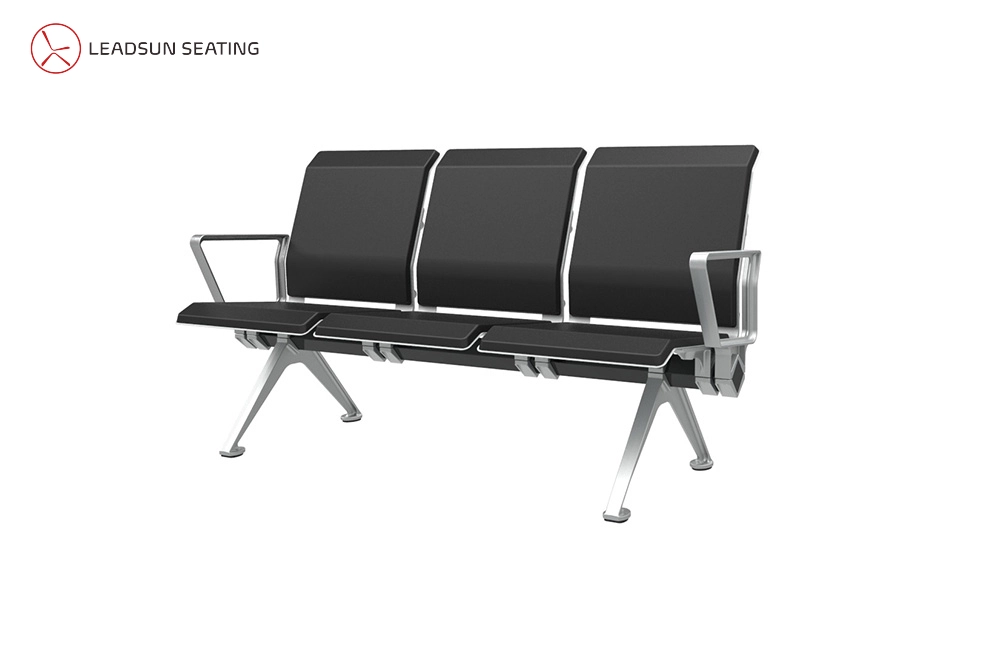
LS-529Y Ergonomic Waiting Chairs | High-Density PU Seating Solutions by Leadsun Seating
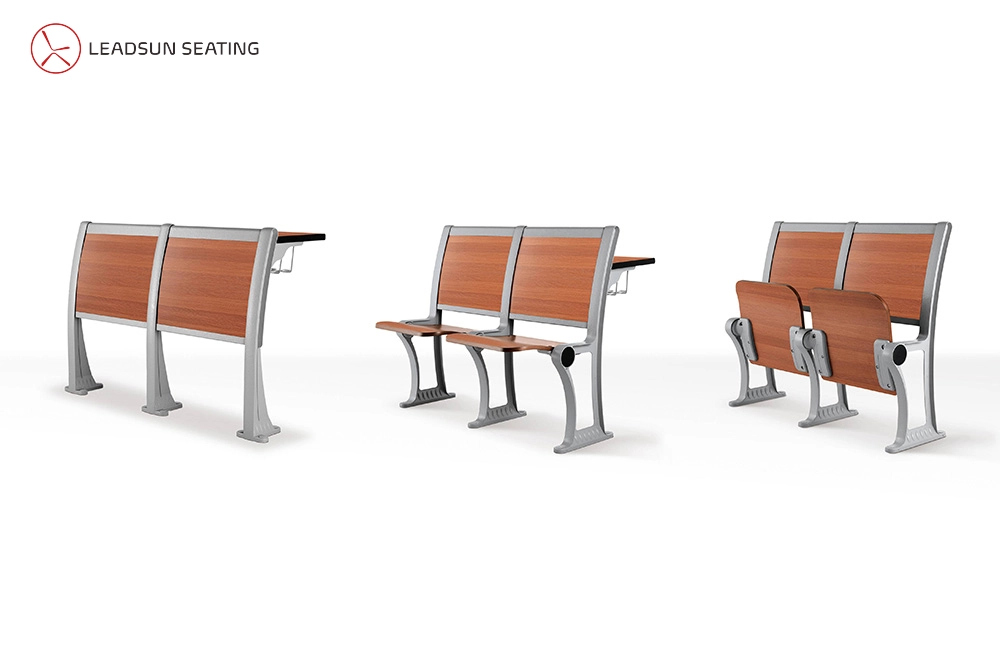
LS-908 Series Fixed Public Auditorium Chair or Tiered Classroom Solutions by Leadsun Seating
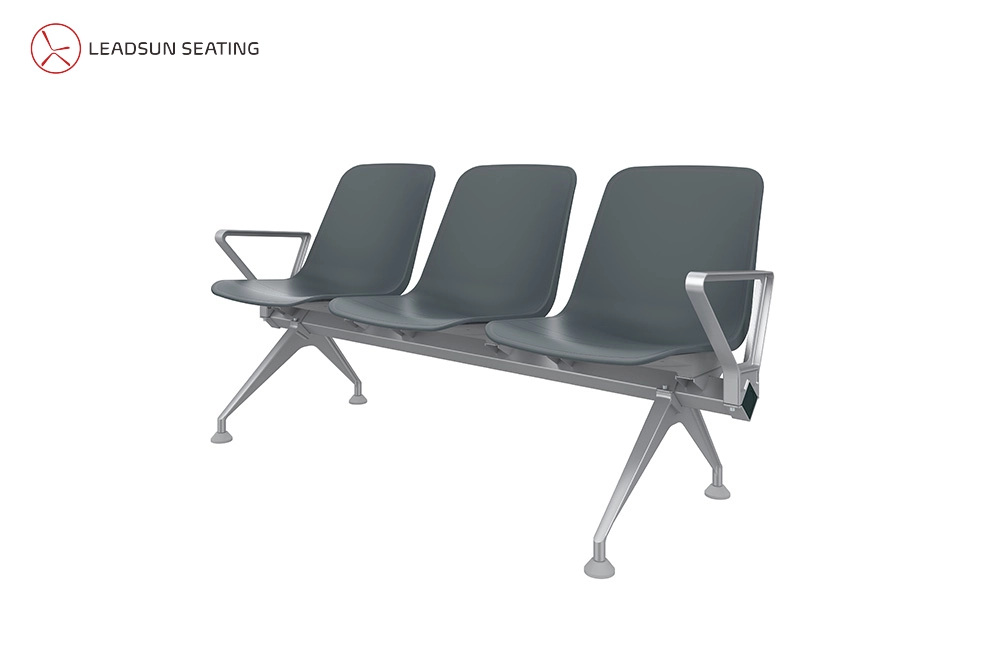
LS-550 Comfortable and Durable Waiting Chair | Customizable Waiting Chair Supplier Leadsun Seating
The LS-550 waiting chair from Leadsun offers superior comfort and durability for any public place. Customize your seating with Leadsun, a leading customizable waiting chair supplier. Ideal for high-traffic areas, the LS-550 ensures lasting performance and style.
Ready for your public seating project?
We specialize in providing high-quality, customizable seating solutions for public spaces, and we are excited to assist you with your project.
Our professional team will quickly answer your questions and provide customized solutions to ensure you have a worry-free experience.

Leadsun Seating is also engaged in the design, development, production, and marketing of lightweight public seats in public places, with an annual output of desks and chairs.
 Scan QR Code