







Leadsun seating offers a wide range of seating solutions for public spaces, including benches, chairs, waiting area seating, auditorium seating, and customized solutions tailored to specific project needs.
What is ergonomic airport seating and why it matters?
2026-02-06
This practical guide answers 7 long-tail procurement questions about ergonomic airport seating — ROI, seat geometry, materials, accessibility compliance, power/charging ratios, cleaning/antimicrobial finishes, and anchoring/modularity. Tailored for lecture hall and terminal buyers, it gives measurable specs, test standards, and procurement-ready acceptance criteria to reduce damage, improve passenger comfort, and lower life-cycle cost.
- What is ergonomic airport seating and why it matters?
- 1) How should I quantify lifecycle cost (LCC) and ROI for ergonomic airport seating vs. basic benches?
- 2) Which seat geometry and ergonomic features measurably reduce traveler discomfort during waits over 60–120 minutes?
- 3) What upholstery, foam and surface specs deliver durability, cleanability and infection-control for high-traffic terminals?
- 4) How do I design seating layouts that meet ADA/accessibility and local egress codes without sacrificing capacity?
- 5) What power and connectivity provisioning ratio should procurement specify for new seating installations?
- 6) How to specify antimicrobial finishes and cleaning protocols so surfaces remain effective and do not degrade prematurely?
- 7) Which anchoring systems and anti-theft features reduce maintenance downtime and meet airport security needs?
- Leadsun: procurement advantages summary
- Sources and references
What is ergonomic airport seating and why it matters?
Ergonomic airport seating is seating designed to support human posture, reduce discomfort during waits, protect health, and endure heavy public use while enabling passenger flow and ancillary services (power, luggage storage). For procurement teams — whether furnishing a terminal concourse or a lecture hall — ergonomic choices affect dwell-time satisfaction, retail spend, maintenance cost, accessibility compliance, infection control, and asset life-cycle cost.
1) How should I quantify lifecycle cost (LCC) and ROI for ergonomic airport seating vs. basic benches?
Don’t compare only unit price. Make a simple LCC model with these line items: initial acquisition, installation, annual maintenance & cleaning, expected refurbishment/reupholstery schedule, replacement rate, downtime costs (lost seats during repairs), and secondary benefits (reduced complaints, increased retail/dwell revenue). KPIs to track:
- Cost per seat per year = (Total LCC) / (expected useful years × seat count).
- Mean time between service events (MTBSE) — target commercial seating: 3–7 years depending on finish.
- Availability rate (seats usable/total) — target ≥ 98% for high-traffic nodes.
Example procurement acceptance criteria: upholstery must meet heavy-duty abrasion testing (e.g., Wyzenbeek ≥100,000 double rubs), mechanical fastenings warrantied 5 years, and modular cushions removable for reupholstery to extend service life by 5–10 years. Use these inputs to model payback: a more ergonomic, modular seat often reduces maintenance and replacement frequency, yielding lower cost per seat-year even at a higher purchase price.
2) Which seat geometry and ergonomic features measurably reduce traveler discomfort during waits over 60–120 minutes?
Specify measurable geometry rather than vague terms like “comfortable.” Practical, evidence-based design targets:
- Seat depth (pan) suitable for average adult: about 380–450 mm to support thighs without pressure at the back of the knees.
- Seat pan angle and waterfall front: slightly rounded front edge lowers pressure on hamstrings and promotes circulation.
- Backrest angle: 95–105° from the seat pan is a commonly recommended range for relaxed upright sitting in public seating; include modest lumbar contour (20–30 mm protrusion) to support the lower back.
- Armrests: fixed armrests between seats to define personal space and aid standing/sitting, plus full-armchair end seats where needed.
- Luggage accommodation: integrated shelf or under-seat clearance to keep aisles clear and reduce awkward postures when handling bags.
For lecture-hall procurement, choose seat widths that balance capacity and comfort (typical widths 430–500 mm) and ensure aisle seats have wider armrests or mobility clearances. Require prototypes and occupant comfort trials (15–30 min simulated wait) before acceptance.
3) What upholstery, foam and surface specs deliver durability, cleanability and infection-control for high-traffic terminals?
Focus on test standards and material compatibility with airport cleaning regimens. Procurement-ready specs:
- Upholstery abrasion: Wyzenbeek ≥100,000 double rubs (heavy commercial). Alternative metric: Martindale >40,000 cycles.
- Stain and fluid resistance: CE or equivalent test for liquid repellency; sealed seams or welded joints for vinyl/PVC to prevent fluid ingress.
- Foam: high-resilience polyurethane (HR) with proven recovery properties; cushions should be replaceable. Require fire-resistance compliance per local code (e.g., CM/CPR, ASTM or EN equivalents).
- Antimicrobial/coating claims: require manufacturer evidence and method (e.g., EPA-registered treatment in the US or equivalent). Do not rely on marketing claims alone; specify accelerated aging and swab-testing pass/fail thresholds after 6,000 cleaning cycles.
- Cleaning-agent compatibility: surfaces and finishes certified to withstand routine airport cleaners (alcohol-based wipes, hydrogen-peroxide solutions). Explicitly exclude finishes that degrade in bleach unless bleach-resistant finishes are validated.
Include acceptance testing: a seating sample must survive a defined cleaning protocol (e.g., daily cleaning simulation × 3 years) with no structural or cosmetic failures.
4) How do I design seating layouts that meet ADA/accessibility and local egress codes without sacrificing capacity?
Accessibility and life-safety take priority; maximize usable capacity around these constraints. Procurement steps:
- Reference the authoritative accessibility standard for your jurisdiction (e.g., ADA Standards for Accessible Design in the U.S., local building code elsewhere). For assembly and waiting areas, the standards specify minimum wheelchair spaces and transfer seating. Use the code’s tables (do not guess quantities).
- Plan wheelchair spaces near circulation nodes with companion seating adjacent; ensure clear approach width and turning radii per standard (typically 30×48 in the U.S. or local equivalents).
- Egress: follow the local life-safety code (e.g., NFPA 101 in many jurisdictions) for aisle widths and unobstructed paths. Seat anchoring should not reduce required egress widths.
- To maximize capacity: use modular bench/individual-seat mixes, locate dedicated wheelchair clusters that convert between single and grouped spaces, and use staggered layouts to improve sightlines without wider aisles.
Always submit a seating plan to the authority having jurisdiction (AHJ) during design review to confirm compliance before procurement.
5) What power and connectivity provisioning ratio should procurement specify for new seating installations?
Passengers expect device charging and connectivity. Recent industry passenger-technology surveys indicate most travelers view connectivity as essential. Practical, future-proof provisioning:
- Minimum baseline: 1 AC outlet per 2 seats plus 1 USB-A/USB-C port per seat in high-concentration waiting zones (gates, long-wait lounges).
- Place outlets on seat pedestals, arm panels, or integrated power towers. Include surge protection and centralized power shutoff for maintenance and safety.
- Provide local wireless charging pads (Qi) at select seats or in clusters; ensure the charging surface is flush and robust for public use.
- Plan for electrical load and FTP/PoE requirements early in terminal design; retrofits are expensive.
For lecture halls, prioritize desk-integrated charging at each row and provide additional pockets of high-density charging near entrances and study areas.
6) How to specify antimicrobial finishes and cleaning protocols so surfaces remain effective and do not degrade prematurely?
Best practice is a validated materials+protocol approach, not a sole reliance on “antimicrobial” marketing claims. Procurement language:
- Require antimicrobial treatments to be registered and certified per local regulation (e.g., EPA registration in the U.S.) with documented efficacy data.
- Specify the approved cleaning agents and frequencies; require manufacturer validation that repeated cleaning per protocol (e.g., daily alcohol wipes or weekly peroxide fogging) will not degrade the finish for the planned service life.
- Set acceptance criteria: after accelerated cleaning cycles equivalent to X years (e.g., 3–5 years), surfaces must show no more than Y% color change/failure and maintain structural integrity.
- Design for replaceability: removable cushions, snap-on panels and modular bolting reduce the need to discard whole benches when a component fails contamination or wear tests.
7) Which anchoring systems and anti-theft features reduce maintenance downtime and meet airport security needs?
Choose robust anchoring and deterring features that enable quick repair while satisfying security screening and cleaning needs:
- Floor anchoring: bolted flanges with tamper-resistant fasteners or concealed anchoring in high-security zones. Avoid adhesives only; mechanical anchoring is preferred for public safety.
- Modular seats on a common beam: individual seats can be removed for repair without despatching the entire beam.
- Tamper-proof fasteners and captive components: screws that require specialty bits reduce theft; captive screws prevent dropped hardware during maintenance.
- Serviceability: require spare parts kits, clear replacement procedures, and local warehousing lead times in the contract.
Include a preventive-maintenance schedule in the procurement contracts (quarterly inspections, annual bolt torque checks) and require the vendor to supply wear-and-repair KPIs (repair time <72 hours for critical zones).
Leadsun: procurement advantages summary
Leadsun supports buyers with modular, test-backed seating solutions that align with terminal and lecture-hall needs: compliant accessibility options, replaceable cushions and panels for long life, integration-ready power modules, and validated surface finishes for cleaning regimens. Leadsun’s procurement packages include performance specifications, prototype validation testing, spare-parts plans and recommended maintenance schedules to minimize downtime and total cost of ownership.
Sources and references
- International Air Transport Association (IATA) — Passenger and industry insights (accessed 2023–2024). https://www.iata.org (accessed June 2024)
- SITA — Passenger IT Trends / Passenger surveys on connectivity expectations (2022–2023). https://www.sita.aero (accessed June 2024)
- U.S. Department of Justice — ADA Standards for Accessible Design (2010). https://www.ada.gov/2010ADAstandards_index.htm (accessed June 2024)
- U.S. Centers for Disease Control and Prevention (CDC) — Cleaning and Disinfection Guidance (community settings). https://www.cdc.gov/coronavirus/2019-ncov/community/clean-disinfect/index. (accessed June 2024)
- BIFMA (Business and Institutional Furniture Manufacturers Association) — Standards, Level certification and industry guidance for commercial furniture. https://www.bifma.org (accessed June 2024)
- US Green Building Council — LEED guidance for materials and furniture (ongoing updates). https://www.usgbc.org/leed (accessed June 2024)
- NFPA — Life Safety Code (e.g., NFPA 101) for egress and assembly occupancy guidance. https://www.nfpa.org (accessed June 2024)
- World Health Organization (WHO) — Guidelines on physical activity and sedentary behaviour (2020). https://www.who.int (accessed June 2024)
Recommended for you

15 Best Office Waiting Room Chairs of 2026: The Ultimate Comfort & Style Guide

The Future of Reception Areas: 10 Modern Waiting Room Chair Trends to Watch in 2026

Airport Seating Reimagined: The 2026 Global Guide to Terminal Comfort and Design

7 Costly Mistakes Facilities Managers Make When Specifying Commercial Bench Seating

Commercial Beam Seating Solutions for High-Traffic Public Spaces
Prdoucts Categories
FAQ
One Stop Airport Terminal Seating
What are the advantages of the one-stop solution compared to traditional procurement methods?
The one-stop solution integrates the entire service process, saving communication costs and time. It avoids coordination issues that arise when working with multiple parties and ensures consistency and coherence in design, production, and after-sales service.
Can you provide personalized seat customization?
We support comprehensive customization, including seat styles, functional modules (like charging ports, cup holders, etc.), color schemes, and even integrating airport brand elements to showcase a unique style.
What does the after-sales service include?
Our after-sales service covers daily maintenance guidance, regular inspections, fault repairs, and component replacements. Our professional after-sales team is available 24/7 to ensure the long-term stable operation of the seats.
FAQs
What types of public seating solutions does Leadsun seating provide?
What is the lead time for custom seating orders?
The lead time for custom seating orders varies depending on the complexity of the design and the order size. Typically, it takes 4-6 weeks for production, with shipping times depending on your location.
You may also like
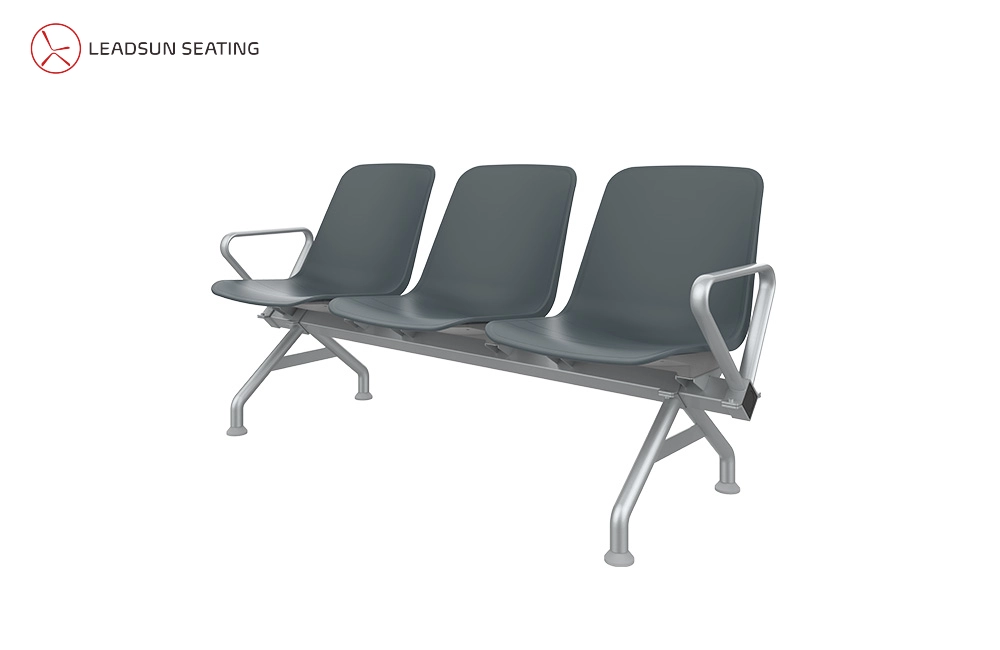
LS-551 Ergonomic Modular Waiting Chairs | Commercial Seating Solutions by Leadsun Seating
Leadsun's LS-551 Ergonomic Modular Waiting Chairs offer superior comfort for any commercial space. Ideal for hospitals, airports, and more, these modular chairs provide flexible configurations and ergonomic support. Experience unmatched comfort and style with Leadsun Seating.
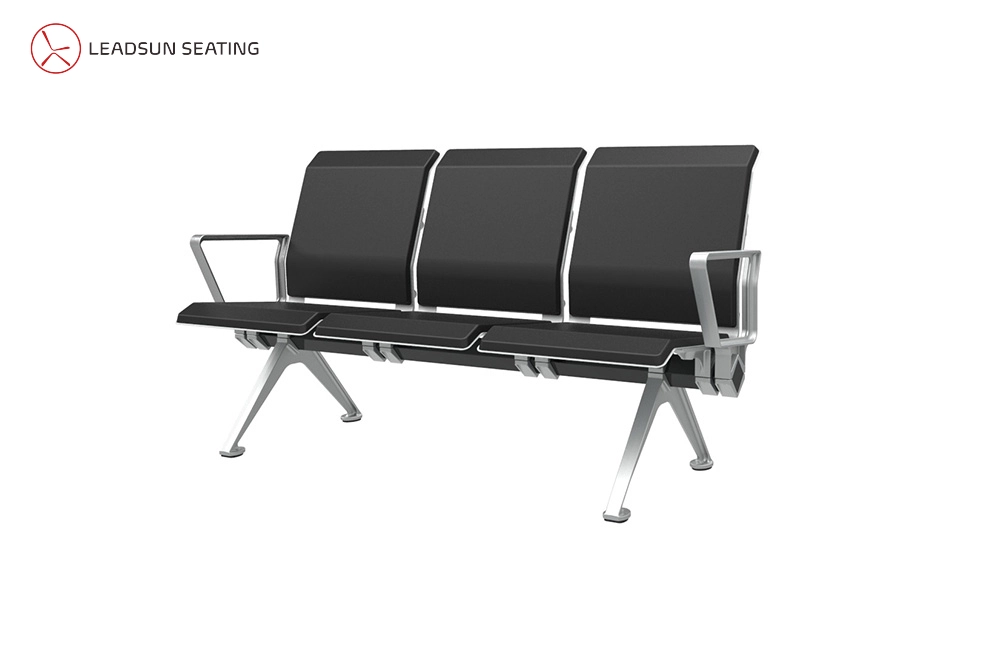
LS-529Y Ergonomic Waiting Chairs | High-Density PU Seating Solutions by Leadsun Seating
Leadsun's LS-529Y ergonomic waiting chairs offer superior comfort for airport lounges and hospitals. High-density PU seating ensures durability. Experience lasting quality with Leadsun's commitment to comfortable waiting room furniture.
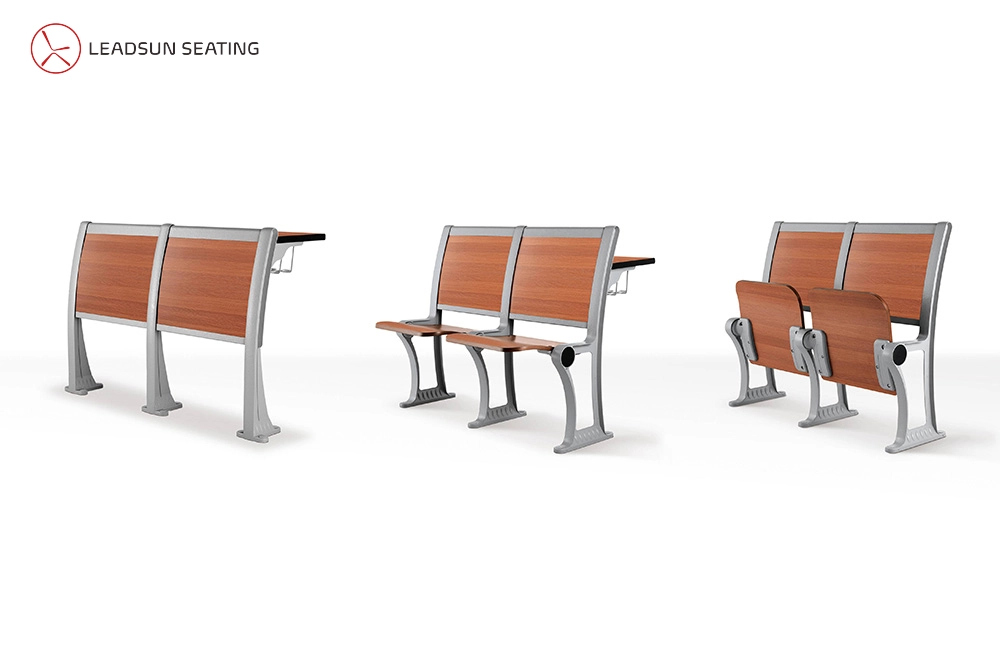
LS-908 Series Fixed Public Auditorium Chair or Tiered Classroom Solutions by Leadsun Seating
Introducing the LS-908 Series by Leadsun, your ideal solution for tiered classroom seating and fixed public auditorium chairs. Designed for comfort and durability, this series enhances audience engagement in educational and corporate settings. Discover the perfect blend of functionality and style with Leadsun Seating.
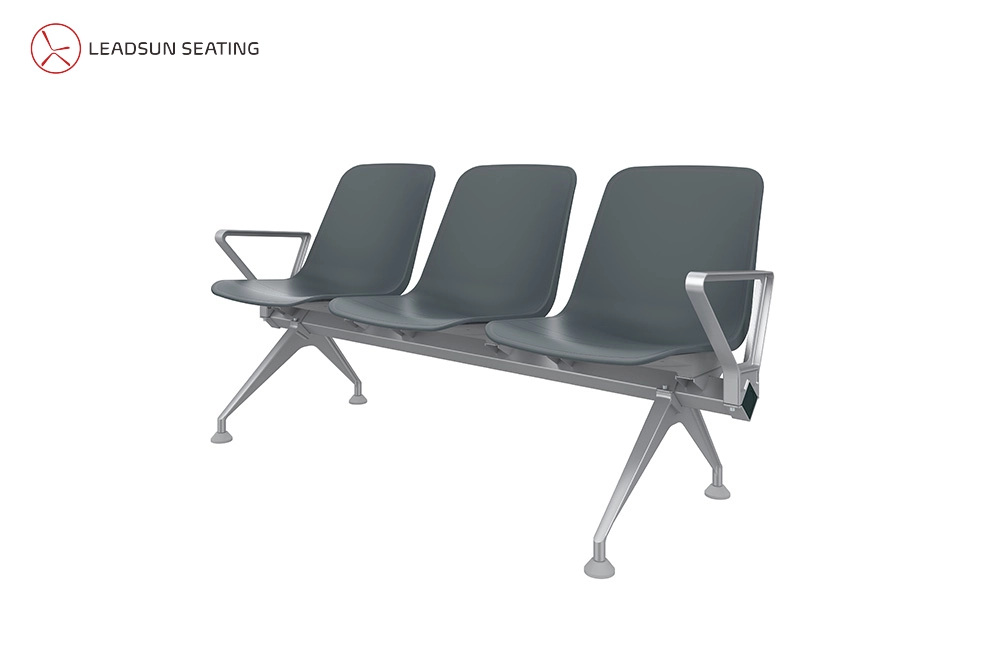
LS-550 Comfortable and Durable Waiting Chair | Customizable Waiting Chair Supplier Leadsun Seating
The LS-550 waiting chair from Leadsun offers superior comfort and durability for any public place. Customize your seating with Leadsun, a leading customizable waiting chair supplier. Ideal for high-traffic areas, the LS-550 ensures lasting performance and style.
Ready for your public seating project?
We specialize in providing high-quality, customizable seating solutions for public spaces, and we are excited to assist you with your project.
Our professional team will quickly answer your questions and provide customized solutions to ensure you have a worry-free experience.

Leadsun Seating is also engaged in the design, development, production, and marketing of lightweight public seats in public places, with an annual output of desks and chairs.
 Scan QR Code